


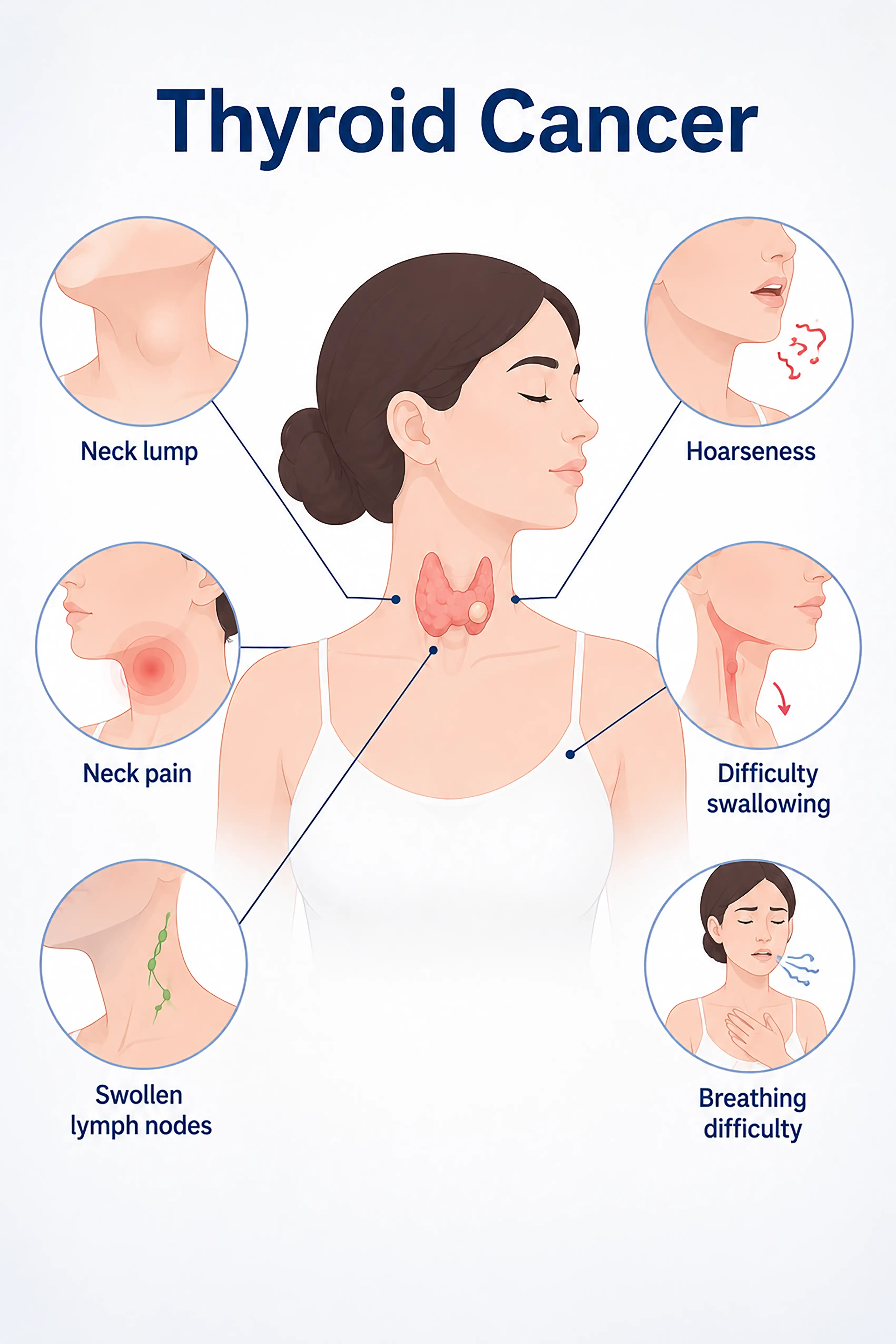
Thyroid cancer arises from malignant transformation of thyroid epithelial cells. Early disease often causes no obvious symptoms and is usually found incidentally during health examinations. Tumor enlargement may cause neck lumps, hoarseness, and difficulty swallowing.
Thyroid cancer prevalence worldwide
Thyroid cancer incidence has risen in many regions worldwide. It is considerably more common in women, and part of the increase is related to greater imaging use and detection of small tumors. Papillary carcinoma is the most common type and usually has a favorable prognosis, whereas anaplastic carcinoma is rare but highly aggressive and has poor overall outcomes.
Thyroid cancer symptoms by stage
1.Early-stage thyroid cancer symptoms
The tumor is confined to the thyroid and usually causes no obvious symptoms. Some patients have a palpable small, painless, hard neck lump with indistinct borders that moves with swallowing.
2.Intermediate-stage thyroid cancer symptoms
The lump gradually enlarges, with hoarseness, swallowing discomfort, and breathing difficulty. Enlarged ipsilateral cervical lymph nodes may be palpable, suggesting surrounding tissue invasion or metastasis.
3.Advanced-stage thyroid cancer symptoms
Extensive invasion of the trachea, esophagus, and recurrent laryngeal nerve causes severe breathing difficulty, impaired swallowing, persistent hoarseness, and symptoms of distant metastasis.
When to Seek Medical Attention
Early signs of thyroid cancer include a painless neck lump, hoarseness, difficulty swallowing, and enlarged cervical lymph nodes. Consult a doctor through "Chat with a Doctor" for early detection. During an online consultation, the doctor will ask about your symptoms and radiation exposure history and guide you toward thyroid ultrasound.
Thyroid cancer stages
Stage 0 thyroid cancer
Cancer cells are confined to the thyroid epithelium, representing carcinoma in situ, usually without obvious clinical symptoms and often found incidentally on thyroid ultrasound during health examinations.
Stage I thyroid cancer
The tumor is less than two centimeters in diameter, confined to the thyroid, without lymph node metastasis, and usually asymptomatic or causes only a small neck nodule.
Stage II thyroid cancer
The tumor is two to four centimeters in diameter or has multiple intrathyroidal foci. It remains confined to the thyroid or has only limited surrounding invasion.
Stage III thyroid cancer
The tumor exceeds four centimeters or invades surrounding muscles and nerves, with cervical lymph node metastasis and symptoms such as hoarseness.
Stage IV thyroid cancer
The tumor extensively invades the trachea or esophagus, or spreads to the lungs, bones, and brain, causing severe breathing difficulty and systemic wasting.
Thyroid cancer symptoms in detail
1.Appearance of a neck lump
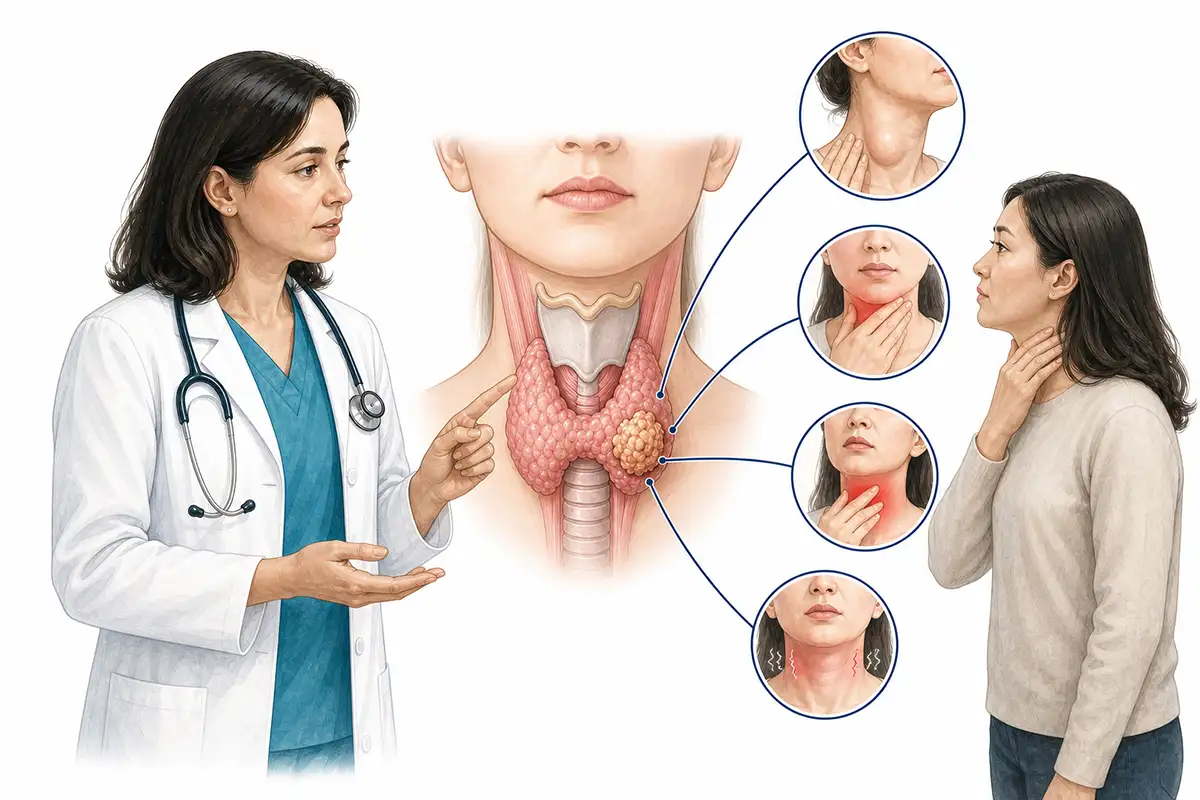
The most common initial symptom is a painless lump in the lower front of the neck that moves with swallowing. It is hard, has an uneven surface and indistinct borders, and later becomes fixed.
2.Persistent hoarseness
Compression or invasion of the recurrent laryngeal nerve causes vocal cord paralysis and persistent hoarseness, suggesting spread beyond the thyroid.
3.Marked swallowing difficulty
An enlarging tumor compressing the esophagus impairs swallowing, particularly solids, with a foreign body sensation and retrosternal discomfort.
4.Severe breathing difficulty
Tracheal compression impairs breathing and causes stridor. Severe cases may cause tracheal displacement and severe respiratory difficulty.
5.Enlarged cervical lymph nodes
Thyroid cancer may spread early to cervical lymph nodes, causing hard, painless lumps on the side of the neck. This is especially common in papillary carcinoma.
6.Neck pain
Rapid tumor growth or surrounding tissue invasion causes persistent neck pain that may radiate to the ear, occiput, and shoulder.
7.Horner syndrome
Invasion of the cervical sympathetic chain causes ipsilateral pupil constriction, narrowing of the eyelid opening, absence of facial sweating, and a sunken eye.
8.Diarrhea and facial flushing
Medullary thyroid cancer secretes active substances such as calcitonin and serotonin, causing persistent diarrhea, facial flushing, and palpitations.
9.Rapid weight loss
Increased tumor-related energy consumption causes marked short-term weight loss, weakness, and malnutrition, progressing to cachexia in advanced disease.
Conclusion
Most thyroid cancer types have a favorable prognosis. Early detection and standardized treatment can achieve long-term survival. Regular thyroid ultrasound aids early detection. People with a family history or radiation exposure need closer monitoring.


