


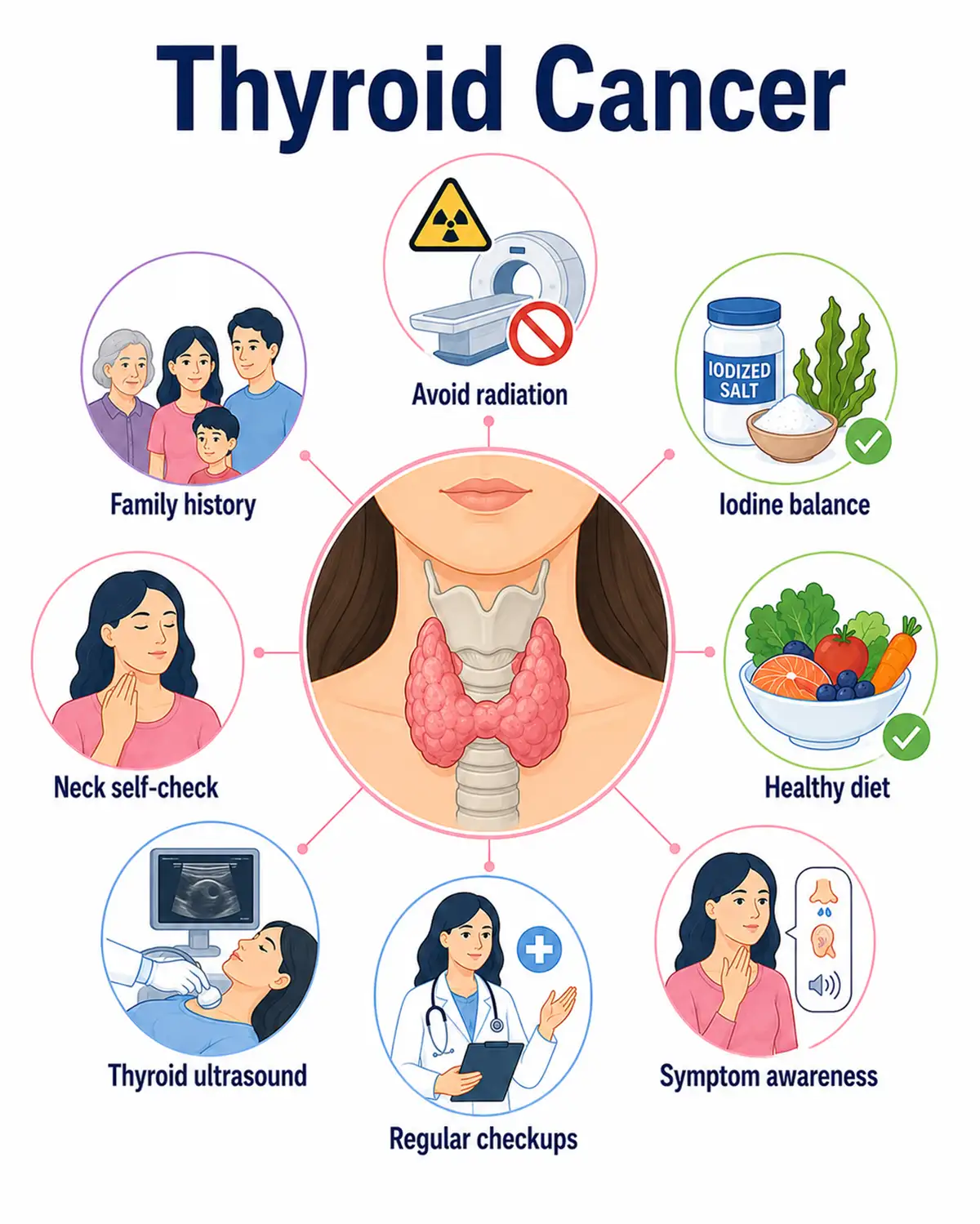
1. Avoidance of radiation
Minimize unnecessary head and neck radiological examinations. Children should avoid radiotherapy, as ionizing radiation is an established cause of thyroid cancer.
2. Appropriate iodine supplementation
Too much or too little iodine may increase thyroid cancer risk. Iodized salt should provide appropriate iodine intake while avoiding extremes.
3. Regular ultrasound
Thyroid ultrasound is an important noninvasive screening method. High-risk people should have annual scans to detect nodules early.
4. Monitor nodules
Thyroid nodules warrant prompt assessment. Rapid enlargement, hardening, or hoarseness requires particular vigilance.
5. Reduce stress
Long-term psychological stress affects endocrine balance. A positive mood and regular routines help maintain stable thyroid function.
6. Balanced diet
Eat more selenium- and zinc-rich foods, such as nuts and seafood. These trace elements are important for thyroid hormone synthesis and metabolism.
7. Genetic counseling
People with a family history of medullary thyroid cancer should undergo RET testing. Those at high risk of hereditary thyroid cancer may consider preventive thyroidectomy.
Conclusion
Although most thyroid cancers have a favorable prognosis, they still harm health. Avoiding radiation, appropriate iodine supplementation, and regular ultrasound for early detection and timely intervention are crucial to improving prognosis.


