


A pituitary tumor is a neoplasm formed by the abnormal proliferation of cells in the anterior pituitary gland.Located in the sella turcica at the base of the skull, the pituitary gland is a central hub of the endocrine system, secreting various hormones that regulate human metabolism, growth, and reproductive functions.
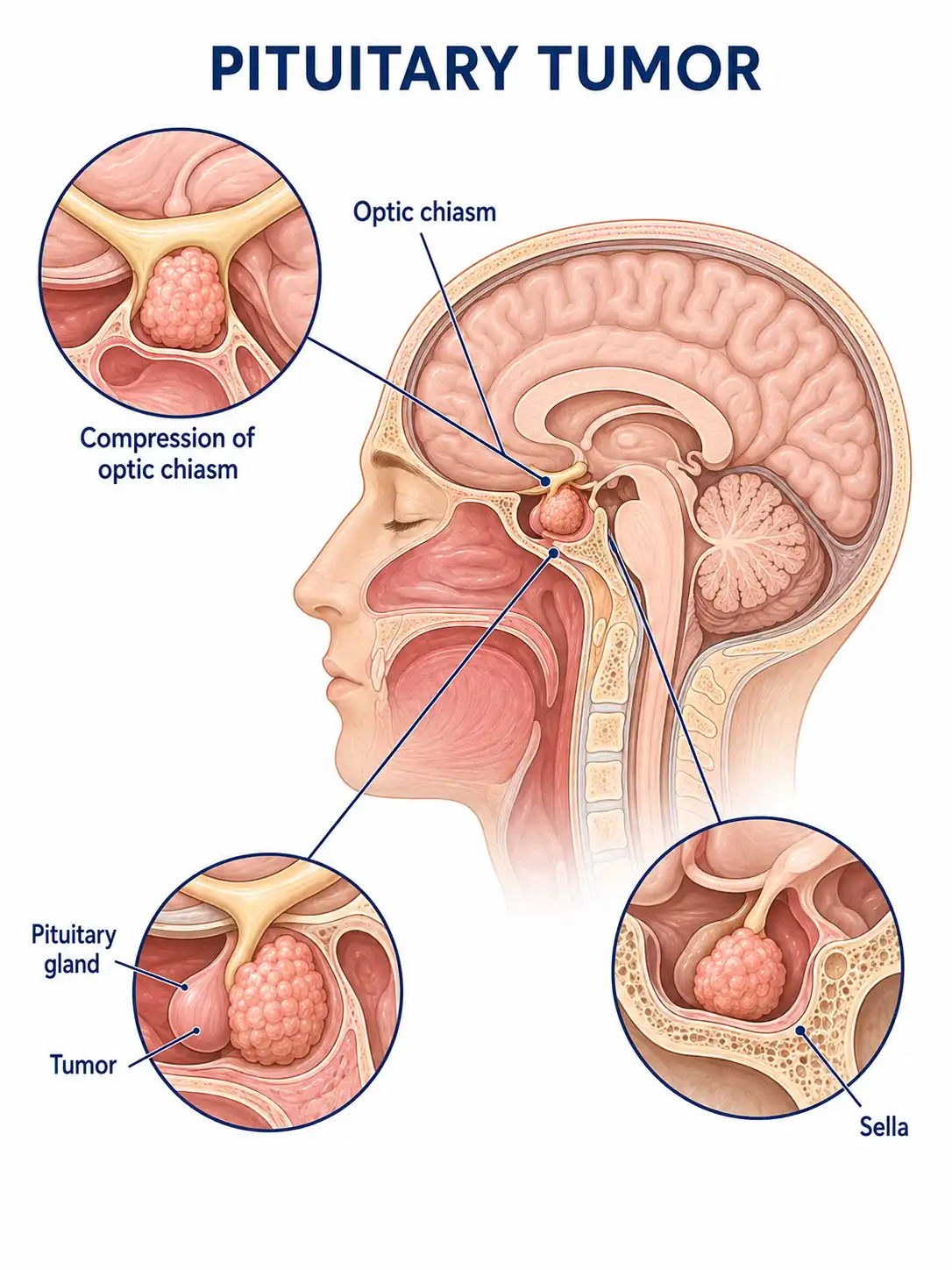
Global overview of pituitary tumors
Pituitary tumors account for a significant proportion of intracranial tumors; most are benign adenomas. They can occur at any age but are most common between 20 and 50 years old.Functional pituitary tumors are often detected earlier due to abnormal hormone secretion.
Consult a doctor regarding cancer-related issues
Individuals experiencing symptoms such as unexplained headache, vision loss, menstrual irregularities, lactation, acromegaly, or signs of Cushing's syndrome should promptly consult an endocrinologist or a neurosurgeon.
Main types of pituitary tumors
1. Prolactinoma
Secretes excessive prolactin; manifests as amenorrhea and galactorrhea in women and sexual dysfunction in men; it is the most common type of functional pituitary adenoma.
2. Growth hormone-secreting tumor
Secretes excessive growth hormone; manifests as gigantism in children and acromegaly in adults, and can lead to metabolic disorders.
3. ACTH-secreting tumor
Excessive secretion of ACTH leads to Cushing's disease, characterized by centripetal obesity, hypertension, hyperglycemia, and osteoporosis.
4. Non-functioning pituitary adenoma
It does not secrete biologically active hormones; it is detected due to symptoms caused by tumor compression, with patients often seeking medical attention for vision loss and headaches.
5. TSH-secreting tumor
Excessive secretion of TSH leads to hyperthyroidism; this condition is relatively rare and prone to clinical misdiagnosis.
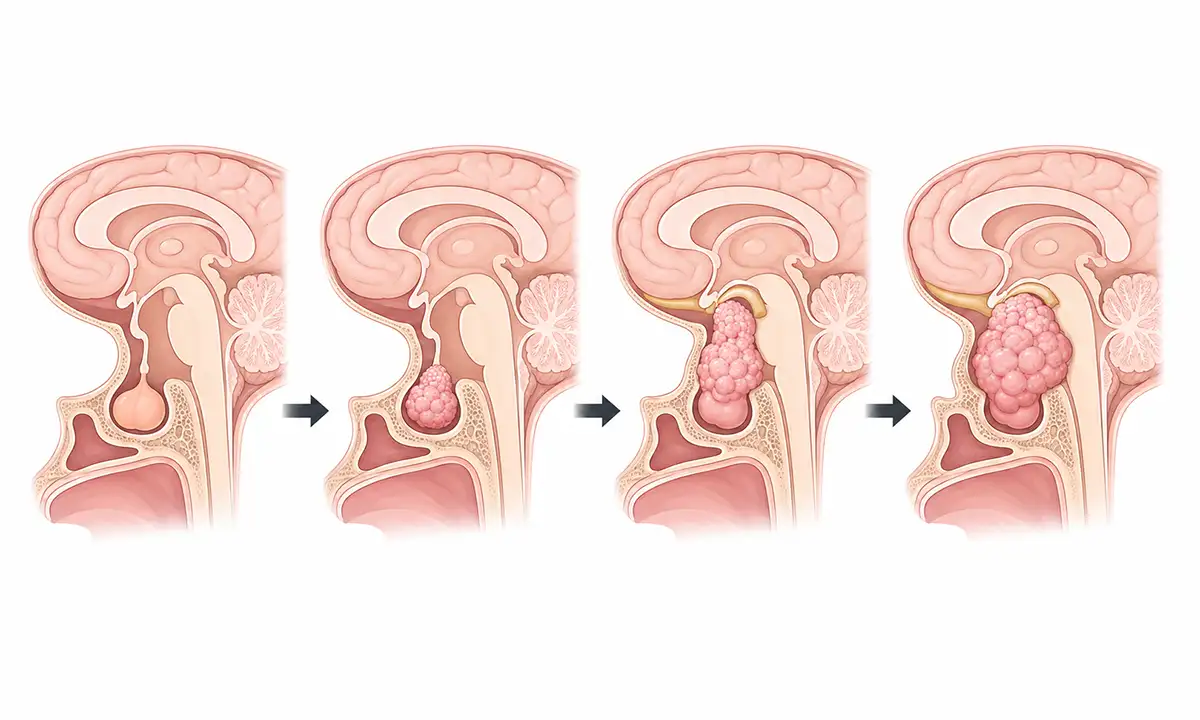
Typical symptoms and signs of pituitary tumors
1. Visual impairment
Upward growth of the tumor compressing the optic chiasm causes bitemporal hemianopia and decreased visual acuity; severe cases can lead to total blindness.
2. Headache
Compression of the diaphragma sellae and surrounding structures by the tumor causes headaches, typically located in the frontal or retro-orbital regions, presenting as a persistent dull ache.
3. Endocrine disorders
Functional pituitary tumors cause symptoms associated with hormone excess, whereas non-functional tumors lead to pituitary hypofunction.
4. Amenorrhea-galactorrhea
Female patients with prolactinomas typically present with oligomenorrhea or amenorrhea, non-puerperal galactorrhea, infertility, and decreased libido.
5. Acromegaly
Adult patients with growth hormone-secreting tumors exhibit enlarged hands and feet, coarse facial features, a deep voice, and joint swelling and pain.
6. Decreased sexual function
Male patients present with decreased libido, impotence, and infertility, while female patients present with menstrual irregularities and infertility.
Diagnostic methods for pituitary tumors
1. Hormone testing
Measure serum levels of hormones such as prolactin, growth hormone, ACTH, cortisol, and thyroid function markers to assess pituitary functional status.
2. Pituitary MRI
Contrast-enhanced MRI of the sellar region is the preferred method for diagnosing pituitary adenomas, as it clearly displays the tumor's size and its relationship with surrounding structures.
3. Visual acuity and visual field examination
Ophthalmological examinations assess visual acuity and visual field defects; bitemporal hemianopia is a typical sign of optic chiasm compression.
4. Dynamic hormone testing
Perform tests such as the glucose suppression test and dexamethasone suppression test to clarify the nature and extent of abnormal hormone secretion.
5. Assessment of target gland function
Assesses the function of target glands—such as the thyroid, adrenal glands, and gonads—to determine the severity of hypopituitarism.
6. Genetic testing
Genetic testing should be performed for familial cases to rule out hereditary syndromes such as multiple endocrine neoplasia (MEN).
What are the treatment methods for pituitary tumors
1. Pharmacotherapy
Dopamine agonists such as bromocriptine and cabergoline are first-line treatments for prolactinomas, capable of shrinking the tumor and normalizing hormone levels.
2. Transsphenoidal surgery
Pituitary tumor resection via the transsphenoidal approach is the primary treatment modality; it is minimally invasive, safe, and associated with rapid postoperative recovery.
3. Craniotomy
For cases of giant pituitary adenomas with extensive suprasellar and parasellar invasion, craniotomy for tumor resection may be required.
4. Radiotherapy
Stereotactic radiotherapy is suitable for treating residual or recurrent tumors following surgery, helping to control tumor growth.
5. Hormone replacement
Postoperative patients with hypopituitarism require appropriate hormone replacement therapy, including thyroxine, glucocorticoids, and sex hormones.
6. Somatostatin analogs
Octreotide and lanreotide can be used for preoperative preparation and postoperative adjuvant therapy in patients with growth hormone-secreting tumors or TSH-secreting tumors.
7. Symptomatic and supportive care
Manage complications such as hypertension and hyperglycemia; provide nutritional support to improve general condition, and offer psychological support to alleviate anxiety.
8. Follow-up monitoring
Regular postoperative monitoring of hormone levels and sellar region MRI is performed to track tumor recurrence and pituitary functional status.
Conclusion
Pituitary tumors are common benign intracranial tumors that can cause endocrine dysfunction and visual impairment.Most patients achieve good disease control through comprehensive treatment, including medication, transsphenoidal surgery, and radiotherapy.


