


Prevalence worldwide
Parotid gland cancer is a relatively rare malignancy worldwide, accounting for a small proportion of head and neck tumors and occurring in all age groups.
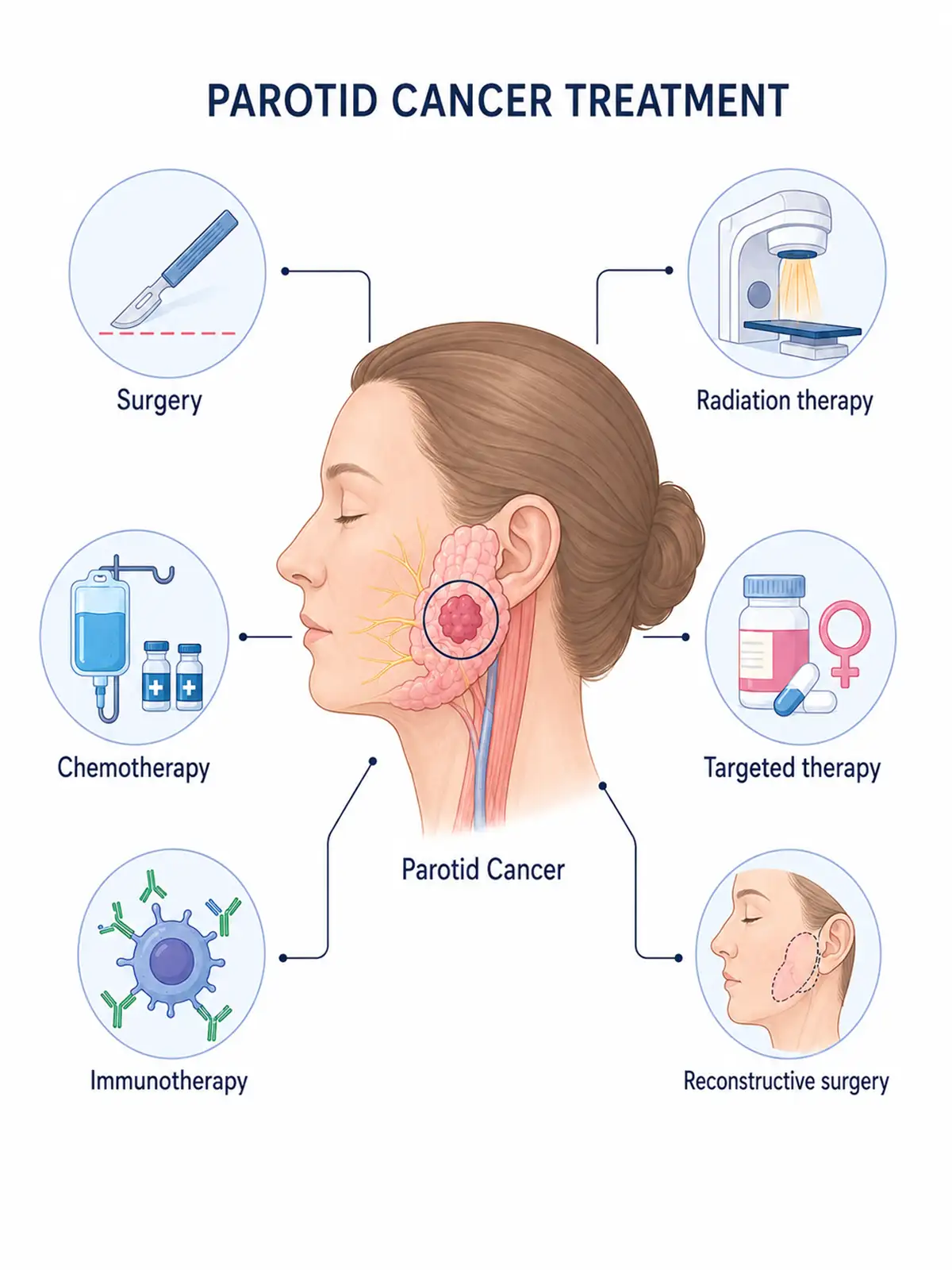
Parotid gland cancer treatment by stage
Early treatment (involving a localized, small tumor with a favorable response)
specifically surgical resection combined with adjuvant therapy—can effectively control tumor progression, and the patient's prognosis is relatively good.
Treatment for the intermediate stage (involving local spread; aiming to inhibit growth and delay progression)
employs a comprehensive approach—such as surgery combined with radiotherapy and chemotherapy—to control further tumor spread and slow the rate of disease deterioration.
Treatment for advanced-stage disease (involving distant metastasis, symptom relief, and survival prolongation)
primarily relies on systemic therapies such as radiotherapy and chemotherapy to alleviate clinical symptoms and extend patient survival as much as possible.
Consequences of failing to receive timely treatment in the early stage: If standardized treatment is not administered promptly in the early stage, the tumor will continue to grow and spread/metastasize to surrounding tissues and distant organs, resulting in a missed opportunity for optimal intervention and a worsening of the condition.
Why choose Fosun Health for parotid gland cancer treatment
Fosun Health draws on its hospitals' head and neck surgery, facial nerve assessment and reconstruction, M6 CyberKnife, VitalBeam, and molecular testing platforms to organize multidisciplinary consultations involving head and neck surgery, radiotherapy, imaging, pathology, and medical oncology specialists. The team develops individualized plans based on tumor subtype, margins, lymph nodes, facial nerve involvement, and relevant molecular markers.
Precision surgery helps preserve the facial nerve while ensuring adequate tumor removal. Precision radiotherapy covers the parotid bed, high-risk neck regions, and pathways of perineural spread while reducing exposure of the oral cavity, cochlea, and contralateral salivary glands, lowering some risks of dry mouth and hearing- and swallowing-related adverse effects. Treatment can be followed by eye protection, cosmetic reconstruction, and follow-up.
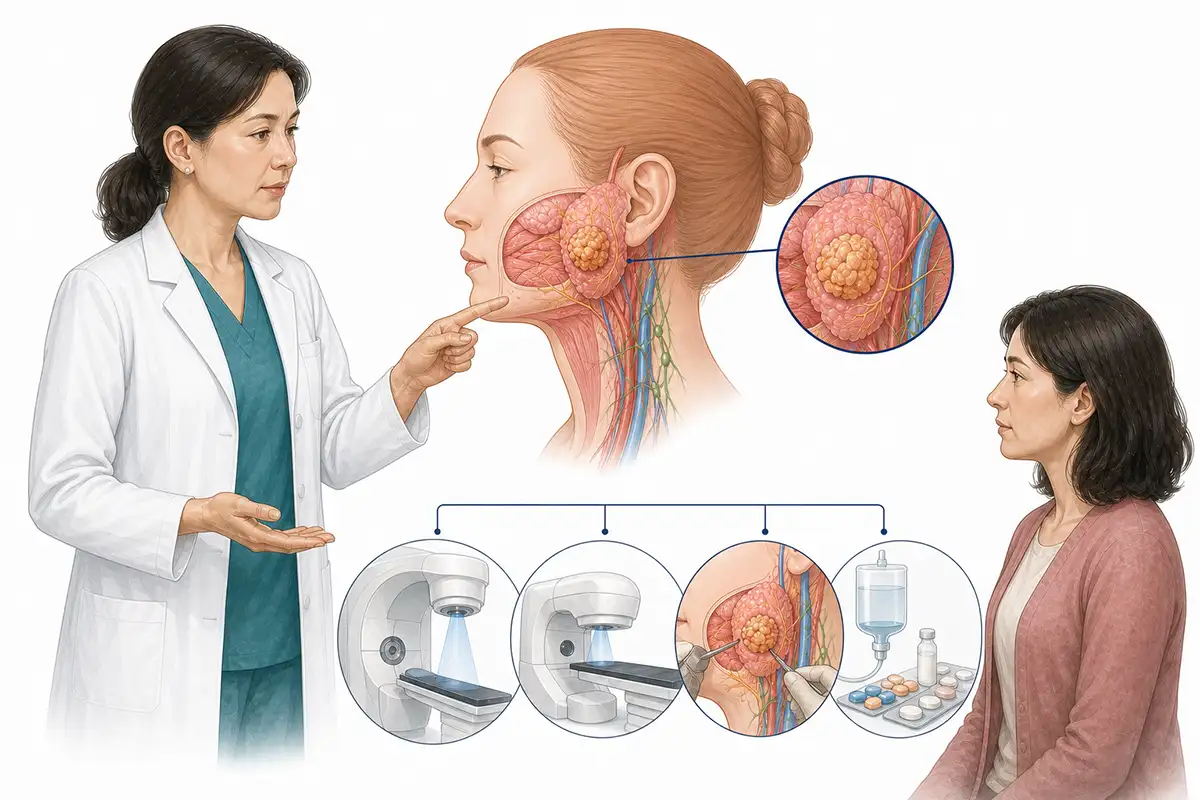
Parotid gland cancer treatment methods
1.M6 CyberKnife treatment
Using real-time imaging verification and focused radiation from multiple angles, this approach is suitable for MDT-selected residual perineural lesions at the skull base, small recurrences, or oligometastases.
Treatment advantages:
①Suitable for localized recurrence: Focused irradiation of small residual or recurrent lesions.
②Protects skull base structures: Reduces doses to the brainstem, temporal lobes, and cochlea.
③Preserves facial function: Minimizes effects on the facial nerve and swallowing structures.
④Limited scope of use: Cannot replace standard surgery for resectable primary parotid gland cancer.
2.VitalBeam precision radiotherapy
Image-guided and intensity-modulated radiotherapy treats the parotid bed, pathways of perineural spread, and high-risk neck regions, suitable for high-risk postoperative, unresectable, or locally recurrent disease.
Treatment advantages:
①Covers nerve pathways: Includes the course of the facial nerve and skull base passages.
②Protects contralateral salivary glands: Reduces dry mouth and effects on oral function.
③Reduces ear doses: Protects the cochlea and adjacent temporal lobe.
④Adapts to postoperative risk: Target volumes are designed according to margins, nerve invasion, and lymph node status.
3.Parotid tumor resection, neck dissection, and facial nerve reconstruction
Surgery is the main treatment for most resectable parotid gland cancers. The procedure is determined by tumor extent, cervical lymph nodes, and facial nerve involvement.
4.Chemotherapy
Meticulous surgical techniques preserve facial nerve function, maximizing normal facial expression while removing the tumor.
5.Targeted therapy
Formulate an individualized comprehensive treatment plan—combining surgery, chemoradiotherapy, and other modalities based on the patient's specific condition—to enhance therapeutic efficacy.
6.Immunotherapy
Chemotherapy before surgery shrinks the tumor, creating more favorable conditions for subsequent resection and improving its success rate.
Follow-up care after treatment
Maintain oral cleanliness and facial hygiene, eat a balanced and nutritious diet, attend regular follow-up appointments as instructed, and actively cooperate with subsequent treatment.
Post-treatment examinations
Regular parotid ultrasound, tumor marker testing, and follow-up imaging are needed to detect abnormal changes promptly.
Conclusion
Parotid gland cancer is a serious disease. Early detection, diagnosis, and intervention are central to treatment. An appropriate treatment plan and continued follow-up help improve quality of life and prolong survival.


