


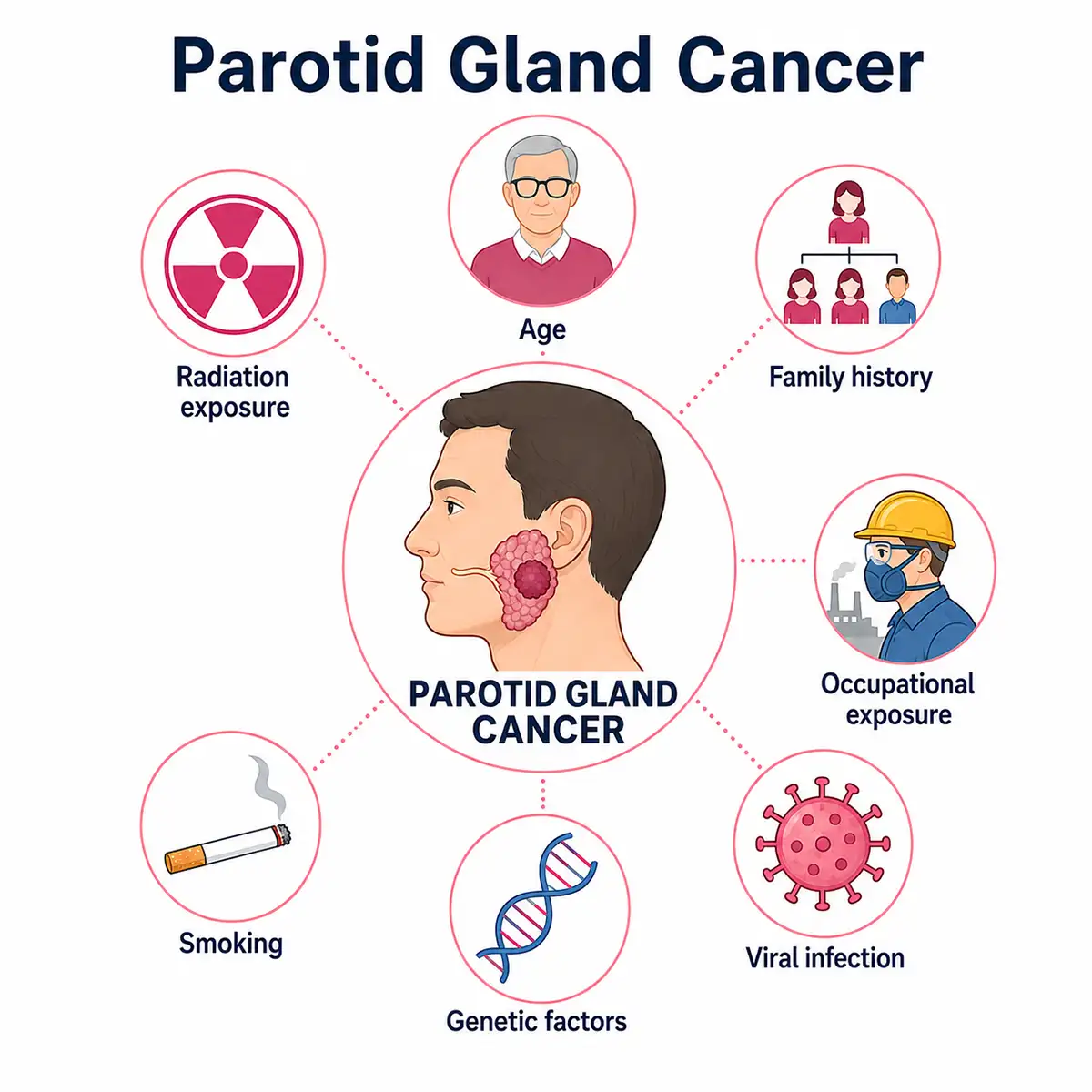
1. Ionizing radiation
Head and neck radiotherapy or prolonged exposure to radioactive environments increases parotid gland cancer risk, especially radiotherapy during childhood.
2. Occupational exposure
Workers with prolonged exposure to nickel-chromium alloys, wood dust, and rubber products have increased risk. Inadequate occupational protection is an important causal factor.
3. Smoking factor
Smoking has some association with parotid gland cancer. Tobacco carcinogens can be absorbed through the oral mucosa and affect salivary gland tissue.
4. Viral infection
Epstein-Barr virus and human papillomavirus infections may be associated with some parotid gland cancers, as viruses can induce malignant cell transformation.
5. Benign lesions
Long-standing benign parotid tumors such as pleomorphic adenomas may become malignant. Recurrent parotitis may also increase cancer risk.
6. Genetic factors
Certain hereditary syndromes, such as Lynch syndrome, increase parotid gland cancer risk. A family history of salivary gland tumors raises the risk.
7. Age and gender
Parotid gland cancer is more common in middle-aged and older people, with incidence increasing with age. Men are affected slightly more often than women, but the difference is less pronounced than in laryngeal cancer.
Conclusion
Parotid gland cancer results from the combined effects of ionizing radiation, occupational exposure, and other factors and can cause serious harm by invading the facial nerve and causing facial paralysis. Avoiding radiation exposure, using occupational protection, and regular examinations for early detection and timely intervention are essential.


