


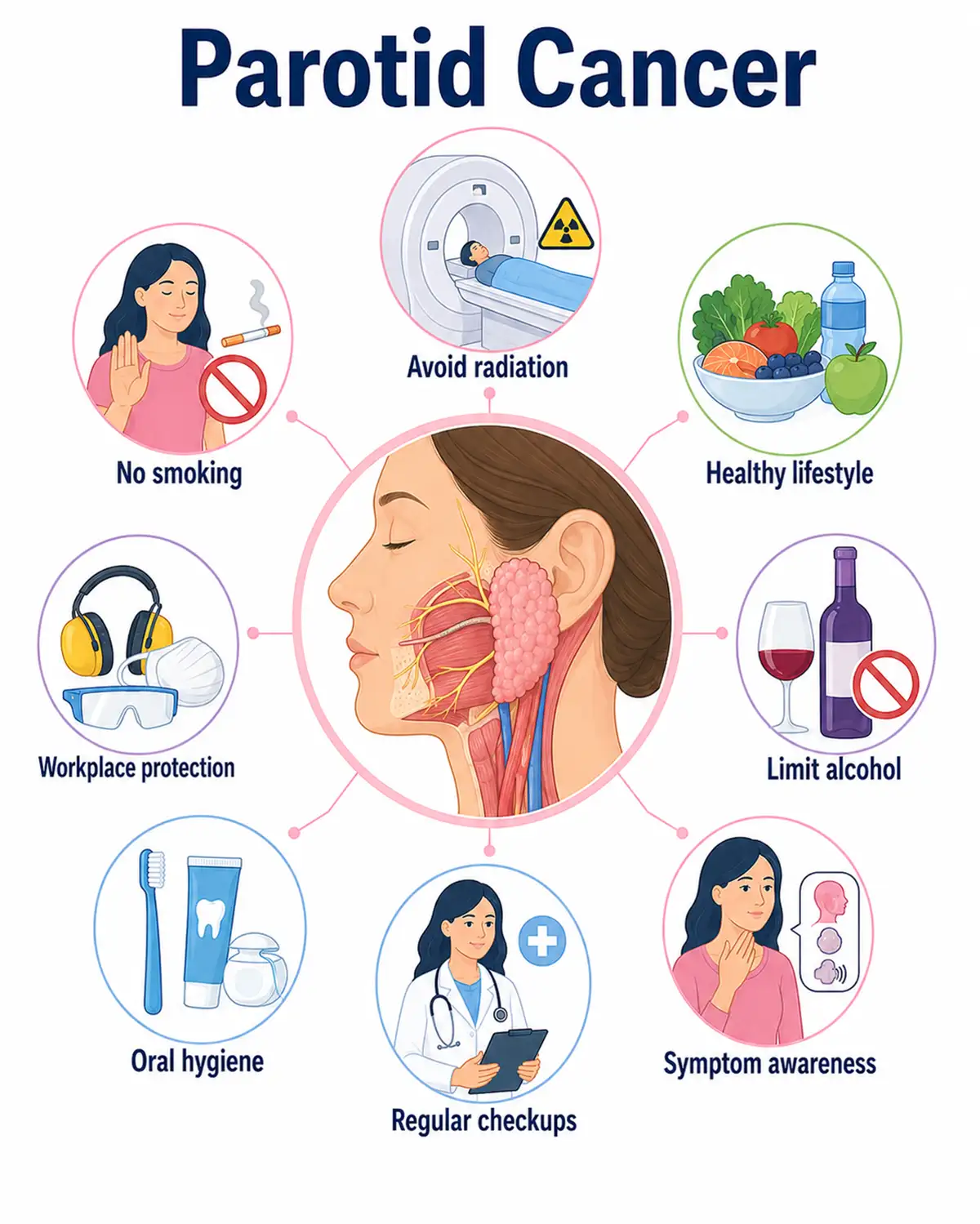
1. Avoidance of radiation
Minimize unnecessary radiological examinations of the head and neck. Radiotherapy during childhood should be avoided to reduce parotid gland cancer risk.
2. Occupational protection
Workers in wood processing, leather manufacturing, and rubber industries should use occupational protection and wear masks to reduce inhalation of harmful dust.
3. Smoking cessation and alcohol restriction
Smoking and alcohol consumption increase parotid gland cancer risk. Tobacco carcinogens can be absorbed through the oral mucosa and affect salivary gland tissue.
4. Pay attention to lumps
Seek prompt care for a painless lump in the parotid region. Recent growth, hardening, or facial paralysis symptoms warrant high suspicion of malignancy.
5. Oral hygiene
Maintain good oral hygiene and actively treat salivary stones and chronic parotitis to reduce prolonged inflammatory irritation of the gland.
6. Avoid pollution
Reduce exposure to nickel-chromium alloys, organic solvents, and volatile chemicals, which can damage salivary gland tissue and increase cancer risk.
7. Regular physical examinations
People with parotid lumps or long-standing chronic parotitis should have regular ultrasound examinations and, when necessary, fine-needle aspiration biopsy to establish the diagnosis.
Conclusion
Although rare, parotid gland cancer can invade the facial nerve and cause serious facial paralysis. Avoiding radiation exposure, using occupational protection, and monitoring parotid lump changes for early detection and timely intervention are essential.


