


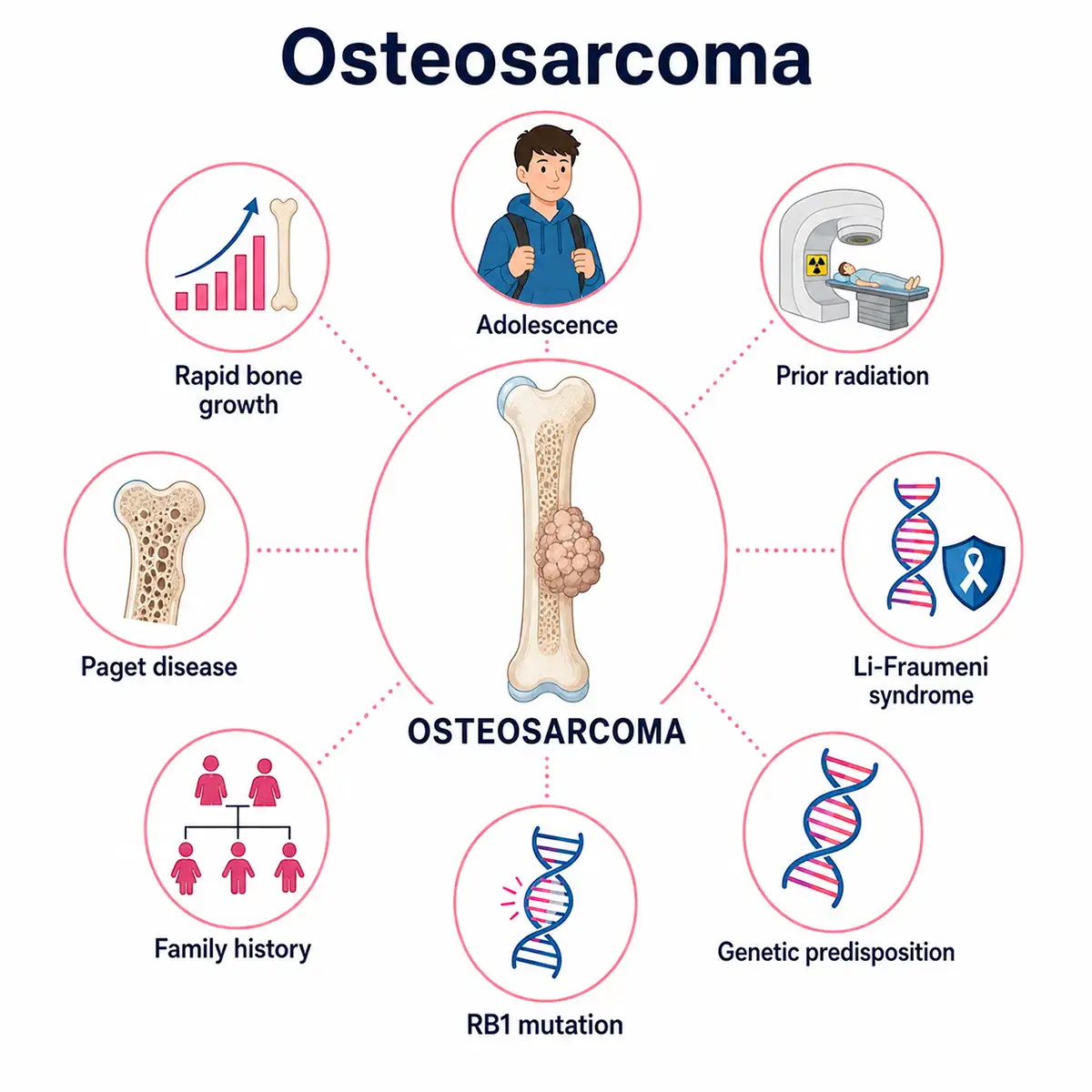
1. Genetic factors
Mutations in the RB1 tumor suppressor gene and abnormalities in the TP53 gene are closely associated with the development of osteosarcoma; patients with Li-Fraumeni syndrome are at significantly increased risk.
2. Radiation exposure
A history of radiotherapy is a significant risk factor for osteosarcoma; the latency period between radiotherapy and the development of osteosarcoma is typically ten to fifteen years or longer.
3. Paget's disease
Patients with Paget's disease of bone have a significantly increased risk of developing secondary osteosarcoma; this condition is more common in the elderly and carries a relatively poor prognosis.
4. Rapid growth
Osteosarcoma frequently occurs during the rapid growth phase of adolescence, suggesting that the rate of skeletal growth and changes in hormone levels may play a role in tumor development.
5. Genetic syndromes
Hereditary disorders such as Rothmund-Thomson syndrome and Werner syndrome can increase the risk of developing osteosarcoma.
6. History of tumors
Patients with retinoblastoma face a significantly increased risk of developing osteosarcoma following radiotherapy, particularly those with *RB1* gene mutations.
7. Age factors
Osteosarcoma is frequently seen in adolescents aged 10–25 and the elderly over 60, exhibiting a bimodal age distribution pattern.
Conclusion
Osteosarcoma is caused by a combination of factors, including genetic mutations and radiation exposure;it is the most common malignant bone tumor in adolescents and poses a serious health risk. Individuals with genetic syndromes should undergo regular screening, as early detection and timely intervention are crucial.


