


Global overview: Nasopharyngeal cancer is rare in most regions but occurs more frequently in Southeast Asia, North Africa, the Middle East, and some Arctic populations, showing strong geographic and population clustering.
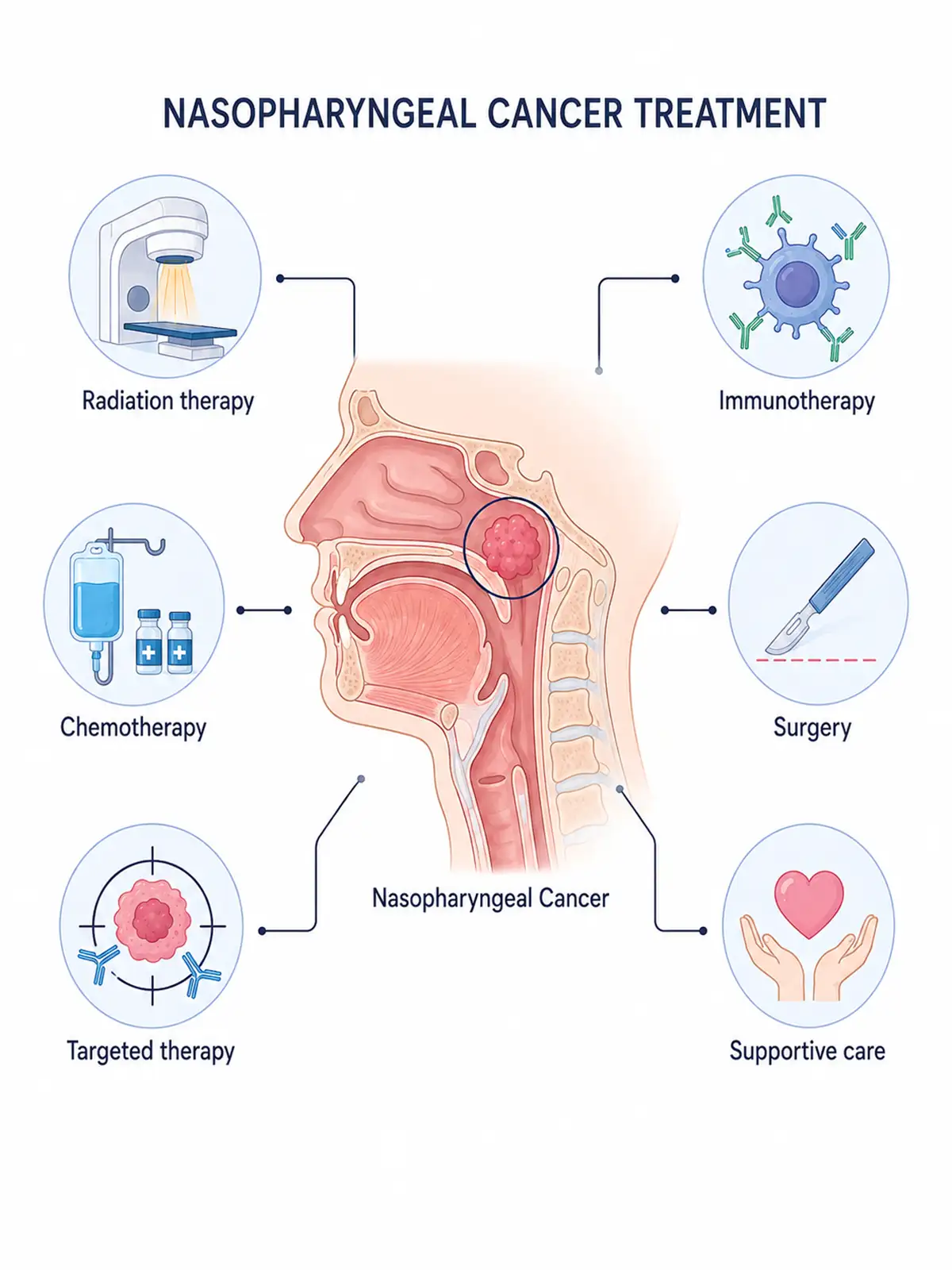
Nasopharyngeal Carcinoma Staging and Treatment
Early treatment (involving localized tumors and tumor shrinkage with good outcomes)
utilizing radiotherapy combined with adjuvant chemotherapy—can effectively control tumor progression, resulting in a relatively favorable prognosis for patients.
Intermediate-stage treatment (addressing local spread, inhibiting growth, and delaying progression)
employs a comprehensive approach—combining chemoradiotherapy with targeted therapy—to control further tumor spread and slow the rate of disease deterioration.
Treatment for advanced disease (distant metastasis; aimed at symptom relief and survival prolongation)
primarily employs systemic therapies such as chemoradiotherapy, targeted therapy, and others to alleviate clinical symptoms and extend patient survival as much as possible.
Why choose Fosun Health for nasopharyngeal carcinoma treatment
Leveraging its hospitals' platforms—including M6 CyberKnife, VitalBeam, and comprehensive head and neck tumor treatment capabilities—Fosun Health facilitates multidisciplinary consultations involving experts in ENT/head and neck surgery, radiotherapy, radiology, pathology, and medical oncology.The team formulates treatment plans involving precision radiotherapy, chemotherapy, or immunotherapy based on tumor staging, MRI or PET/CT findings, EBV-related markers, and prior treatment history.
The nasopharynx is located in close proximity to the brainstem, visual pathways, temporal lobes, cochleae, and salivary glands;precise dose planning helps minimize radiation exposure to these normal tissues, thereby reducing the risk of side effects such as dry mouth, hearing loss, swallowing difficulties, and neurological complications.Fosun Health also offers oral care, hearing assessments, nutritional support, swallowing rehabilitation, and long-term follow-up services.
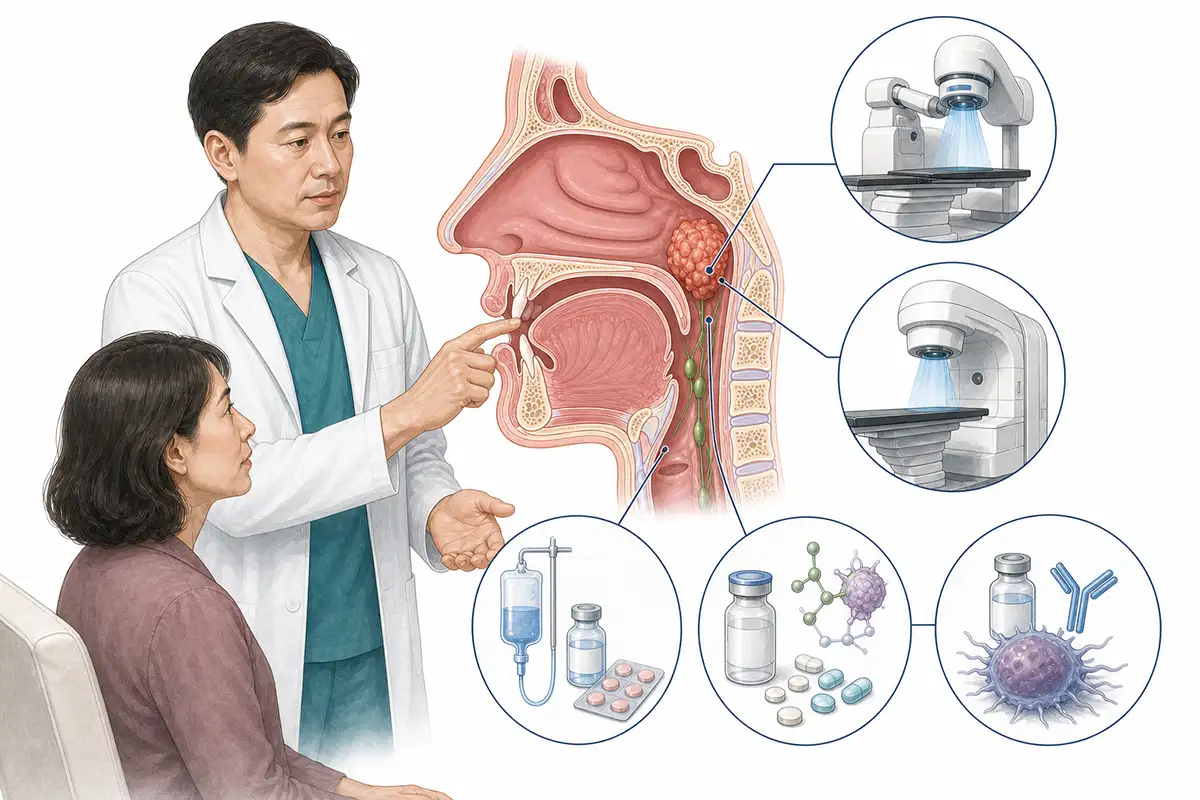
Nasopharyngeal Carcinoma Treatment Methods
1.M6 CyberKnife treatment
Uses a robotic arm and multi-angle focused radiation; suitable for small-volume local residual disease or recurrence in the nasopharynx, or localized skull base lesions, following MDT assessment.
Treatment advantages:
① Suitable for complex anatomical sites: Enables irradiation of small, irregular lesions in the nasopharynx and skull base.
② Protect neural structures: Reduce radiation dose to the brainstem, visual pathways, temporal lobe, and cochlea.
③ Shortened retreatment course: Hypofractionated irradiation can be used for eligible patients.
④ Strict risk control: Prior to re-irradiation, previous radiation doses and risks involving major blood vessels must be verified.
2.VitalBeam precision radiotherapy
Uses image-guided intensity-modulated radiotherapy (IMRT) to target the primary nasopharyngeal lesion and bilateral cervical lymph node regions; serves as the primary local treatment modality for non-metastatic nasopharyngeal carcinoma.
Treatment advantages:
① Coverage of complex target areas: Encompassing the nasopharynx, parapharyngeal space, skull base, and cervical lymph nodes.
② Protection of critical organs: Reduces radiation dose to the brainstem, spinal cord, visual pathways, temporal lobes, and cochlea.
③ Preserves salivary function: Reduces unnecessary radiation exposure to the parotid glands and oral cavity.
④ Facilitates concurrent therapy: Can be integrated with induction chemotherapy and platinum-based concurrent chemoradiotherapy.
3. Salvage endoscopic or neck surgery
Suitable for strictly selected patients with local recurrence, residual lesions, or isolated cervical lymph node recurrence.
4.Chemotherapy
Systemic elimination of potential cancer cells using anti-cancer drugs; often combined with radiotherapy to enhance efficacy and control distant metastasis; achieves therapeutic goals.
5.Neoadjuvant therapy
Using chemotherapy drugs to shrink the tumor before radiotherapy creates favorable conditions for the subsequent radiation, significantly improving local control rates and therapeutic efficacy.
6.Targeted therapy
Precision targeting of specific molecular targets such as EGFR offers good efficacy and relatively mild side effects, making it suitable for patients with locally advanced disease.
7.Immunotherapy
Activates the body's immune system to recognize and attack cancer cells, offering a new treatment option for patients with recurrent or metastatic nasopharyngeal carcinoma.
8.Seed implantation:
Indicated for nasopharyngeal carcinoma patients assessed by a multidisciplinary team (MDT) as having local recurrence and clearly defined lesion boundaries, and for whom prior external beam radiotherapy is limited; continuous local irradiation can be administered under image guidance.
Post-treatment care
Maintain nasal and oral hygiene and a balanced, nutritious diet; attend scheduled follow-ups and actively cooperate with further treatment as advised.
Post-treatment examinations
Regular nasopharyngoscopy, EB virus (EBV) tumor marker testing, and follow-up imaging are required after treatment to detect abnormal changes in a timely manner.
Conclusion
Nasopharyngeal carcinoma poses a serious health threat; successful treatment hinges on early detection, diagnosis, and intervention. Selecting an appropriate treatment plan and adhering to follow-up schedules help improve quality of life and prolong survival.


