


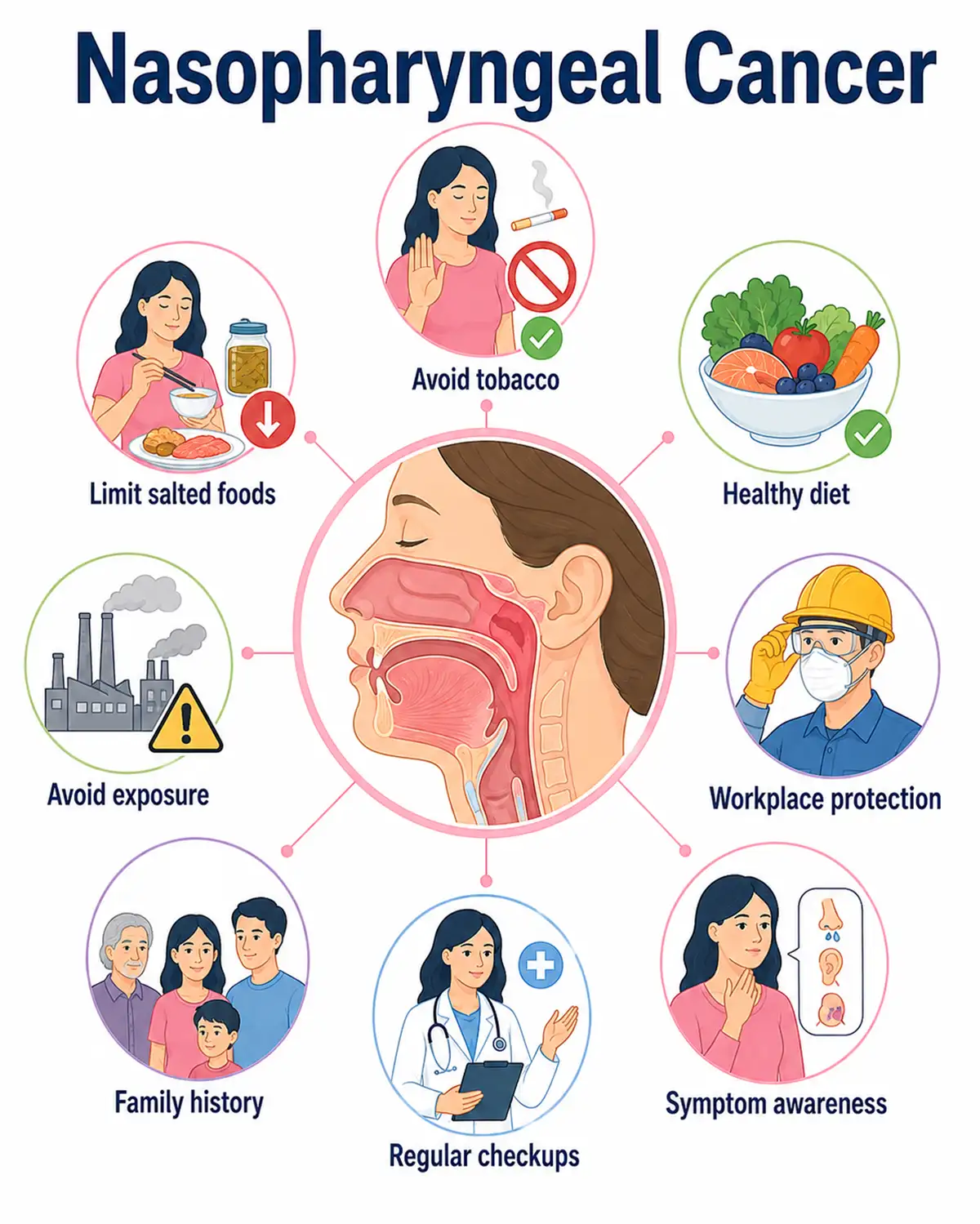
1. Eat less salted fish
Reduce intake of preserved foods such as salted fish and cured meats. Their high nitrite content can be converted in the body into carcinogenic nitrosamines, increasing risk.
2. Smoking cessation and alcohol restriction
Smoking and heavy drinking increase nasopharyngeal cancer risk. Carcinogens in tobacco and alcohol can directly irritate the nasopharyngeal mucosa and promote malignant transformation.
3. Avoid pollution
Reduce exposure to harmful substances such as formaldehyde, wood dust, nickel, and chromium. Thoroughly ventilate newly renovated homes before moving in to reduce chemical carcinogen exposure.
4. Oral hygiene
Maintain good oral hygiene and actively treat chronic rhinitis and sinusitis to reduce prolonged inflammatory irritation of the nasopharynx and lower cancer risk.
5. Epstein-Barr virus monitoring
People in high-incidence areas should regularly test Epstein-Barr virus antibodies and DNA load. Persistent infection is an important cause of nasopharyngeal cancer and warrants vigilance.
6. Genetic counseling
People with a family history of nasopharyngeal cancer should receive genetic counseling and regular screening. The disease shows familial clustering, so high-risk groups need closer monitoring.
7. Improve physical fitness
A regular daily routine and moderate exercise help strengthen immunity, improve the body's ability to clear Epstein-Barr virus, and reduce the likelihood of persistent infection.
Conclusion
Subtle early symptoms of nasopharyngeal cancer, such as blood-stained postnasal secretions and neck lumps, are easily overlooked and can have serious consequences. Reducing preserved foods, quitting smoking, limiting alcohol, and regular Epstein-Barr virus testing are essential for early detection and timely intervention.


