


Nasopharyngeal cancer prevalence worldwide
Nasopharyngeal cancer is globally uncommon but more frequent in parts of Southeast Asia and North Africa. Incidence is about two to three times higher in men and is most often seen in middle age. Risk is associated with Epstein-Barr virus infection, familial susceptibility, tobacco, and preserved foods.
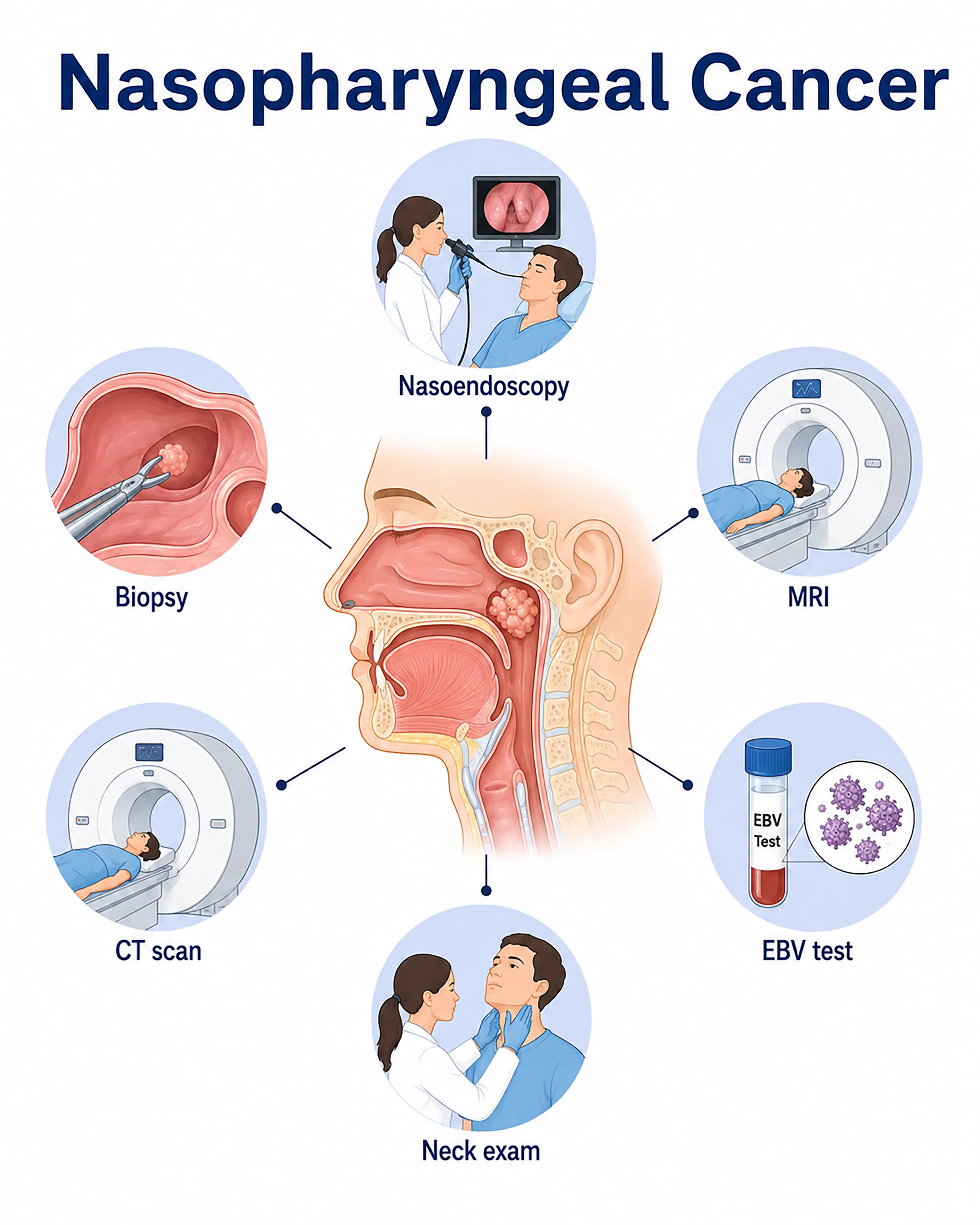
Nasopharyngeal cancer diagnosis by stage
1.Early-stage nasopharyngeal cancer diagnosis
The tumor is confined to the nasopharyngeal mucosa and symptoms are nonspecific. Nasopharyngoscopy may reveal raised, rough, or ulcerated mucosa on the roof, posterior wall, or lateral wall of the nasopharynx. Biopsy tissue is submitted for pathological confirmation.
2.Intermediate-stage nasopharyngeal cancer diagnosis
The tumor invades surrounding structures such as the skull base, nasal cavity, or oropharynx. MRI shows tumor extent and skull base bone destruction, Epstein-Barr virus DNA copy numbers rise, and enlarged cervical lymph nodes require needle biopsy.
3.Advanced-stage nasopharyngeal cancer diagnosis
The tumor extensively invades intracranial structures or spreads to distant sites. Whole-body PET-CT assesses lung, bone, and liver metastases. Repeated nasopharyngeal biopsies ensure pathological confirmation, with typing to guide chemoradiotherapy.
Without timely diagnosis, nasopharyngeal cancer will invade the skull base and intracranial structures. Cervical lymph node metastasis rates exceed 70%, distant metastasis risk increases, and treatment outcomes and survival decline significantly.
When to Seek Medical Attention
Early signs of nasopharyngeal cancer include blood-stained postnasal secretions, unilateral nasal obstruction, a painless neck lump, and tinnitus with hearing loss. Consult a doctor through "Chat with a Doctor" for early detection. During an online consultation, the doctor will ask about your symptoms and family history and guide you toward nasopharyngoscopy.
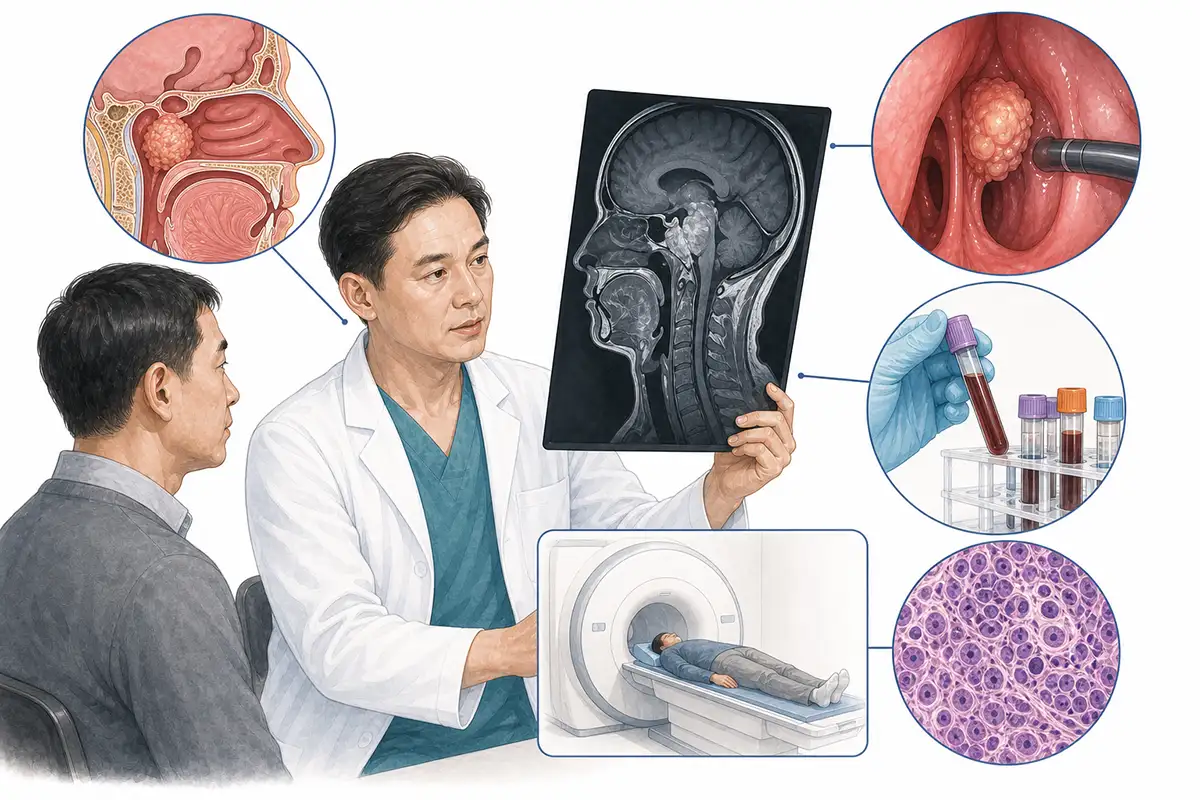
Basis for nasopharyngeal cancer diagnosis
1.Nasopharyngoscopy
Direct observation of nasopharyngeal mucosal changes using indirect or electronic nasopharyngoscopy can identify raised lesions, ulcers, or cauliflower-like masses, making it an important initial screening method.
2.Histopathological biopsy
Suspicious tissue is sampled with forceps under nasopharyngoscopic guidance for pathological examination, the gold standard for diagnosing nasopharyngeal cancer. Undifferentiated nonkeratinizing carcinoma is the most common pathological type.
3.Epstein-Barr virus serology
Serum Epstein-Barr virus VCA-IgA and EA-IgA antibody titers are measured. Positive results suggest Epstein-Barr virus infection and are important reference indicators for screening and supporting diagnosis of nasopharyngeal cancer.
4.Epstein-Barr virus DNA testing
Measuring circulating cell-free Epstein-Barr virus DNA copies in plasma can support diagnosis, monitor treatment response, and predict recurrence. It is currently an important liquid biopsy marker.
5.Nasopharyngeal MRI
MRI is the preferred imaging method for assessing local invasion of nasopharyngeal cancer, clearly showing the tumor's relationship to the parapharyngeal space, skull base, and intracranial structures.
6.Nasopharyngeal CT scan
Contrast-enhanced CT assesses skull base bone destruction and the extent of nasal cavity and paranasal sinus invasion. It is superior to MRI for showing destruction of bony structures.
7.Neck ultrasound
It assesses cervical lymph node metastasis, guides lymph node needle biopsy, and monitors changes in cervical lymph node size.
8.Whole-body PET-CT assessment
Whole-body PET-CT assesses distant metastasis and detects small metastatic lesions that conventional imaging may miss, enabling precise staging.
9.Nasal endoscopy
Nasal endoscopy provides a clearer view of lesions in the nasopharynx, nasal cavity, and paranasal sinuses, helping detect early lesions and guide precise biopsy.
Daily Self-Check
Residents of southern regions should promptly seek care for blood-stained postnasal secretions, painless neck lumps, unilateral nasal obstruction, or tinnitus. Regular Epstein-Barr virus serological screening is recommended for those with a family history of nasopharyngeal cancer.
Conclusion
Early diagnosis of nasopharyngeal cancer is crucial to improving cure rates. Epstein-Barr virus serological screening, nasopharyngoscopy, and pathological biopsy are the core diagnostic methods, while MRI is preferred for assessing local invasion.


