


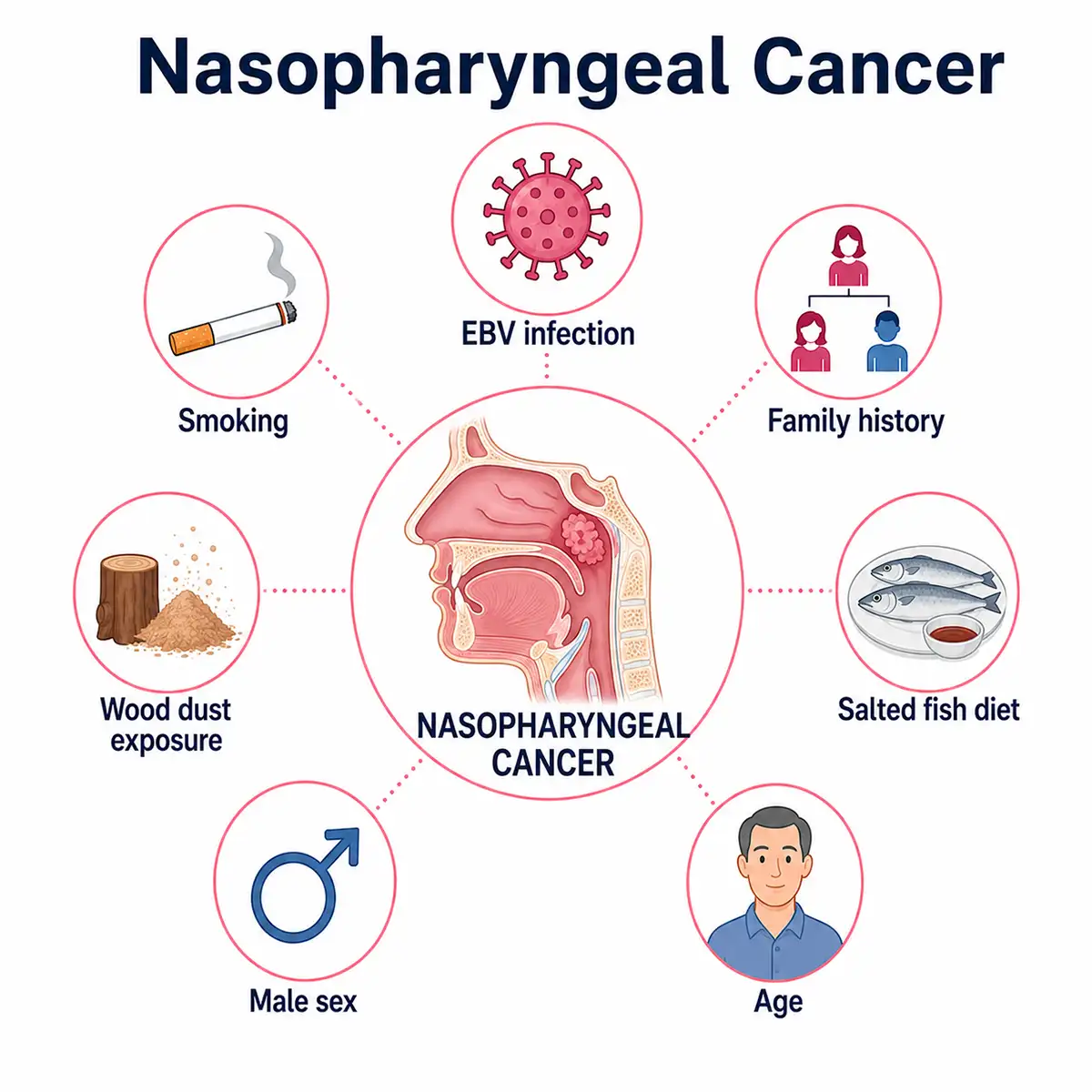
1. Epstein-Barr virus (EBV) infection
Epstein-Barr virus is an important cause of nasopharyngeal cancer. Viral DNA can be detected in most tumor tissues, and interactions between the virus and host genes promote malignant transformation.
2. Genetic factors
Nasopharyngeal cancer shows marked ethnic and familial clustering, with the highest incidence in southern Chinese populations. Genetic susceptibility plays an important role in its development.
3. Preserved foods
Long-term consumption of preserved foods such as salted fish and cured meats increases nasopharyngeal cancer risk. Their high nitrite content can be converted into carcinogenic nitrosamines.
4. Smoking and alcohol
Heavy drinking and tobacco use increase nasopharyngeal cancer risk. Alcohol promotes the absorption of carcinogens such as those in tobacco, producing a marked synergistic effect.
5. Environmental factors
Rice and water in high-incidence regions have relatively high nickel levels. Nickel can promote nitrosamine-induced nasopharyngeal cancer, and accumulated cooking fumes also have mutagenic effects.
6. Age and gender
Nasopharyngeal cancer is most common in middle-aged people aged 30 to 60. Its incidence is significantly higher in men than women, with a male-to-female ratio of about two or three to one.
7. Hereditary syndromes
Hereditary conditions such as Lynch syndrome increase nasopharyngeal cancer risk. Certain HLA genotypes are closely associated with cancer risk following Epstein-Barr virus infection.
Conclusion
Nasopharyngeal cancer results from the combined effects of Epstein-Barr virus infection, genetic susceptibility, and environmental factors. Its subtle early symptoms make it particularly harmful. People with a family history should undergo regular screening for early detection and timely intervention to improve prognosis.


