


Global prevalence
Myeloma is a common hematologic malignancy worldwide with a high incidence among the elderly; it currently remains incurable.
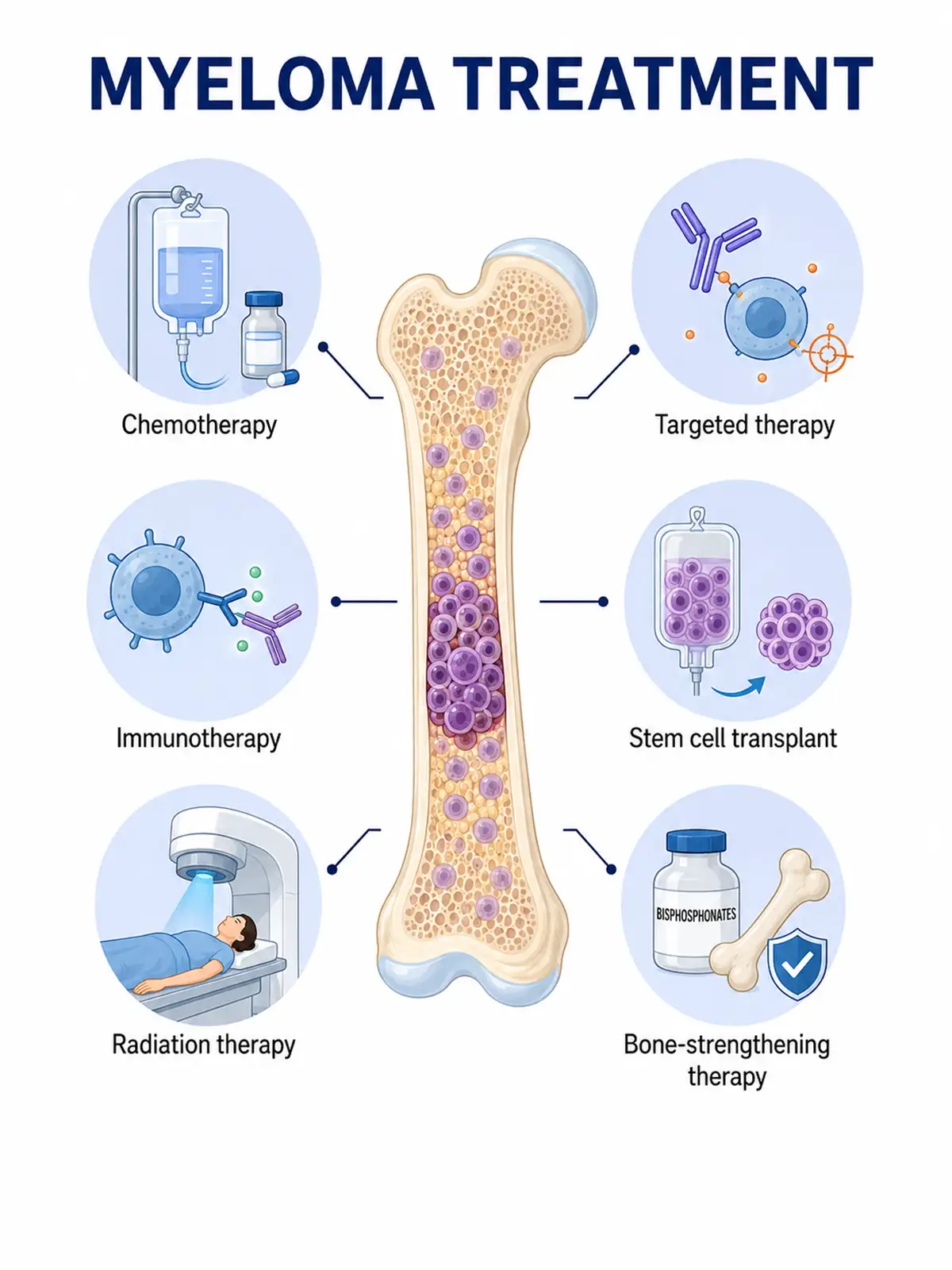
Treatment based on myeloma stage
Early treatment (involving localized tumors and controlled progression with good outcomes)
utilizing chemotherapy combined with targeted drug therapy—can effectively control tumor progression and slow the rate of disease advancement.
Intermediate-stage treatment (addressing disease progression, inhibiting spread, and delaying deterioration)
employs a comprehensive approach—combining multi-drug chemotherapy with immunotherapy—to control further disease progression and slow the rate of deterioration.
Advanced-stage treatment (addressing extensive involvement, alleviating symptoms, and prolonging survival)
primarily employs modalities such as chemotherapy, immunotherapy, and stem cell transplantation to alleviate clinical symptoms and maximize patient survival time.
Consequences of failing to receive timely treatment in the early stage: If standardized treatment is not administered promptly in the early stage, the tumor will continue to progress, causing severe bone destruction and renal failure; the optimal window for intervention will be missed, endangering the patient's life.
Why choose Fosun Health for myeloma treatment
Fosun Health’s myeloma diagnosis and treatment services are managed by a specialized hematologic oncology center; the team possesses extensive experience in chemotherapy, targeted therapy, immunotherapy, and hematopoietic stem cell transplantation.Professor Ye Gang, Chief Expert of Medical Oncology at Foshan Fosun Chancheng Hospital, brings 30 years of clinical experience from both the U.S. and China, with profound expertise particularly in the diagnosis and treatment of multiple myeloma.Leveraging a global medical network, patients can access state-of-the-art international treatments such as proteasome inhibitors, immunomodulatory agents, CD38 monoclonal antibodies, BCMA-targeted CAR-T cell therapy, bispecific antibodies, and autologous hematopoietic stem cell transplantation.
For complex cases such as relapsed/refractory myeloma, an MDT—comprising experts in hematology, medical oncology, transplantation, and radiology—collaborates to formulate the optimal treatment plan; a cross-border consultation mechanism enables patients to obtain second opinions from leading international hematology centers.
FKC389, an off-the-shelf (allogeneic) BCMA/CD19 dual-target CAR-T product developed by Fosun Kairui (a subsidiary of Fosun Pharma), has completed the first patient infusion and entered the clinical validation stage.Weilituomimab (GR1803), a BCMA×CD3 bispecific antibody co-developed by Yaoyou Pharmaceutical (a holding subsidiary of Fosun Pharma) and Zhixiang Jintai, has submitted a conditional marketing authorization application, which has been accepted for review.HLX15 (a biosimilar to daratumumab), a CD38 monoclonal antibody independently developed by Henlius, has been approved to initiate Phase I clinical trials for multiple myeloma.By integrating innovative approaches such as novel drug R&D and cell therapy, the company provides personalized, comprehensive diagnosis and treatment for myeloma patients at various stages of the disease.
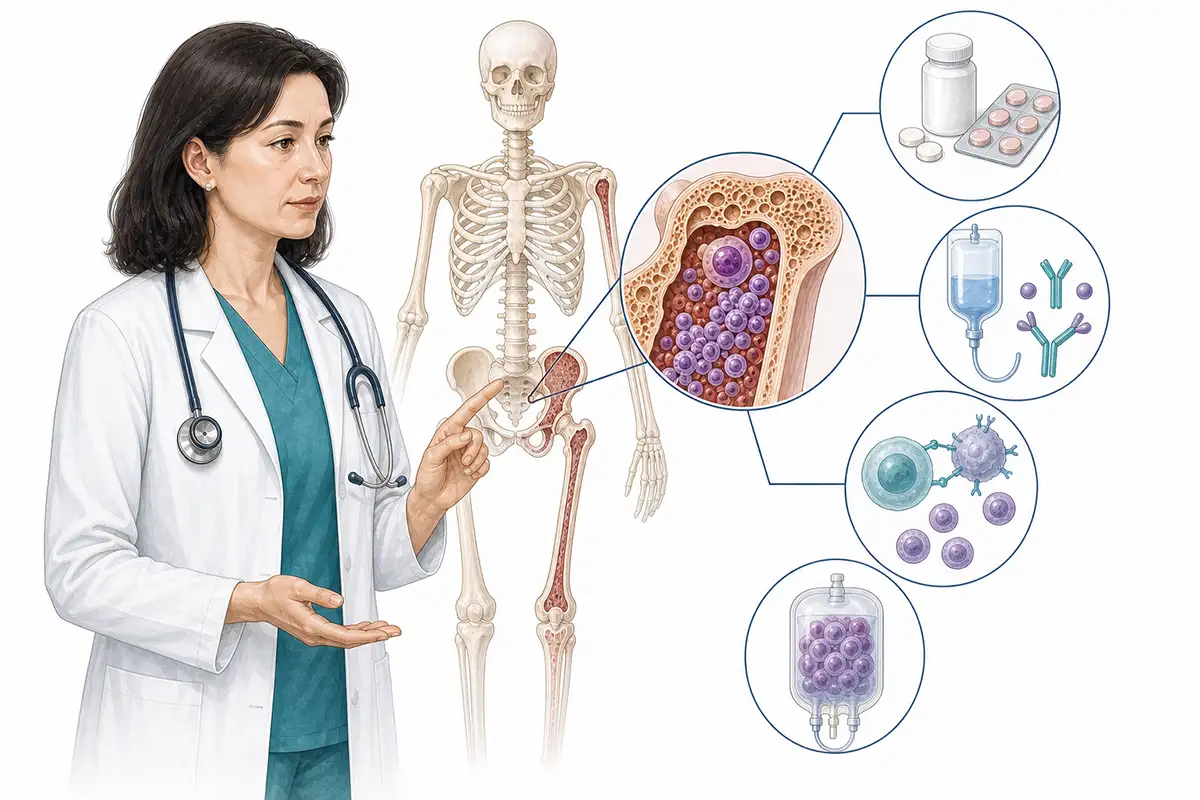
Myeloma Treatment Methods
1.Chemotherapy
For newly diagnosed myeloma patients requiring active treatment, combination induction therapy—based on agents such as proteasome inhibitors, immunomodulatory drugs, glucocorticoids, and monoclonal antibodies—may be selected based on disease stage, cytogenetic risk, renal function, and the patient's physical condition.
Treatment advantages:
① Reduce tumor burden: Decreases the number of myeloma cells through combination drug therapy.
② Rapid treatment response: Some patients may achieve significant disease remission during the induction phase.
③ Flexible regimen: Drug combinations can be adjusted based on renal function, age, and disease risk.
④ Preparation for transplantation: For transplant-eligible patients, induction therapy can achieve good disease control, creating favorable conditions for subsequent hematopoietic stem cell transplantation.
2.Autologous hematopoietic stem cell transplantation
For patients meeting the criteria for transplantation, hematopoietic stem cell collection and autologous hematopoietic stem cell transplantation can generally be performed following induction therapy.
Treatment advantages:
① Intensified therapy: High-dose treatment to further reduce the myeloma cell burden in the body.
② Consolidation of remission: Serves as an important consolidation therapy following induction therapy.
③ Enhance depth of treatment: Some patients may achieve a deeper level of disease remission.
④ Personalized selection: Assess indications for transplantation based on age, organ function, disease risk, and response to induction therapy.
3. CyberKnife precision radiotherapy
For selected patients with localized disease presenting with significant symptoms or local lesions in the spine or other bones, CyberKnife precision radiotherapy may be considered based on lesion location and size and the status of surrounding critical structures.
Treatment advantages:
① Precise irradiation: High-precision radiotherapy targeting specific, localized myeloma lesions.
② Local symptom relief: Provides local therapeutic effects for lesions causing bone pain, local compression, or neurological symptoms.
③ Applicable to special anatomical sites: Can serve as a local treatment option for lesions in areas where surgery carries high risk, such as parts of the spine.
④ Protects surrounding tissues: Optimizes dose distribution based on the spatial relationship between the lesion and critical structures such as the spinal cord and nerves.
4.CAR-T cell therapy
For selected patients with relapsed or refractory myeloma who meet the relevant indications, CAR-T cell therapy targeting BCMA or other targets may be evaluated.
Treatment advantages:
① Targeted recognition: Genetically modified T cells recognize specific antigens on the surface of myeloma cells.
② Suitable for relapsed/refractory cases: Offers new treatment options for patients whose disease has progressed after multiple lines of therapy.
③ Personalized cell therapy: Involves the collection, modification, and expansion of the patient's own T cells, followed by reinfusion.
④ Achievement of deep remission: Some patients may achieve deep disease remission.
5.Bispecific antibody therapy
For selected patients with relapsed or refractory myeloma, bispecific antibody therapy targeting BCMA, GPRC5D, or other targets may be selected based on prior treatment history and specific indications.
Treatment advantages:
① Immune targeting: Promotes T-cell recognition and attack on myeloma cells by simultaneously binding to tumor cell antigens and T cells.
② Ready-to-use drug therapy: Unlike CAR-T therapy, which requires cell collection and preparation, bispecific antibodies can be administered directly.
③ Applicable to relapsed/refractory disease: Can be used for some patients who have progressed despite prior multi-line therapies.
④ Diverse treatment options: Bispecific antibodies targeting different sites can be selected based on prior medication history and disease characteristics.
6.Bone-protective therapy
For patients with bone lesions, bone destruction, or risk of fracture, bone-modifying therapies such as bisphosphonates or RANKL inhibitors may be selected based on renal function and skeletal status, combined with necessary orthopedic and pain management.
7.Immunotherapy
Activates the body's immune system to recognize and attack cancer cells, offering a new treatment option for patients with relapsed or refractory myeloma.
8.Comprehensive therapy
Formulate an individualized comprehensive treatment plan—combining chemotherapy, targeted therapy, immunotherapy, and other modalities based on the patient's specific condition—to enhance therapeutic efficacy.
9.Supportive care
Approaches such as nutritional support, psychological counseling, and symptom management can comprehensively improve the patient's physical condition and quality of life.
Post-treatment care
Maintain a regular daily routine and a high-calcium diet; prevent falls and infections; attend scheduled follow-ups and actively cooperate with further treatment as advised.
Post-treatment examinations
Regular serum protein electrophoresis, bone marrow aspiration, and follow-up imaging are required after treatment to detect changes in the condition in a timely manner.
Conclusion
Myeloma poses a serious threat; the key to treatment lies in early detection, diagnosis, and intervention. Selecting an appropriate treatment plan and adhering to follow-up care are essential to controlling disease progression.


