


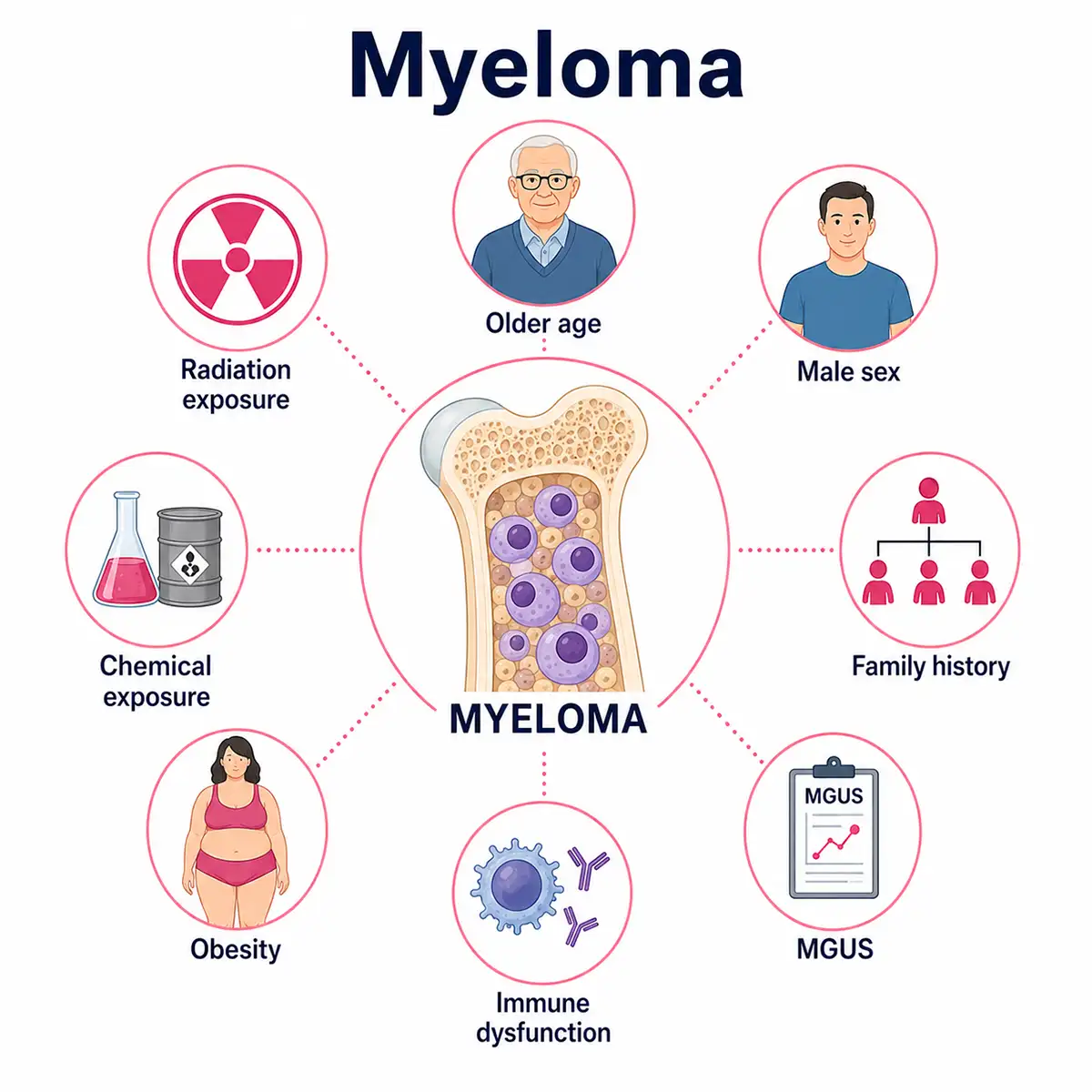
1. Genetic factors
Individuals with a history of multiple myeloma among first-degree relatives face a two- to four-fold increased risk of developing the disease; certain HLA genotypes are associated with its onset.
2. Occupational exposure
Agricultural and industrial workers with long-term exposure to petroleum products, pesticides, organic solvents, and heavy metals face an increased risk of developing the disease.
3. Obesity-related factors
Obesity, particularly abdominal obesity, is associated with an increased risk of multiple myeloma; the obesity-related inflammatory state may promote tumorigenesis.
4. Chronic inflammation
Long-term chronic inflammatory diseases, such as rheumatoid arthritis and inflammatory bowel disease, can increase the risk of multiple myeloma.
5. Radiation exposure
A history of radiotherapy or long-term exposure to low-dose radiation may increase the risk of developing myeloma.
6. Immune factors
Immune system dysfunction and chronic immune stimulation may be associated with the development and progression of myeloma, though the specific mechanisms remain unclear.
7. Age and gender
Multiple myeloma is most common in individuals over the age of 65; the incidence rate is higher in men than in women and increases with age.
Conclusion
Myeloma is caused by a combination of factors, including genetic predisposition, occupational exposure, and obesity;it can lead to serious complications such as bone destruction and renal failure.Avoiding occupational exposure, controlling weight, and undergoing regular health check-ups are crucial for early detection and timely intervention.


