


Myeloma (multiple myeloma) is a malignant tumor characterized by the clonal proliferation of plasma cells; it is most common in middle-aged and elderly individuals.Early symptoms lack specificity, but as the disease progresses, typical "CRAB" symptoms appear.
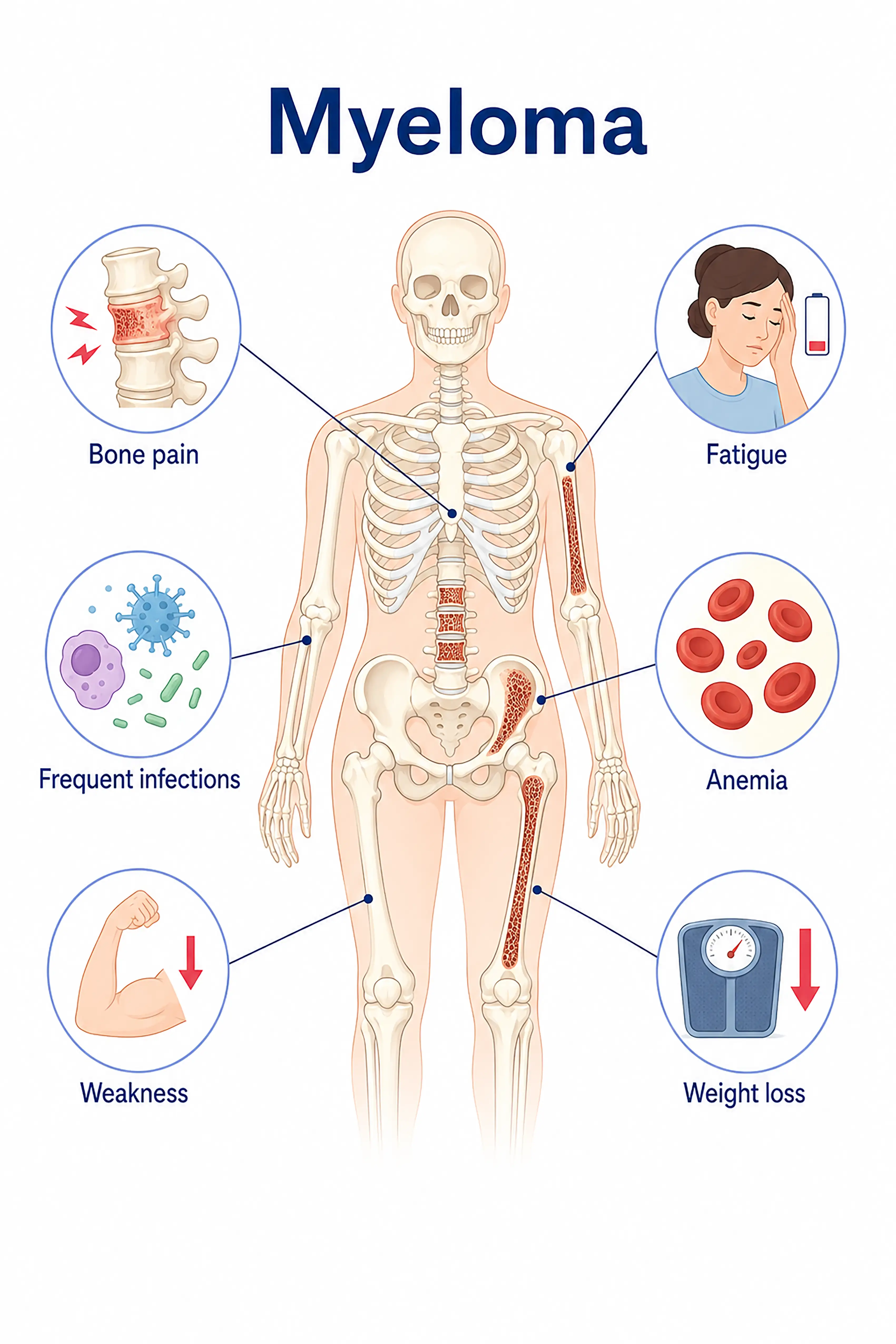
Global prevalence of myeloma
Multiple myeloma is most common in middle-aged and elderly individuals, with a median age of onset of 69 years. It has an overall incidence rate of approximately 2 per 100,000 people, making it the second most common hematologic malignancy.Clinical manifestations vary; as the disease progresses, "CRAB" symptoms may appear: elevated blood calcium (hypercalcemia), renal insufficiency, anemia, and bone disease.
Symptoms associated with myeloma stages
1.Early symptoms of myeloma
The tumor presents during an asymptomatic phase or with only mild anemia and proteinuria; symptoms are atypical, leading to a high risk of misdiagnosis as other diseases.Some patients present with back pain as the initial symptom.
2.Intermediate-stage symptoms of myeloma
Typical CRAB symptoms appear: skeletal damage leads to bone pain and pathological fractures; hypercalcemia causes nausea and constipation; renal impairment results in oliguria and edema; and anemia leads to fatigue and dizziness.
3.Symptoms of advanced myeloma
Extensive tumor infiltration leads to severe bone destruction, renal failure, recurrent infections (pneumonia and urinary tract infections), hyperviscosity syndrome, and systemic failure.
When to Seek Medical Attention
Early signs of myeloma include persistent bone pain, anemia and fatigue, abnormal renal function, and manifestations of hypercalcemia.Please consult a doctor via the "Chat with a Doctor" feature for early detection.During the online consultation, the doctor will ask about your symptoms and laboratory test results, and guide you through tests such as serum protein electrophoresis and bone marrow examination.
Staging of myeloma
Myeloma Stage 0
Cancer cells are confined to the bone marrow; this is an early stage, potentially presenting only with mild anemia or proteinuria, with no obvious symptoms.
Myeloma Stage I
Low tumor burden; mild bone pain and anemia; hemoglobin >100 g/L; normal serum calcium.
Myeloma Stage II
Moderate tumor burden; worsening bone pain;signs of anemia and hypercalcemia; mild renal impairment.
Myeloma Stage III
High tumor burden; accompanied by extensive bone destruction, severe anemia, hypercalcemia, and renal insufficiency.
Myeloma Stage IV
The tumor is associated with severe complications such as recurrent infections, renal failure, and extensive metastasis, leading to systemic physical decline.
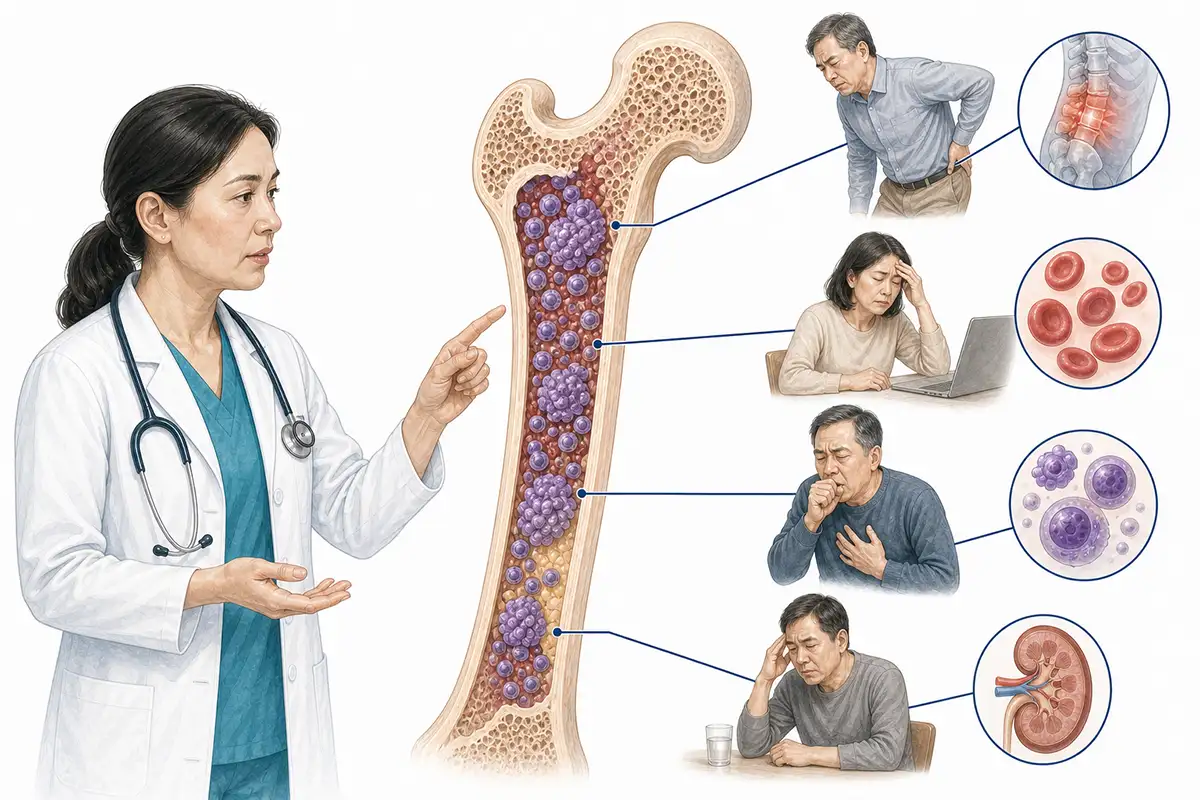
Detailed Symptoms of Myeloma
1.Bone pain and lower back pain
75% of patients experience bone pain; the lumbosacral region is the most common site, followed by the thoracic/dorsal region and the lower limbs.Severe pain following physical activity or a sprain suggests the possibility of a pathological fracture.
2.Anemia and fatigue
Approximately two-thirds of patients develop anemia due to the suppression of hematopoiesis caused by myeloma cell infiltration; symptoms include pallor, fatigue, dizziness, and tachycardia.
3.Renal function impairment
Approximately 50% of patients exhibit a decline in creatinine clearance; 20%–40% present with renal insufficiency at the time of diagnosis, manifesting as proteinuria and hematuria, with severe cases requiring dialysis.
4.Hypercalcemia
Approximately 30%–40% of patients develop hypercalcemia, manifesting as thirst, nausea, vomiting, constipation, confusion, and polyuria.
5.Recurrent infections
Inhibition of normal immunoglobulin production leads to reduced immunity, increasing susceptibility to bacterial pneumonia, urinary tract infections, and herpes zoster.
6.Pathological fracture
Bone destruction leads to fractures caused by minor external force; commonly affecting the spine and ribs, it can cause severe pain and deformity.
7.Bleeding tendency
Thrombocytopenia and platelet dysfunction lead to an increased tendency to bleed, manifesting as nosebleeds, bleeding gums, and cutaneous purpura.
8.Symptoms of hyperviscosity
High levels of M-protein lead to increased blood viscosity, causing dizziness, blurred vision, tinnitus, and Raynaud's phenomenon.
9.Neurological impairment present
Tumor compression or amyloidosis causes limb numbness, weakness, and pain; severe cases may present with symptoms of spinal cord compression.
Conclusion
Early diagnosis of multiple myeloma is challenging; a high level of vigilance is required when unexplained bone pain, anemia, or renal dysfunction occurs.Novel targeted therapies and immunotherapies have significantly improved patient prognosis.


