


Melanoma is a tumor arising from the malignant transformation of melanocytes; early symptoms are often subtle, with common manifestations including changes in pigmented moles, ulceration, and bleeding.
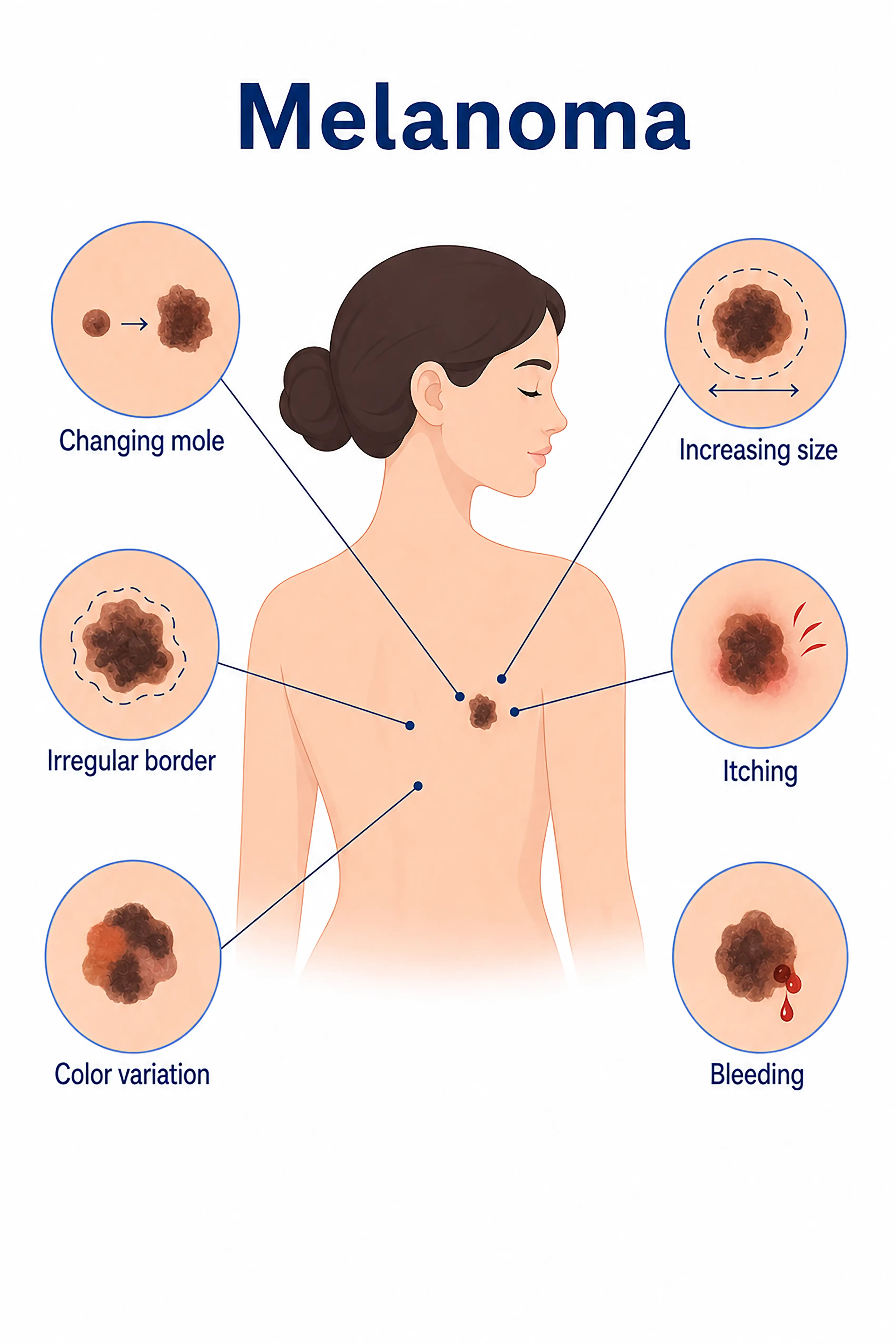
Melanoma prevalence across countries worldwide
The global incidence of melanoma is rising; rates are significantly higher in Caucasians than in people of color, and ultraviolet (UV) exposure is a major risk factor.
Symptoms associated with melanoma stages
1.Early symptoms of melanoma
Changes in the shape, color, or size of an existing pigmented nevus, or the appearance of a new pigmented skin lesion, without pain or itching.
2. Symptoms of intermediate-stage melanoma
The skin lesion enlarges and becomes raised, with irregular borders and uneven color; the surface may show ulceration, bleeding, and crusting, accompanied by itching.
3.Symptoms of advanced melanoma
The tumor extensively invades surrounding tissues and metastasizes to distant sites, including lymph nodes, lungs, liver, and brain, presenting with a large mass, multiple metastatic lesions, and severe systemic wasting.
When to Seek Medical Attention
Early signs of melanoma include changes in the shape of a pigmented mole, uneven color, irregular borders, and an increase in diameter.Please consult a doctor via the "Chat with a Doctor" feature for early detection.During the online consultation, the doctor will ask about changes in your mole and guide you through a dermoscopy examination.
Melanoma staging
Stage 0 melanoma
This staging system is not applicable to melanoma.Melanoma utilizes the TNM staging system, which stages the disease based on tumor thickness, ulceration status, lymph node status, and distant metastasis.
Stage I melanoma
Tumor thickness is less than 1 mm; presentation involves changes to a local pigmented nevus, without ulceration or metastasis.
Stage II melanoma
Tumor thickness is 1–4 mm; presentation includes local elevation and ulceration, potentially with ulceration but without metastasis.
Stage III melanoma
The tumor is associated with regional lymph node metastasis, presenting with lymphadenopathy and local satellite lesions.
Stage IV melanoma
Distant metastasis to the lungs, liver, bones, and brain occurs, resulting in multiple metastatic lesions and severe wasting.
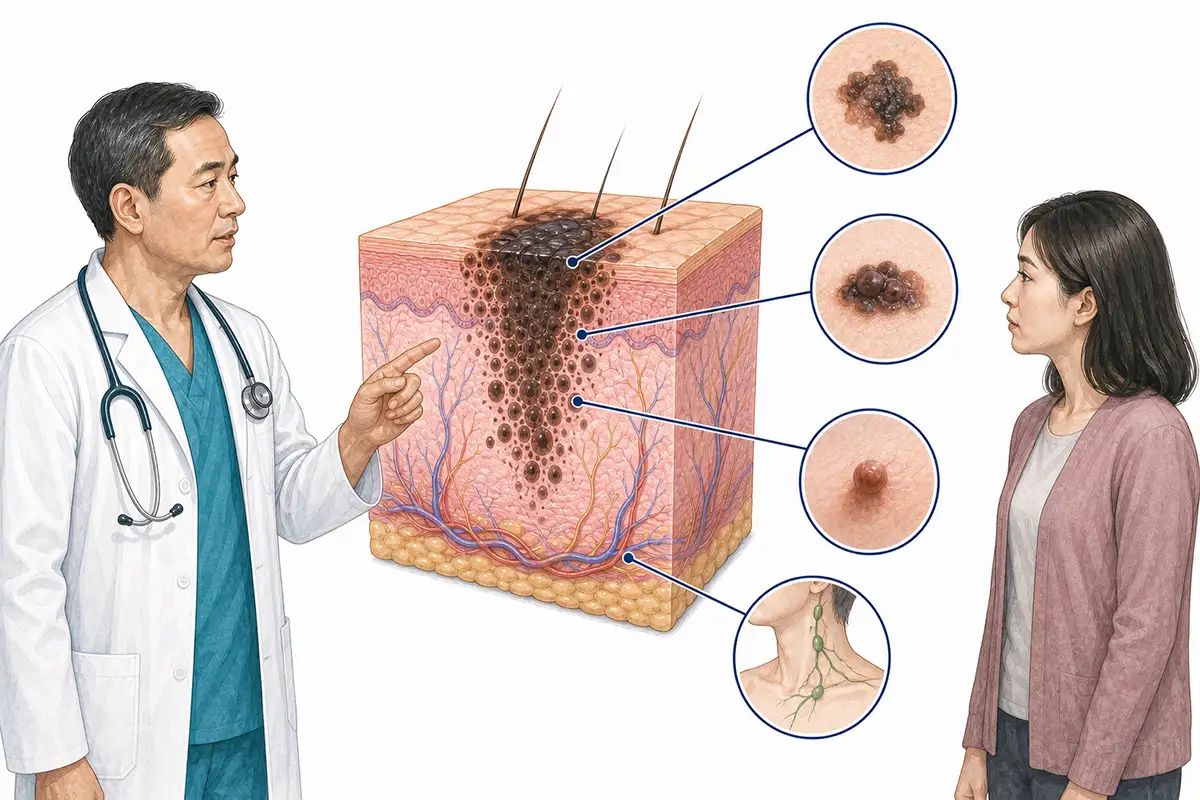
Detailed symptoms of melanoma
1.Changes in a mole
An existing pigmented nevus exhibits asymmetry, irregular borders, uneven color, and increased diameter.
2.Presence of superficial ulceration
The surface of the skin lesion shows ulceration, bleeding, and crusting, and fails to heal over a long period.
3.Itching and pain
The skin lesion causes itching, pain, or a burning sensation, distinguishing it from a benign mole.
4.Appearance of satellite lesions
The appearance of small pigmented nodules around the primary lesion indicates local tumor spread.
5.Lymph node enlargement
Regional lymph node metastasis results in enlarged, hard, and fixed nodules.
6.Distant metastasis
Lung metastases cause coughing and chest pain; liver metastases cause jaundice; and brain metastases cause headaches and neurological dysfunction.
7.Bleeding tendency
The tumor surface bleeds easily; bleeding persists after contact.
8.Rapid weight loss
In the advanced stage, significant weight loss occurs, accompanied by decreased appetite and generalized fatigue.
9.Multiple skin lesions
Some patients present with multiple cutaneous melanomas, suggesting a systemic disease.
Conclusion
The prognosis of melanoma is closely related to tumor thickness and stage; early complete excision yields good outcomes.Sun protection and skin self-examination aid in early detection.


