


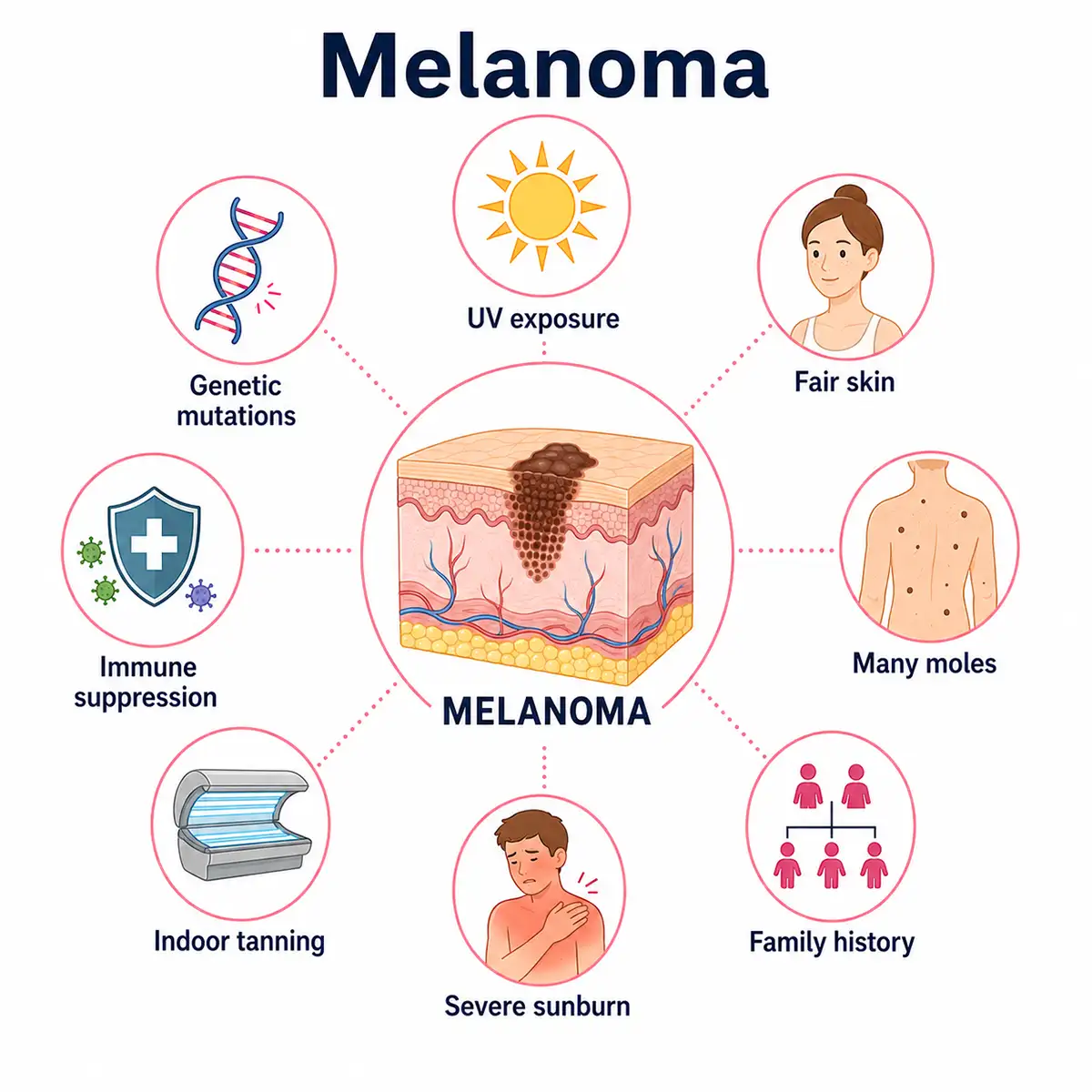
1. Ultraviolet (UV) exposure
Intermittent exposure to high-intensity ultraviolet (UV) radiation—particularly a history of sunburn—is a major risk factor for melanoma, as UVB radiation can damage the DNA of melanocytes.
2. Genetic factors
Carriers of *CDKN2A* gene mutations face a lifetime melanoma risk of up to 70%; familial melanoma exhibits a hereditary tendency.
3. Multiple nevi (moles)
The risk of developing melanoma is significantly increased in individuals with more than fifty atypical cutaneous nevi or the presence of dysplastic nevi.
4. Skin type
Individuals with fair skin who burn easily but do not tan well are at higher risk of developing melanoma, a susceptibility linked to insufficient protective effects from melanin.
5. Immunosuppression
Individuals using immunosuppressants after organ transplantation and those infected with HIV have twice the risk of developing melanoma compared to the general population.
6. History of melanoma
Individuals with a history of melanoma face an approximately tenfold increased risk of developing a new primary melanoma and require lifelong follow-up monitoring.
7. Age and gender
Melanoma is most common in middle-aged and older adults, though incidence among young people is increasing;the back (in men) and the legs (in women) are common sites of occurrence.
Conclusion
Melanoma is caused by a combination of factors, including UV exposure and genetics;it is highly malignant, prone to metastasis, and poses a severe health risk.Effective sun protection, regular skin self-examinations, and monitoring changes in moles are crucial for early detection and timely intervention.


