


1.Strict sun protection
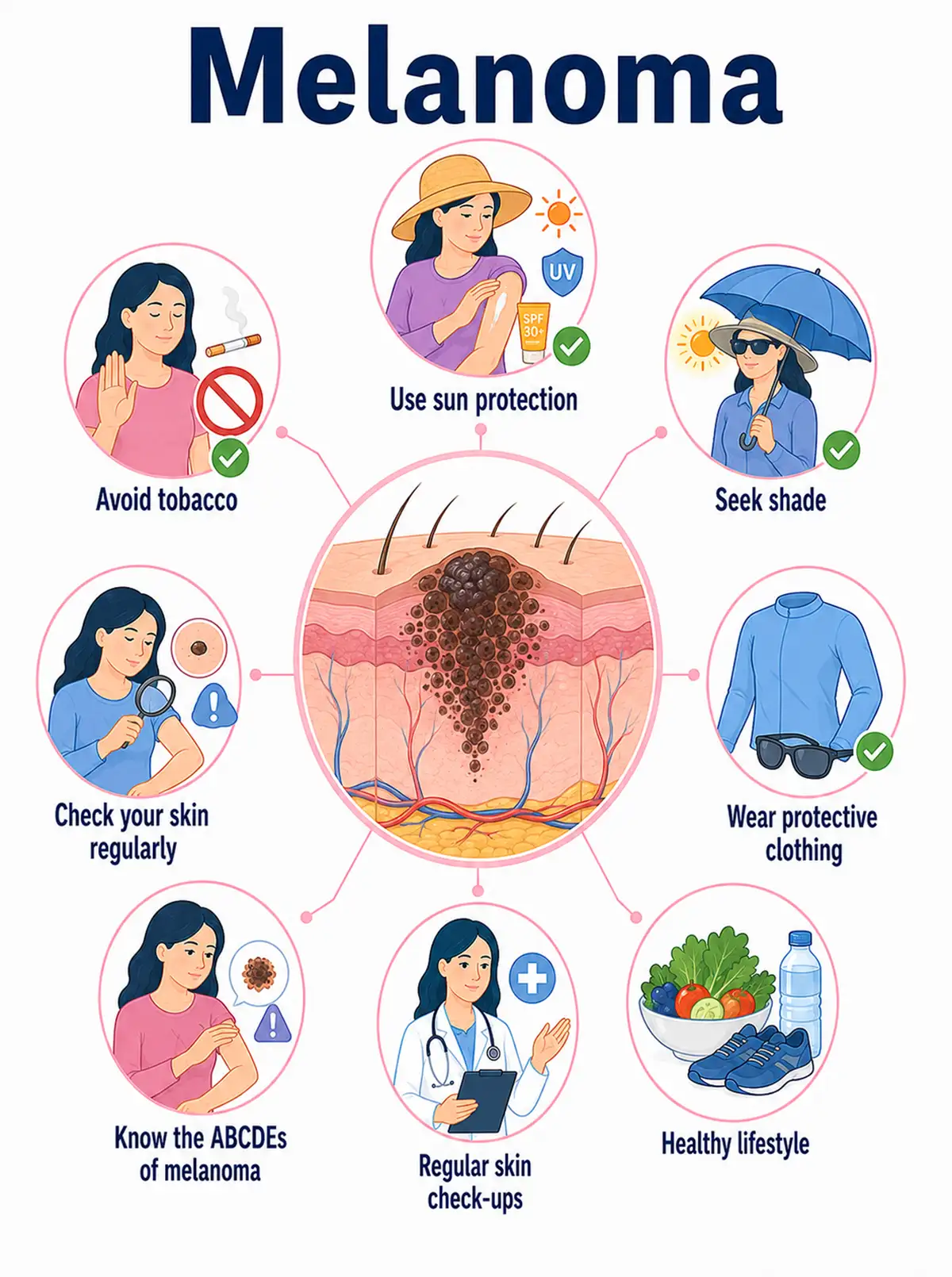
Avoid going outdoors between 10:00 AM and 4:00 PM when ultraviolet radiation is strongest; use sunscreen with SPF 30 or higher and wear sun-protective clothing and hats.
2.Avoiding sunburn
Sunburn should be avoided, particularly during childhood; a single severe sunburn can double the risk of melanoma, making sunburn a definite risk factor.
3.Skin self-examination
Perform a full-body skin self-examination once a month, observing any changes in the size, shape, color, or borders of moles; seek medical attention promptly if abnormalities are detected.
4.Specialized examination
Individuals with a family history or multiple moles should undergo annual professional dermatological examinations; the use of a dermatoscope by a physician allows for the early detection of suspicious lesions.
5.Avoid tanning beds
The use of artificial UV tanning beds is prohibited; the International Agency for Research on Cancer (IARC) classifies tanning beds as carcinogenic, as they significantly increase the risk of melanoma.
6.Genetic screening
Individuals with a family history of melanoma should undergo *CDKN2A* gene testing; those at high risk for hereditary melanoma require close monitoring.
7.Protecting children
Children have more delicate skin that is more sensitive to ultraviolet (UV) radiation; stricter sun protection measures should be adopted to minimize the cumulative damage from childhood sunburns.
Conclusion
Melanoma is caused by a combination of factors, including UV exposure and genetics; it is highly malignant, prone to metastasis, and poses a severe health risk. Strict sun protection, regular skin self-examinations, and professional check-ups are crucial for early detection and timely intervention.


