


Prevalence worldwide
Medullary thyroid cancer is a relatively rare malignancy worldwide, accounting for a small proportion of thyroid cancers. Some patients have a familial hereditary tendency.
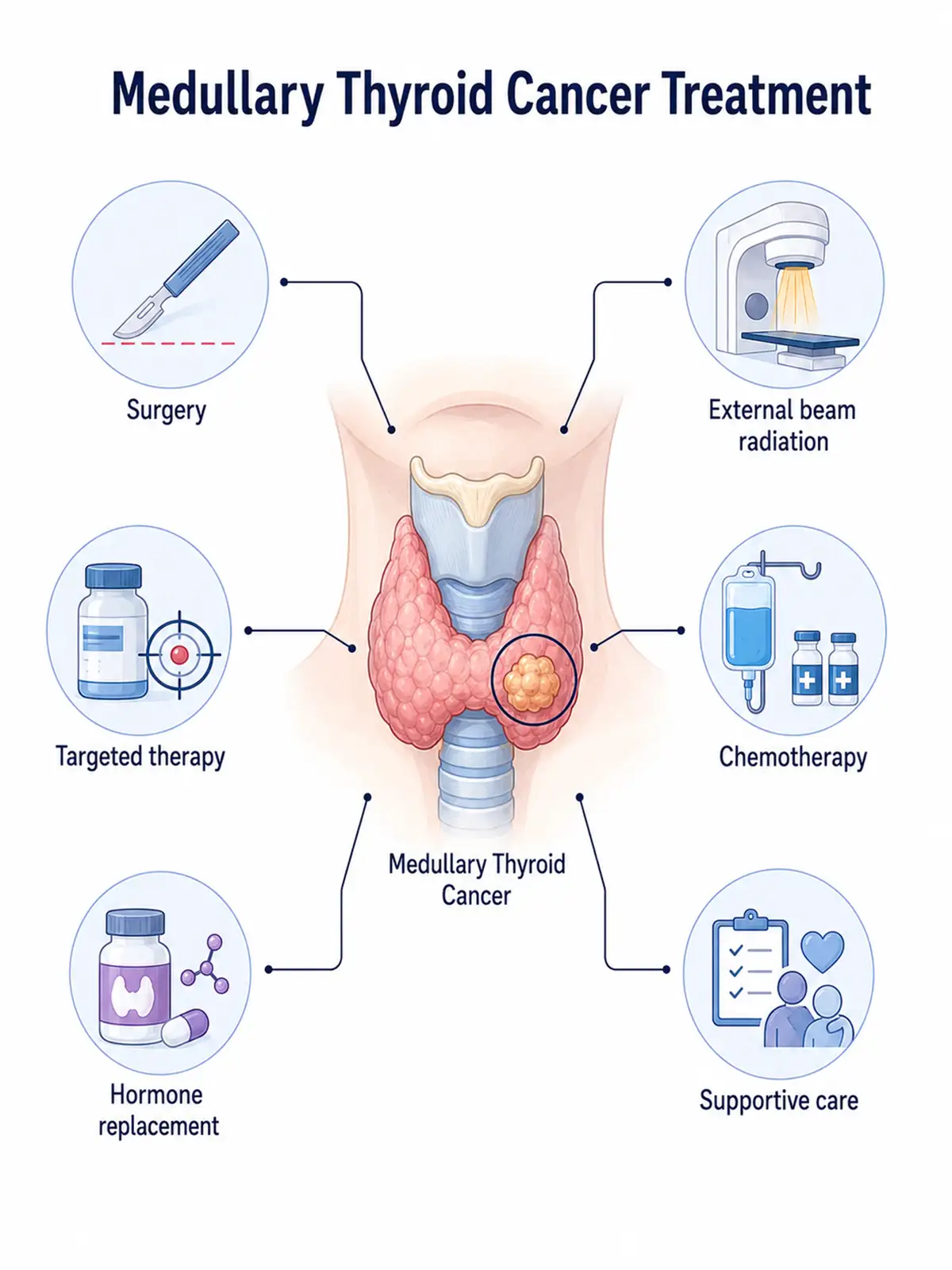
Medullary thyroid cancer treatment by stage
Early treatment (involving a localized, small tumor with a favorable response)
specifically surgical resection combined with adjuvant therapy—can effectively control tumor progression, and the patient's prognosis is relatively good.
Treatment for the intermediate stage (involving local spread; aiming to inhibit growth and delay progression)
employs a comprehensive approach—such as surgery combined with radiotherapy and chemotherapy—to control further tumor spread and slow the rate of disease deterioration.
Advanced-stage treatment (distant metastasis, symptom relief, prolonged survival)
Systemic treatments such as targeted therapy and chemotherapy relieve clinical symptoms and extend survival as much as possible.
Consequences of failing to receive timely treatment in the early stage: If standardized treatment is not administered promptly in the early stage, the tumor will continue to grow and spread/metastasize to surrounding tissues and distant organs, resulting in a missed opportunity for optimal intervention and a worsening of the condition.
Why choose Fosun Health for medullary thyroid cancer treatment
Fosun Health draws on its hospitals' thyroid surgery, VitalBeam, endocrinology, and genetic and molecular testing platforms for multidisciplinary consultations involving surgery, pathology, endocrinology, radiotherapy, and medical oncology specialists. Plans depend on tumor extent, RET status, and calcitonin and CEA changes, with recognition that radioactive iodine is not suitable for medullary thyroid cancer.
Meticulous surgery helps preserve the recurrent laryngeal nerves and parathyroid glands while completing necessary lymph node management. Precision radiotherapy reduces exposure of the larynx, trachea, esophagus, and spinal cord, lowering some neck treatment-related adverse effects. Fosun Health provides long-term management from surgery and RET-targeted therapy to thyroid function, calcium, drug tolerance, and MEN2 screening.

Medullary thyroid cancer treatment methods
1.VitalBeam precision radiotherapy
Suitable for high-risk postoperative residual disease, neck recurrence unsuitable for further surgery, locally advanced disease, or symptomatic metastases in sites such as bone or brain.
Treatment advantages:
①Covers complex neck lesions: Includes the thyroid bed, mediastinum, and recurrent neck regions.
②Protects important structures: Reduces doses to the spinal cord, larynx, trachea, and esophagus.
③Controls local symptoms: Treats compression, pain, or symptomatic metastases.
④Facilitates combined treatment: Can be coordinated with surgery and RET-targeted therapy.
2.Medullary thyroid cancer surgery and neck dissection
Surgery is central for resectable disease. Resection and neck dissection extent depend on tumor extent and lymph node status.
3.RET-targeted therapy
Selected according to germline or somatic RET alterations and calcitonin and CEA changes for unresectable, progressive, or metastatic medullary thyroid cancer.
4.Endocrine and symptom management
Provides postoperative thyroid hormone replacement, hypocalcemia management, control of calcitonin-related diarrhea, and screening for MEN2-related endocrine abnormalities.
5.Chemotherapy
Anticancer drugs systemically eliminate potential cancer cells and control progression, commonly used for advanced medullary thyroid cancer.
6.Radiofrequency ablation
Uses radiofrequency thermal energy to directly destroy tumor tissue; suitable for patients with unresectable locally recurrent or metastatic lesions.
Follow-up care after treatment
Maintain regular routines and a balanced diet, monitor calcitonin regularly, attend follow-up appointments as instructed, and cooperate with subsequent treatment.
Post-treatment examinations
Regular thyroid ultrasound, calcitonin, and carcinoembryonic antigen testing are needed to detect changes promptly.
Conclusion
Medullary thyroid cancer causes serious harm. Early detection, diagnosis, and intervention, appropriate treatment, and continued follow-up help improve quality of life.


