


1. Genetic screening
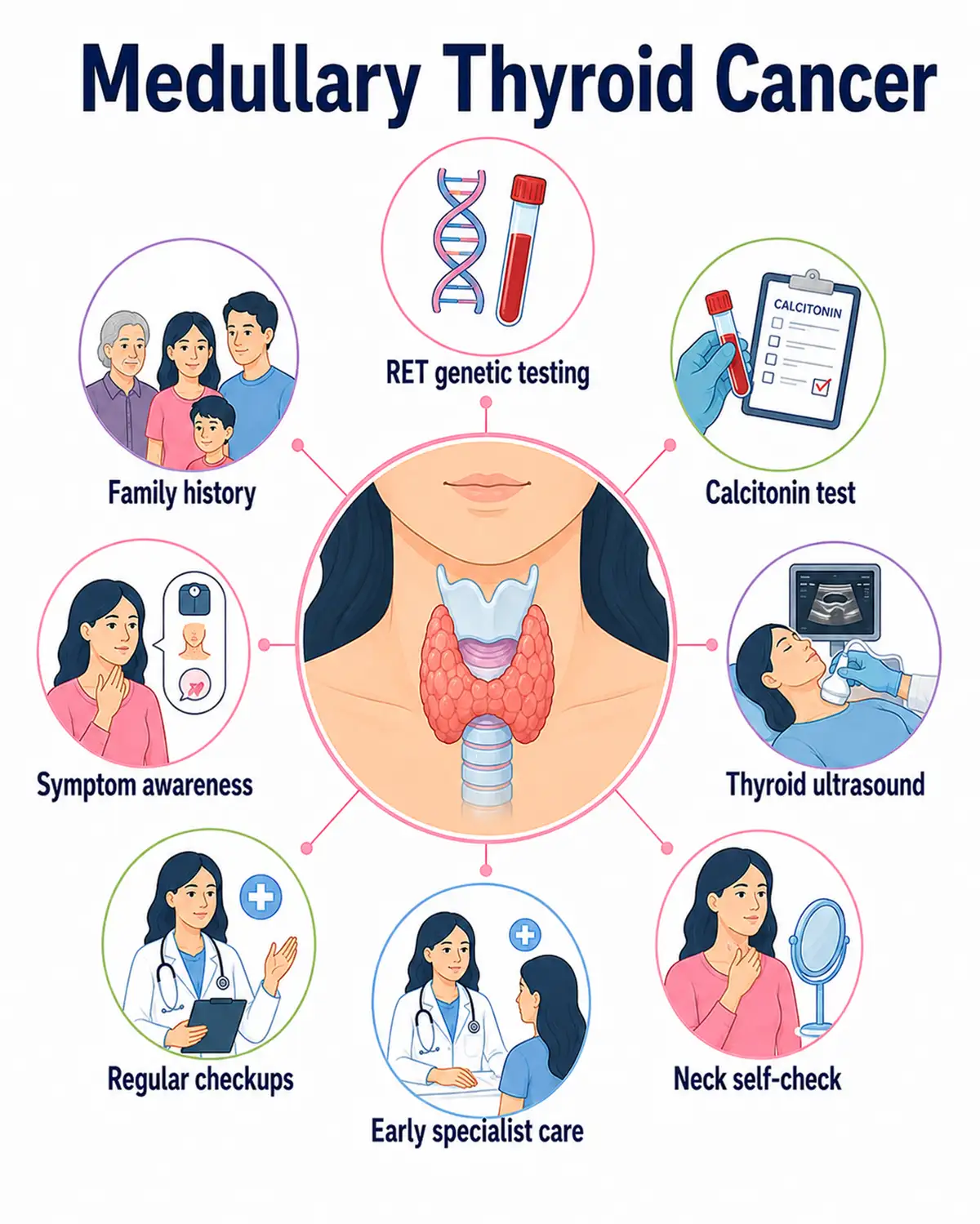
People with a family history of medullary thyroid cancer or multiple endocrine neoplasia should undergo RET testing to identify pathogenic mutations.
2. Preventive removal
RET mutation carriers may consider preventive thyroidectomy on medical advice according to mutation risk level to eliminate the possibility of malignant transformation.
3. Regular testing
High-risk people should have annual serum calcitonin and carcinoembryonic antigen testing. Elevated calcitonin is a sensitive marker of medullary thyroid cancer.
4. Regular ultrasound
Annual ultrasound of the thyroid and cervical lymph nodes detects nodules or abnormal nodes early for prompt assessment.
5. Avoid radiation
Minimize head and neck radiological examinations, especially radiation exposure in childhood, to reduce thyroid cell mutation risk.
6. Balanced diet
Eat more fresh fruit and vegetables rich in vitamins and minerals and avoid prolonged high- or low-iodine diets to maintain normal thyroid function.
7. Family awareness
Family members of MEN2 patients should be regularly screened for pheochromocytoma and hyperparathyroidism, which often coexist with medullary carcinoma.
Conclusion
Medullary thyroid cancer has a strong hereditary tendency and high malignancy, causing serious harm. Those with a family history must undergo hereditary screening and regular monitoring for early detection and timely intervention.


