


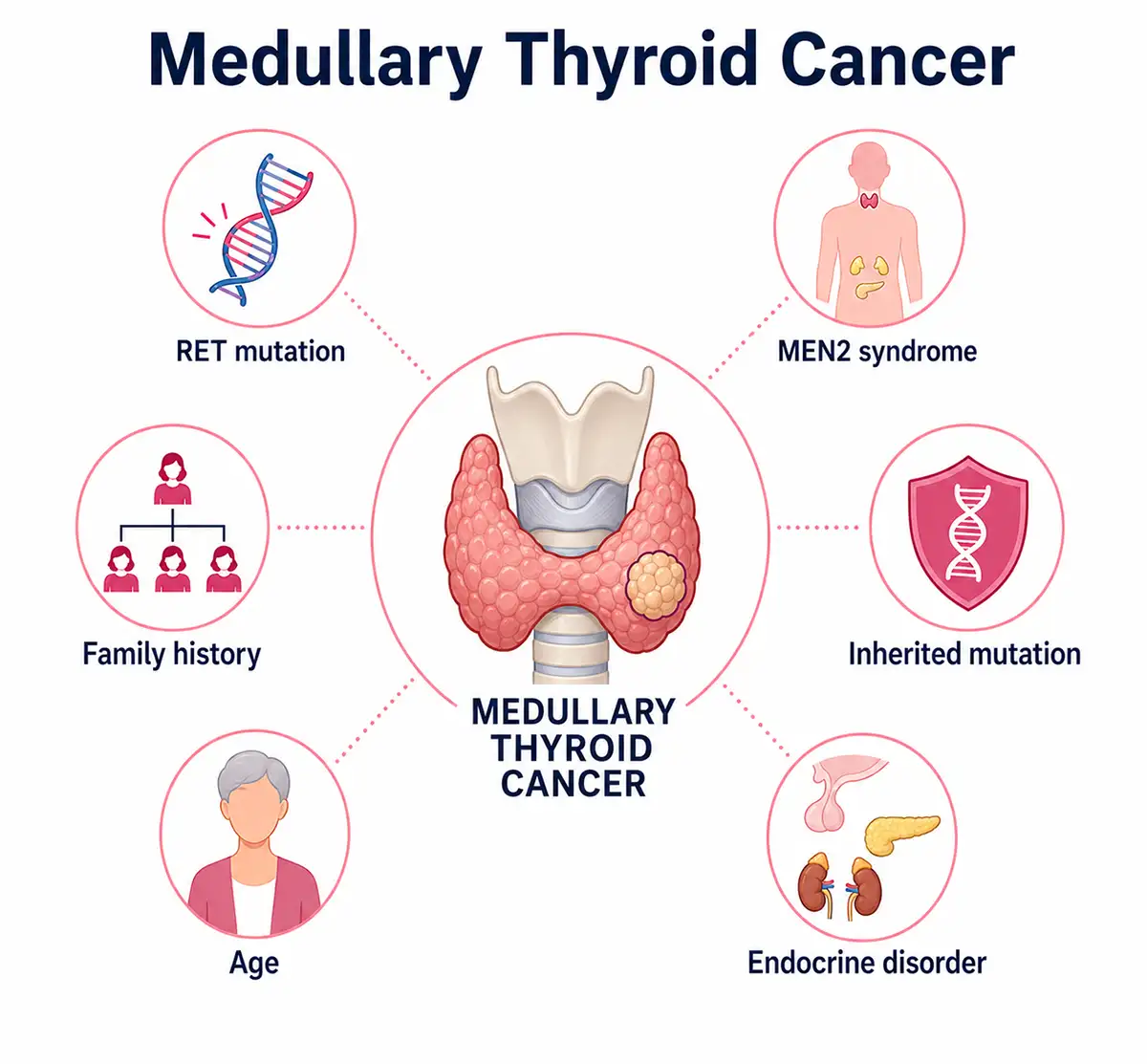
1. RET mutations
Point mutations in the RET proto-oncogene are the main cause. They continuously activate tyrosine kinase, promoting malignant cell proliferation.
2. Genetic factors
About one-quarter to one-third of cases are familial, with autosomal dominant inheritance. Patients often develop disease early and usually have bilateral lesions.
3. MEN syndromes
Multiple endocrine neoplasia types 2A and 2B both include medullary thyroid cancer and are the main hereditary syndromes associated with familial disease.
4. Sex factors
Sporadic medullary thyroid cancer is slightly more common in women, while familial cases affect both sexes at approximately equal rates.
5. Age
Sporadic disease mainly affects people aged 40 to 60, while familial cases may develop in childhood or adolescence.
6. Radiation exposure
Head and neck ionizing radiation exposure may increase medullary thyroid cancer risk, particularly radiotherapy in childhood.
7. Nutritional factors
Long-term vitamin D and certain trace element deficiencies may affect normal C-cell function, but a direct causal relationship with medullary carcinoma remains under investigation.
Conclusion
Medullary thyroid cancer results from the combined effects of RET mutations and hereditary factors and can secrete hormones such as calcitonin that affect systemic metabolism. Genetic testing in people with a family history is essential for early detection and timely intervention.


