


Global disease prevalence: Liver cancer is a common malignant tumor worldwide, with higher incidence rates in parts of Asia and Africa, posing a serious threat to patients' health and quality of life.
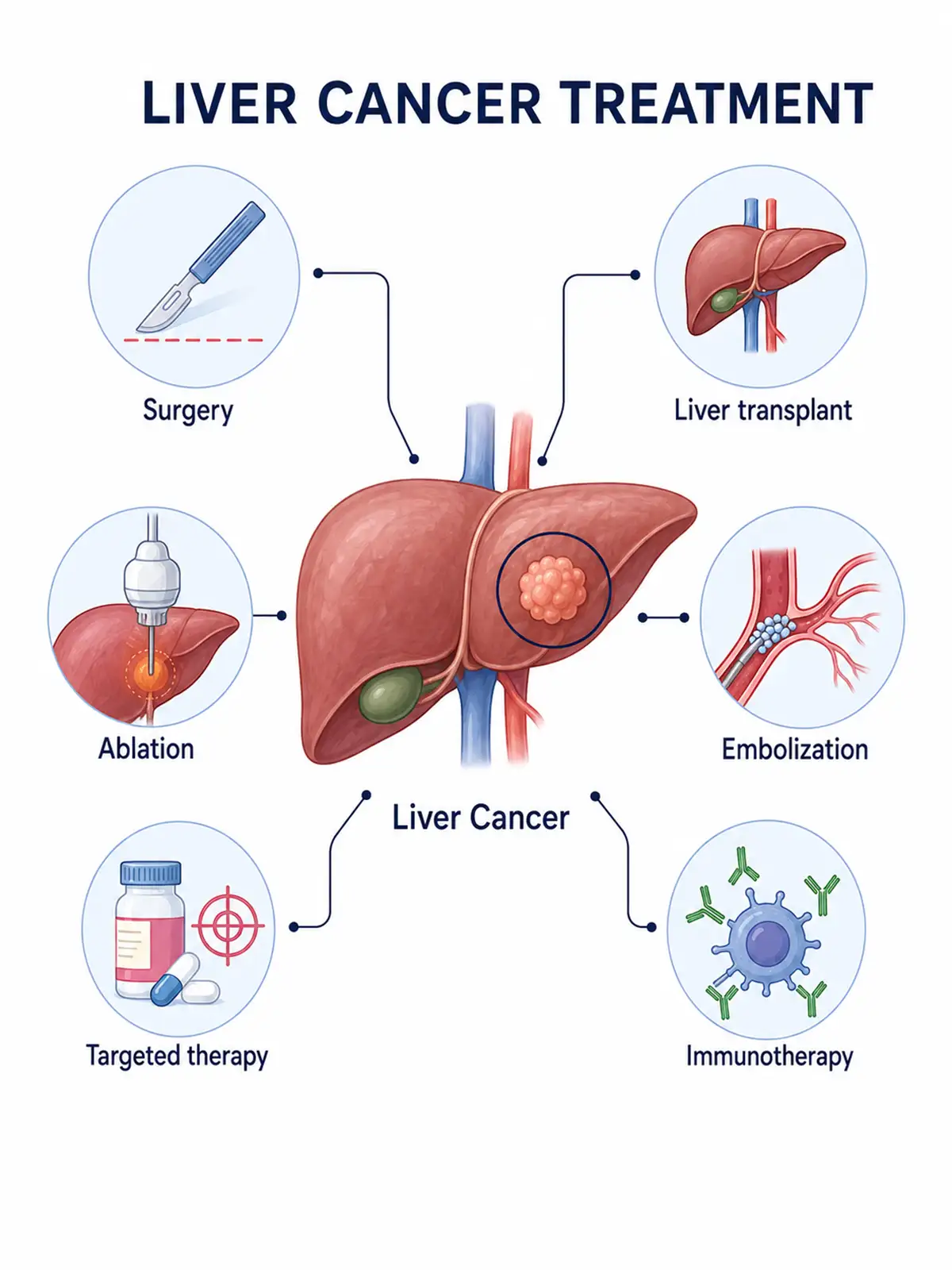
Treatment based on liver cancer stage
Early treatment (involving a localized, small tumor with a favorable response)
specifically surgical resection combined with adjuvant therapy—can effectively control tumor progression, and the patient's prognosis is relatively good.
Treatment for advanced-stage disease (involving distant metastasis, symptom relief, and survival prolongation)
primarily relies on systemic therapies such as targeted therapy, immunotherapy, and interventional therapy to alleviate clinical symptoms and extend patient survival as much as possible.
Consequences of failing to receive timely treatment in the early stage: If standardized treatment is not administered promptly in the early stage, the tumor will continue to grow and spread/metastasize to surrounding tissues and distant organs, resulting in a missed opportunity for optimal intervention and a worsening of the condition.
Why choose Fosun Health for liver cancer treatment
Leveraging the CyberKnife M6, VitalBeam, SCART, TACE/HAIC, microwave/radiofrequency ablation, and robotic liver resection platforms available at its affiliated hospitals, Fosun Health facilitates multidisciplinary consultations involving experts in hepatobiliary surgery, interventional radiology, radiotherapy, medical imaging, hepatology, and medical oncology.The team evaluates factors such as tumor size and number, vascular invasion, liver function, and residual liver reserve to formulate personalized treatment plans.
CyberKnife respiratory tracking and precision radiotherapy help minimize radiation exposure to the normal liver, gastrointestinal tract, and kidneys; ablation and interventional therapies allow treatment to be concentrated on intrahepatic lesions, reducing the risk of certain systemic or surgery-related adverse effects.Fosun Health provides continuous, one-stop medical support covering everything from local and systemic therapies to the management of viral hepatitis, portal hypertension, nutrition, and bleeding risks.
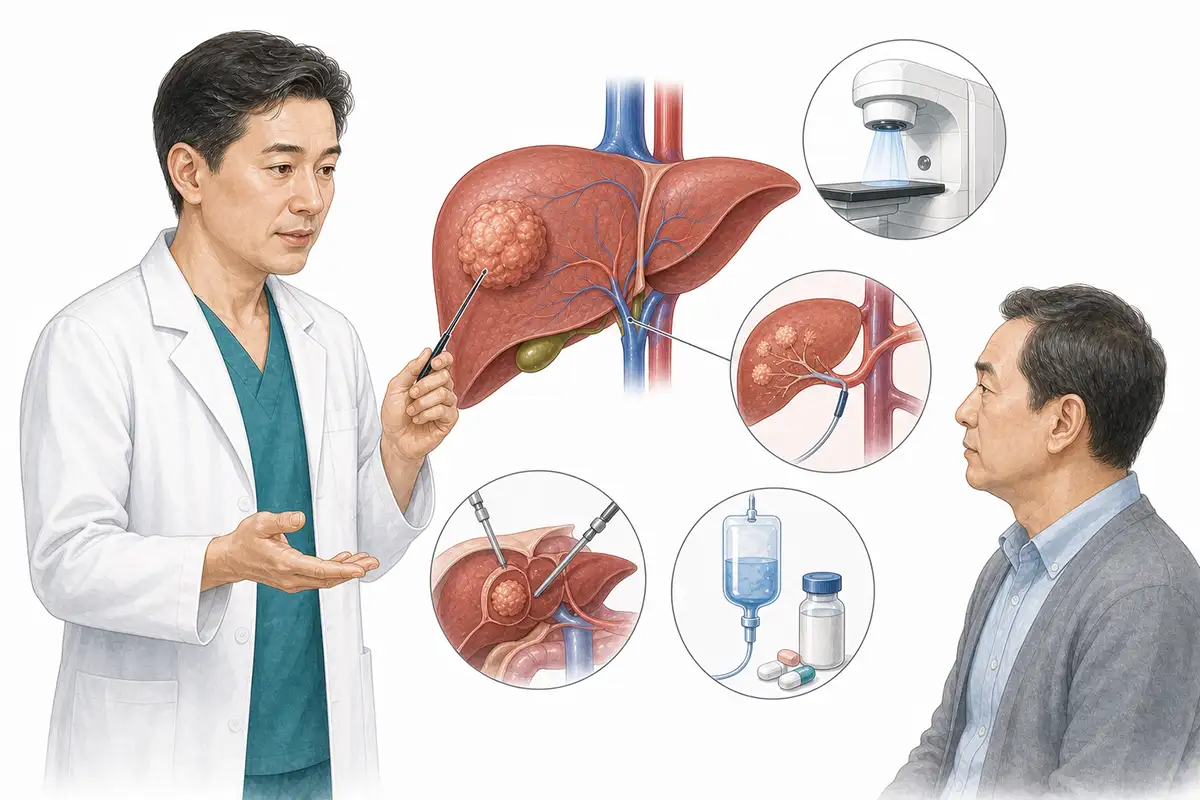
Liver cancer treatment methods
1.M6 CyberKnife treatment
Utilizes real-time image verification and respiratory tracking to irradiate intrahepatic lesions; suitable for patients with small hepatocellular carcinoma (HCC) ineligible for surgery or ablation, localized recurrence, oligometastasis, or partial portal vein tumor thrombus.
Treatment advantages:
① Track respiratory motion: Reduce localization errors caused by liver movement during respiration.
② Protect normal liver: Reduce radiation dose to healthy liver tissue, the gastrointestinal tract, and the kidneys.
③ Hypofractionated treatment: Suitable for patients with limited liver function or performance status.
④ Strict indications: Requires comprehensive assessment of tumor size, location, and residual liver function.
2.VitalBeam precision radiotherapy
Uses image-guided intensity-modulated radiotherapy (IMRT) to target intrahepatic lesions, tumor thrombi, or metastatic regions; suitable for locally advanced disease, residual or recurrent disease post-treatment, and symptomatic metastatic lesions.
Treatment advantages:
① Adaptable to complex targets: Addresses both intrahepatic lesions and portal vein tumor thrombi.
② Protection of residual liver: Controls the irradiation range for normal liver tissue.
③ Protection of abdominal organs: Reduce the radiation dose received by the stomach, intestines, kidneys, and spinal cord.
④ Facilitates combination therapy: Can be integrated with interventional procedures, ablation, and systemic therapy.
3.SCART stereotactic central ablative radiotherapy
A higher radiation dose is concentrated in the central region of a large tumor; this approach is suitable for large, recurrent, or selected lesions where conventional uniform dose escalation might endanger normal liver tissue.
Treatment advantages:
① Targets large-volume tumors: Focuses on treating radioresistant regions within the tumor.
② Reduce pressure on normal liver tissue: Avoid exposing the entire tumor to a uniform high dose.
③ Aiming for conversion: Surgery or interventional procedures may be re-evaluated after lesion shrinkage.
④ An alternative option: Requires rigorous assessment by a liver cancer multidisciplinary team (MDT).
4.TACE or HAIC (hepatic artery interventional therapy)
Suitable for unresectable, multifocal intrahepatic, or locally advanced hepatocellular carcinoma; transcatheter embolization or regional perfusion of the tumor-feeding arteries can be performed.
5.Microwave or radiofrequency ablation
Indicated for early-stage hepatocellular carcinoma with suitable lesion number, size, and location, as well as for localized residual or recurrent lesions following treatment.
Treatment advantages:
① Direct lesion ablation: Local treatment is performed under ultrasound or CT guidance.
② Preserve more liver tissue: Reduce damage to normal liver parenchyma.
③ Minimally invasive: Suitable for some patients who are not candidates for liver resection.
④ Location-dependent risk: Caution is required when the lesion is adjacent to the bile duct, gastrointestinal tract, or major blood vessels.
6.Da Vinci robotic or laparoscopic liver resection
Indicated for patients with adequate hepatic reserve and resectable tumors, where it is anticipated that sufficient functional liver volume can be preserved.
Treatment advantages:
① Magnified surgical field: Facilitates the identification of the hepatic hilum and intrahepatic vascular structures.
② Precise margin control: Balances tumor resection with the preservation of normal liver tissue.
③ Reduce abdominal wall trauma: Facilitates postoperative mobility and functional recovery.
④ Supports rapid recovery: Facilitates the transition to subsequent adjuvant or anti-recurrence therapy.
7.Targeted therapy and immunotherapy
Used for unresectable, recurrent, or metastatic liver cancer, with selection based on liver function, portal vein invasion, bleeding risk, and prior treatments.
8.Cryoablation:
Suitable for patients with early-stage or locally recurrent hepatocellular carcinoma who are not candidates for surgery but have lesions of appropriate size and location; local tumor tissue can be destroyed via image-guided cryoablation.
9.Seed implantation:
Indicated for patients with liver cancer who have undergone multidisciplinary assessment and present with locally residual or recurrent disease, where surgery and thermal ablation are not feasible, and the extent of the lesion is clearly defined; it serves as a selective local treatment option.
Post-treatment care
After treatment, you must abstain from alcohol, maintain a regular daily routine, follow a balanced and nutritious diet, avoid excessive fatigue, attend regular follow-up appointments as instructed, and actively cooperate with subsequent treatment.
Post-treatment examinations
Regular liver ultrasound, alpha-fetoprotein (AFP) testing, and follow-up imaging are required after treatment to detect changes in the condition in a timely manner.
Conclusion
Liver cancer poses a serious threat; successful treatment hinges on early detection, diagnosis, and intervention, as well as selecting the appropriate treatment plan and adhering to follow-up care, which helps improve quality of life and extend survival time.


