


Liver cancer is a tumor arising from the malignant transformation of hepatocytes or intrahepatic bile duct epithelial cells.Early symptoms are often absent, and it frequently develops against a background of cirrhosis or chronic hepatitis;common clinical manifestations include pain in the hepatic region, jaundice, and weight loss.
Global prevalence of liver cancer
Liver cancer is the sixth most common malignant tumor and the fourth leading cause of cancer-related death globally.my country is a high-incidence country, ranking at the top for both incidence and mortality and accounting for about half of global cases.Approximately 80% of liver cancer cases are associated with hepatitis B virus infection, and the incidence rate is significantly higher in men than in women.
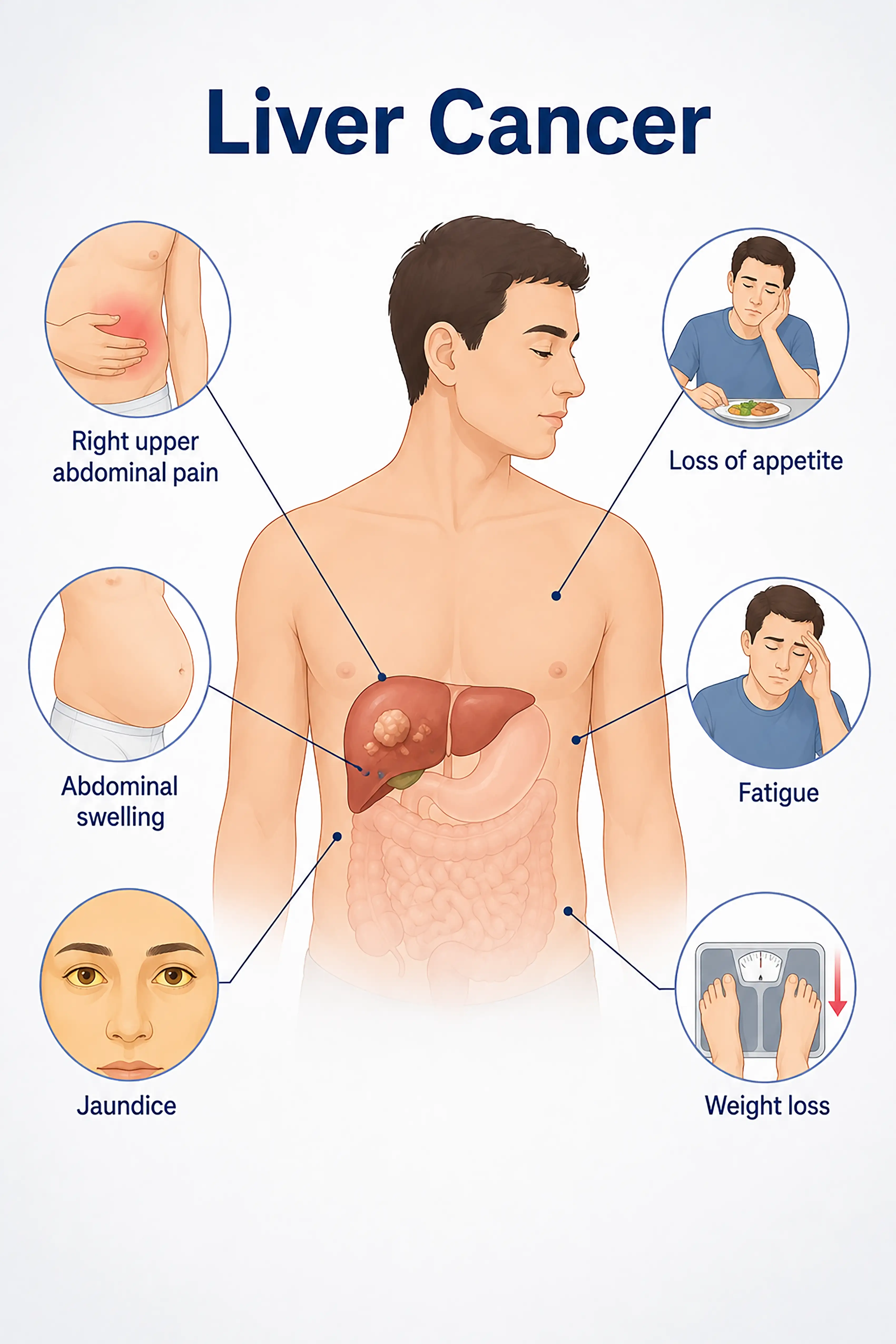
Symptoms associated with liver cancer stages
1.Early symptoms of liver cancer
The tumor is small and typically asymptomatic, though mild right upper quadrant discomfort, fatigue, and loss of appetite may occur; it is often detected incidentally via ultrasound during follow-up for liver cirrhosis.
2.Symptoms of mid-stage liver cancer
Persistent and worsening pain in the liver region is accompanied by jaundice, abdominal bloating, and weight loss; an enlarged liver or a mass may be palpable in the abdomen, often associated with splenomegaly and ascites.
3.Symptoms of advanced liver cancer
Tumor extensively invades intrahepatic blood vessels and metastasizes distantly; presents with persistent severe pain, massive ascites, hepatic encephalopathy, massive gastrointestinal hemorrhage, and systemic failure.
When to Seek Medical Attention
Early signs of liver cancer include pain in the liver region, jaundice, abdominal bloating, and unexplained weight loss.Please consult a doctor via the "Chat with a Doctor" feature for early detection.During the online consultation, the doctor will ask about your history of liver disease and current symptoms, and guide you through necessary tests such as abdominal ultrasound and alpha-fetoprotein (AFP) screening.
Liver cancer staging
Liver cancer: Stage 0
Cancer cells are confined to the liver; this is classified as very early-stage liver cancer. It is often asymptomatic and may be incidentally detected via imaging during screening for liver cirrhosis.
Liver cancer: Stage I
Tumor diameter is less than 5 cm and confined to the liver, with no vascular invasion or metastasis; often asymptomatic or presenting only with mild discomfort in the right upper quadrant.
Liver cancer: Stage II
Tumor diameter >5 cm or multifocal lesions, still confined within the liver; presents with symptoms such as pain in the hepatic region and fatigue.
Liver cancer: Stage III
Tumor invasion of the portal vein or hepatic vein, or presence of lymph node metastasis; marked jaundice, ascites, and emaciation occur.
Liver cancer: Stage IV
Distant metastasis to the lungs, bones, and brain occurs, leading to persistent severe pain, cachexia, and multiple organ failure.
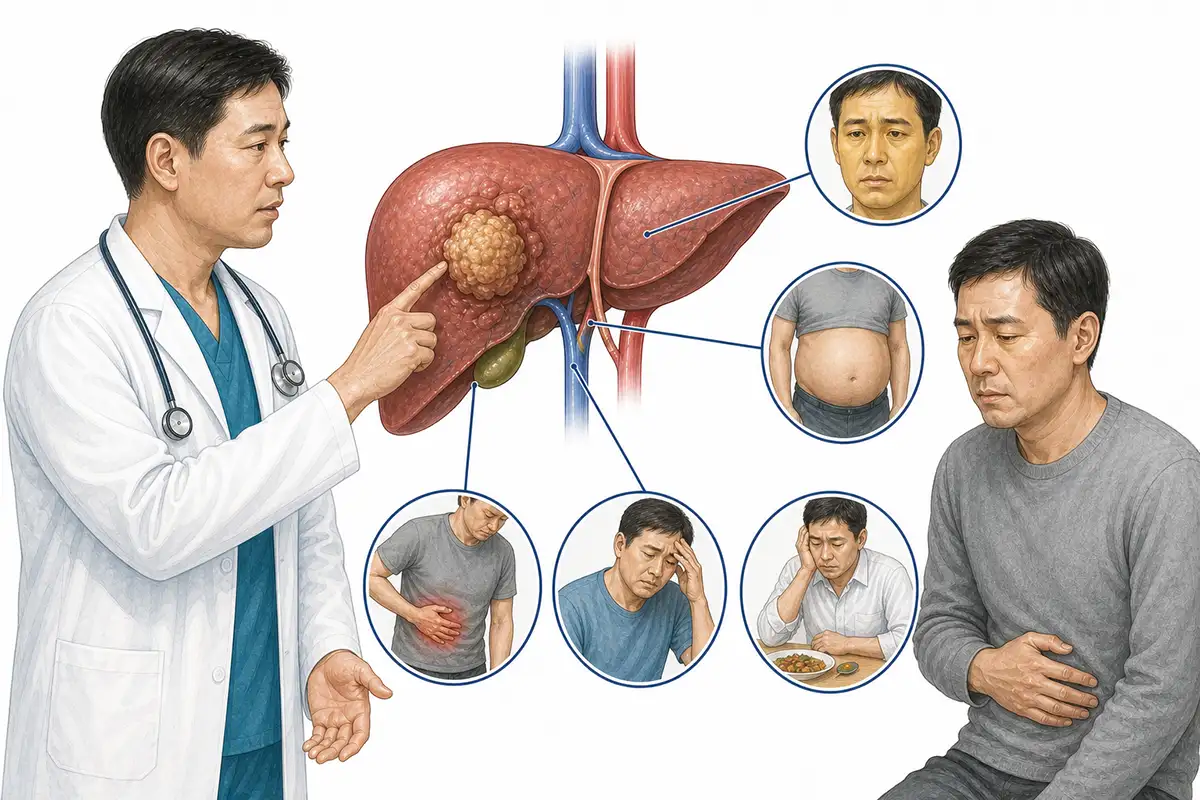
Detailed Overview of Liver Cancer Symptoms
1.Liver region pain
The most common initial symptom presents as persistent dull or distending pain in the right upper or mid-upper abdomen, caused by stretching of the liver capsule due to tumor growth; the pain may radiate to the right shoulder and back.
2.Jaundice and yellowing of the skin
Tumor invasion of intrahepatic bile ducts or compression of the common bile duct leads to obstructive jaundice, manifesting as yellowing of the skin and sclera, dark tea-colored urine, and pruritus.
3.Abdominal distension and ascites
Portal hypertension and hypoproteinemia lead to the accumulation of ascites, resulting in marked abdominal distension accompanied by bloating and edema of the lower limbs.
4.Rapid weight loss
Significant short-term weight loss due to reduced food intake and tumor-induced metabolic consumption, accompanied by fatigue and malnutrition; progresses to a cachectic state in the advanced stage.
5.Fatigue and shortness of breath
Liver function impairment disrupts energy metabolism, resulting in progressively worsening fatigue and shortness of breath, along with a significant decline in exercise tolerance.
6.Loss of appetite
Impaired liver function leads to digestive dysfunction, manifesting as symptoms such as loss of appetite, aversion to greasy foods, nausea, and abdominal bloating.
7Hepatosplenomegaly
Many liver cancer patients have an underlying history of cirrhosis; physical findings often include an enlarged liver with a hard texture and irregular surface, accompanied by an enlarged spleen.
8.Gastrointestinal bleeding
Portal hypertension can lead to the rupture of esophageal and gastric varices, causing hematemesis (vomiting blood) and melena (black, tarry stools); this is a major cause of death in patients with liver cancer.
9.Hepatic encephalopathy present
Liver failure leads to elevated blood ammonia levels, causing disturbances in consciousness, behavioral abnormalities, and coma; it is a serious complication of advanced liver cancer.
Conclusion
Early symptoms of liver cancer are often subtle; patients with chronic hepatitis B or cirrhosis should undergo regular screening.Hepatitis B vaccination and antiviral therapy are key preventive measures.Early treatment can significantly improve prognosis.


