


Overview of Liver Cancer
Liver cancer is a tumor resulting from the malignant proliferation of hepatocytes or bile duct epithelial cells.The liver is the body's largest solid organ, performing diverse functions such as metabolism, detoxification, synthesis, and secretion.
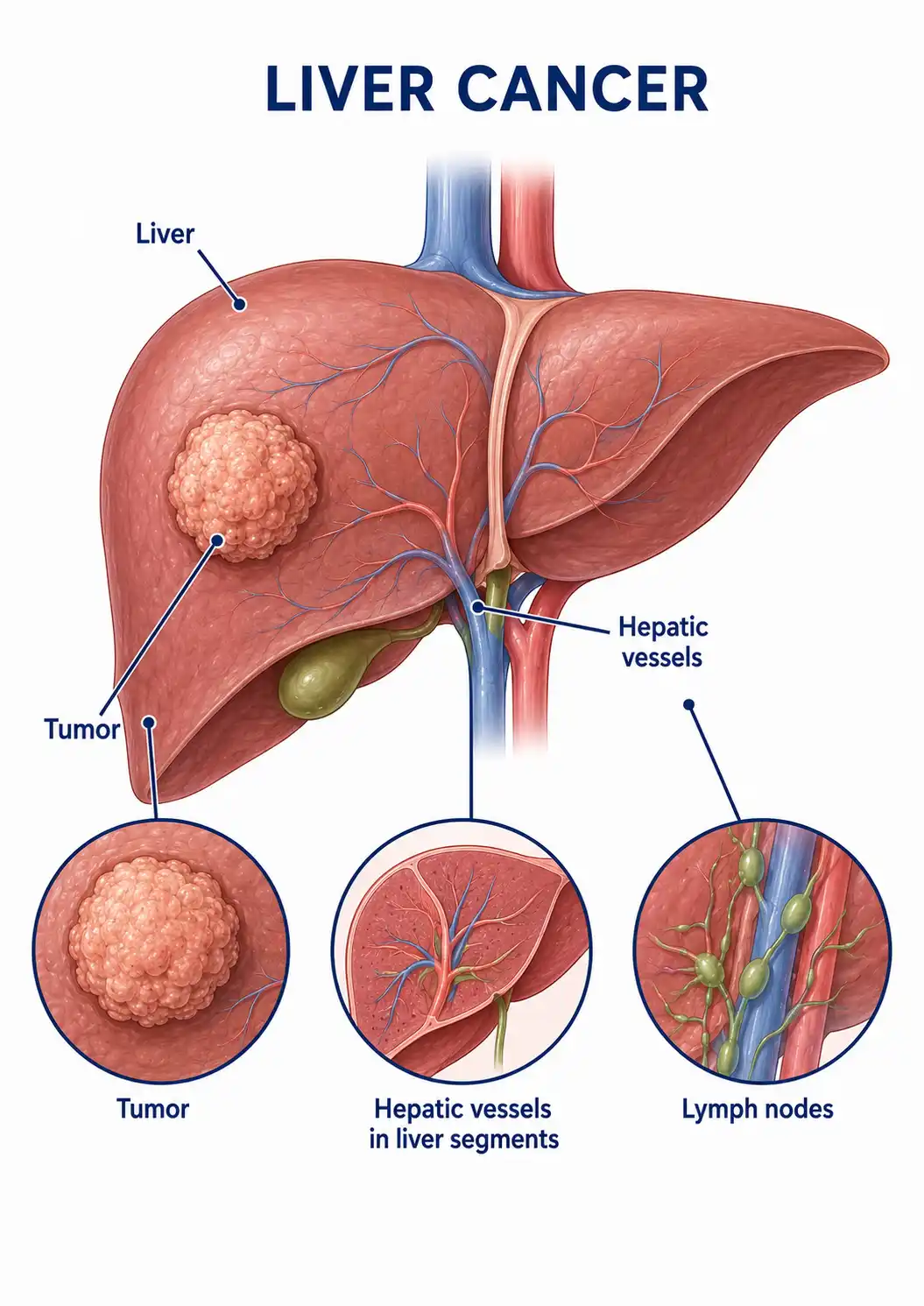
Global overview of liver cancer
Liver cancer is a common malignant tumor worldwide. my country has some of the highest incidence and mortality rates globally, accounting for approximately half of the world's new cases and deaths each year, posing a serious threat to public health.
Consult a doctor regarding cancer-related issues.
Individuals experiencing symptoms such as right upper quadrant abdominal pain, an abdominal mass, jaundice, weight loss and fatigue, or worsening of pre-existing liver disease—particularly those infected with hepatitis B or C—should promptly consult a hepatobiliary surgeon or an oncologist.
Main types of liver cancer
1. Hepatocellular carcinoma
It is the most common type of liver cancer, accounting for approximately 90% of cases; it originates from hepatocytes and is closely associated with chronic hepatitis B and C infections and liver cirrhosis.
2. Intrahepatic cholangiocarcinoma
Originates from intrahepatic bile duct epithelial cells; accounts for approximately 10% of liver cancers; associated with conditions such as bile duct stones and primary sclerosing cholangitis.
3. Mixed-type hepatocellular carcinoma
Tumors containing both hepatocellular carcinoma and cholangiocarcinoma components are relatively rare and carry a poorer prognosis than pure hepatocellular carcinoma.
4. Fibrolamellar carcinoma
It is a distinct subtype of hepatocellular carcinoma, frequently seen in younger patients; the tumor grows slowly, and the prognosis is better than that of conventional hepatocellular carcinoma.
5. Hepatoblastoma
The most common malignant liver tumor in children, predominantly occurring in infants and toddlers under the age of three; it is associated with genetic factors and abnormalities in embryonic development.
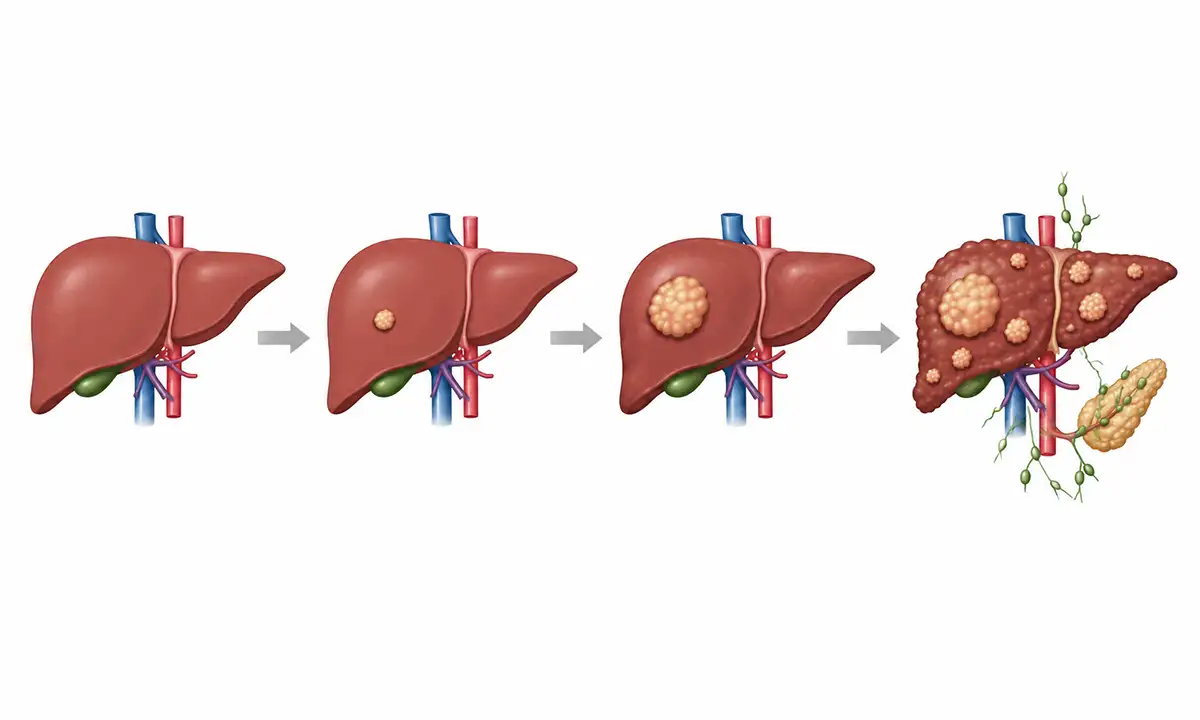
Typical symptoms and signs of liver cancer
1. Right upper quadrant abdominal pain
Persistent dull or distending pain in the right upper abdomen occurs; the pain intensifies as the tumor enlarges and stretches the liver capsule, and may radiate to the right shoulder and back.
2. Abdominal mass
A hard mass with an irregular surface is palpable in the right upper quadrant upon tumor enlargement; it moves vertically with respiration.
3. Jaundice
Tumor compression of the bile duct or severe impairment of liver function leads to yellowing of the skin and sclera, darkened urine, and pruritus (itching).
4. Weight loss and fatigue
Significant weight loss, loss of appetite, generalized fatigue, and listlessness occurring over a short period are systemic manifestations of malignant tumors.
5. Ascites
The onset of ascites or a rapid increase in pre-existing ascites in the context of liver cirrhosis indicates hepatic decompensation and tumor progression.
6. Gastrointestinal bleeding
Rupture and bleeding of esophageal and gastric varices—caused by portal hypertension associated with cirrhosis—manifest as hematemesis and melena; this is a severe complication of liver cancer.
What are the diagnostic methods for liver cancer?
1. Ultrasound examination
Abdominal ultrasound is the preferred method for liver cancer screening; it can detect space-occupying lesions in the liver and assess tumor size, number, and the presence of portal vein tumor thrombus.
2. Contrast-enhanced CT or MRI
Contrast-enhanced CT or MRI is a key method for diagnosing liver cancer; typical cases exhibit "fast-in, fast-out" enhancement characteristics, allowing for the determination of tumor extent and stage.
3. Alpha-fetoprotein (AFP) test
AFP is the most specific serum marker for liver cancer; persistently elevated levels suggest possible liver cancer, though approximately 30% of liver cancer patients have normal AFP levels.
4. Liver needle biopsy
Image-guided needle biopsy to obtain tumor tissue for pathological examination is the gold standard for diagnosing liver cancer, though it carries a risk of needle-track metastasis.
5. Hepatitis B and C testing
Detects hepatitis B virus markers and hepatitis C antibodies to clarify the viral etiology of liver cancer and guide antiviral therapy.
6. Liver function assessment
The Child-Pugh score and indocyanine green clearance test assess hepatic functional reserve and serve as important bases for formulating treatment plans.
What are the treatment methods for liver cancer?
1. Surgical resection
Partial hepatectomy and liver transplantation are the primary treatment modalities for liver cancer; surgery in early-stage patients can yield favorable long-term survival outcomes.
2. Interventional therapy
Transcatheter arterial chemoembolization (TACE) is the standard treatment for intermediate-stage hepatocellular carcinoma; it induces ischemic necrosis of the tumor by embolizing the arteries supplying it.
3. Ablation therapy
Radiofrequency ablation and microwave ablation are suitable for early-stage small hepatocellular carcinoma;they induce tumor necrosis using thermal energy, offering the advantages of minimal trauma and rapid recovery.
4. Targeted therapy
Multi-target tyrosine kinase inhibitors, such as sorafenib and lenvatinib, can be used as first-line treatments for advanced liver cancer.
5. Immunotherapy
The combination of atezolizumab and bevacizumab has become the standard treatment regimen for advanced liver cancer, significantly prolonging patient survival.
6. Radiotherapy
Stereotactic radiotherapy can be used for small hepatocellular carcinomas that are unsuitable for surgery; proton therapy allows for precise irradiation of the tumor while sparing normal liver tissue.
7. Antiviral therapy
Patients with hepatitis B-related liver cancer require lifelong antiviral therapy; suppressing viral replication can reduce the risk of postoperative recurrence.
8. Follow-up monitoring
Postoperative follow-up involving abdominal ultrasound and AFP testing every 3–6 months is crucial to monitor for recurrence and metastasis.
Conclusion
Liver cancer is a common malignancy in my country, strongly associated with hepatitis B virus infection.Screening high-risk populations, early detection, standardized surgery, and comprehensive treatment help improve patient prognosis and quality of life.


