


Liver cancer is a common malignancy worldwide and a major cause of cancer death, with incidence substantially higher in men. Major risk factors include hepatitis B and C infection, alcohol-related liver disease, aflatoxin exposure, and metabolic dysfunction-associated steatotic liver disease. Detection at an early stage increases the opportunity for potentially curative treatment.
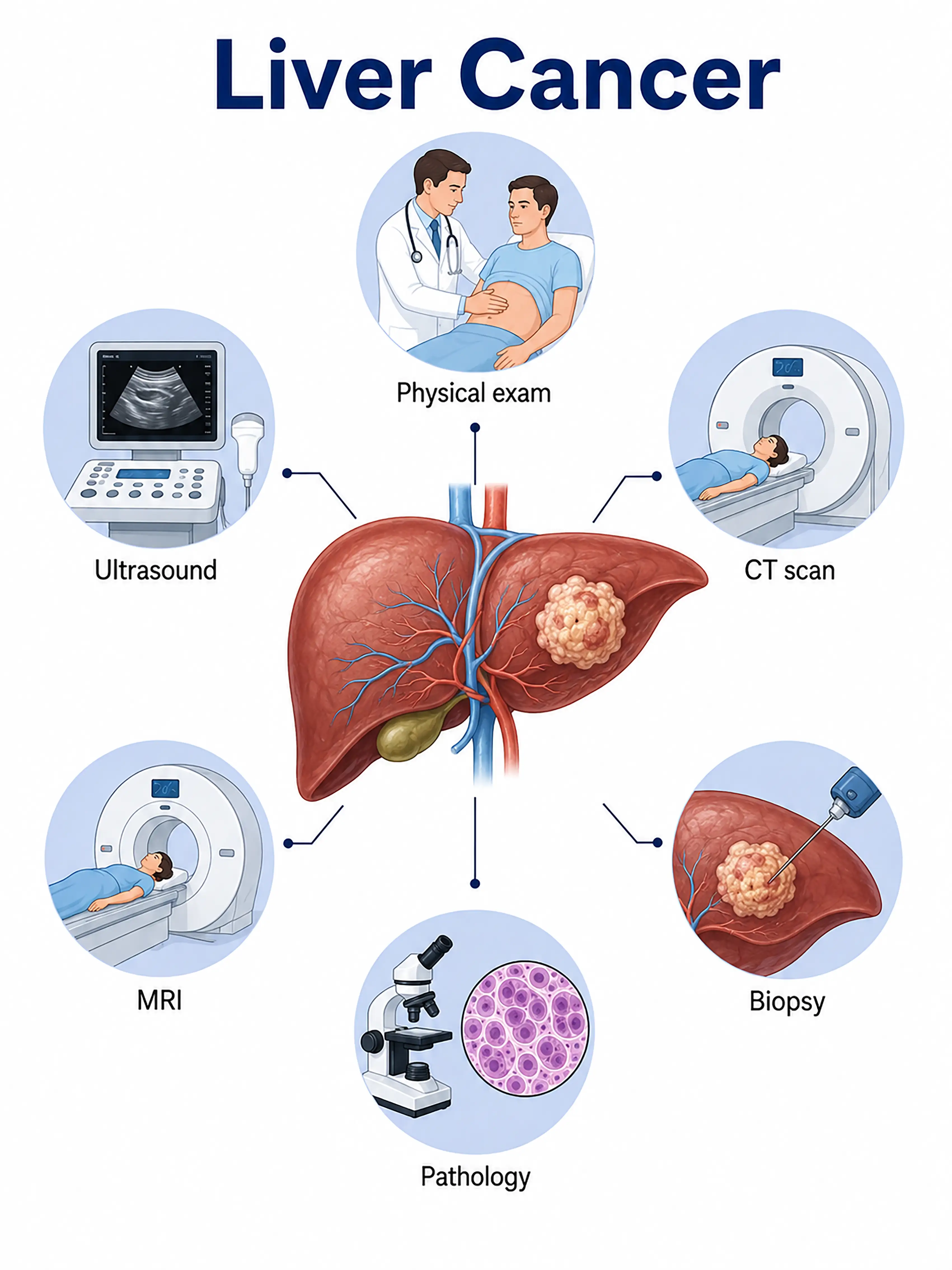
Diagnosis based on liver cancer stage
1.Early diagnosis of liver cancer
Small intrahepatic nodules detected during screening of high-risk individuals.Ultrasound reveals an intrahepatic nodule ≤2 cm in diameter; contrast-enhanced CT or MRI shows typical "rapid uptake and rapid washout" enhancement patterns. A clinical diagnosis can be made when combined with elevated AFP levels.
2.Diagnosis of mid-stage liver cancer
Tumor enlargement accompanied by pain in the hepatic region and jaundice.Contrast-enhanced CT or MRI shows typical enhancement patterns; AFP levels are significantly elevated; needle biopsy of the hepatic lesion is performed if necessary to confirm the diagnosis.
3.Diagnosis of advanced liver cancer
Extensive tumor invasion or distant metastasis to the lungs, bones, and brain.Whole-body CT and PET-CT assess the extent of metastasis; needle biopsy clarifies the pathological type; molecular testing guides targeted therapy.
Without timely diagnosis, approximately 70% of liver cancer patients are already in the intermediate or advanced stages by the time of diagnosis, losing the opportunity for curative treatment;the five-year survival rate is less than 20%.
When to Seek Medical Attention
Early signs of liver cancer include pain in the liver region, jaundice, and abdominal bloating.Please consult a doctor via the "Chat with a Doctor" feature for early detection.During the online consultation, the doctor will ask about your history of liver disease and current symptoms, and guide you through necessary tests such as ultrasound and CT scans.
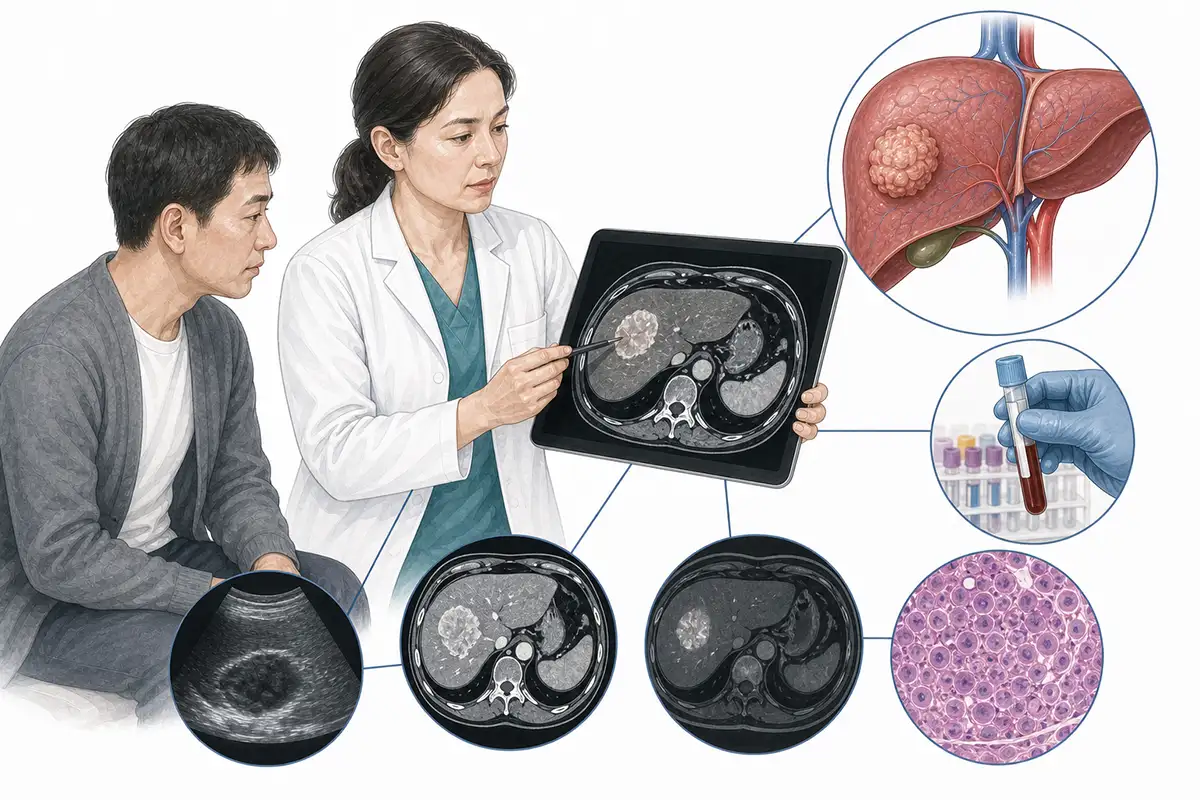
Basis for Liver Cancer Diagnosis
1.Abdominal ultrasound
Ultrasound is the preferred method for screening for liver cancer; high-risk populations should undergo examination every six months, as it can detect intrahepatic nodules and provide a preliminary assessment of their nature.
2.Alpha-fetoprotein (AFP) test
AFP is the most important tumor marker for liver cancer; serum AFP >400 ng/mL strongly suggests liver cancer and serves as a key indicator for screening, diagnosis, and follow-up monitoring.
3.Contrast-enhanced CT scan
Contrast-enhanced CT demonstrates the typical "fast-in, fast-out" enhancement pattern of liver cancer (marked enhancement in the arterial phase followed by decreased enhancement in the portal venous/delayed phases) and is a crucial examination for diagnosis and staging.
4Contrast-enhanced MRI
MRI offers superior detection rates for hepatocellular carcinoma (HCC) lesions smaller than 2 cm compared to CT; contrast-enhanced MRI using a hepatocyte-specific contrast agent (Gd-EOB-DTPA) can further improve diagnostic accuracy for small HCC.
5.Contrast-enhanced ultrasound
Contrast-enhanced ultrasound allows for real-time observation of lesion perfusion characteristics, demonstrating a "fast-in, fast-out" pattern; it offers diagnostic value for cases with atypical CT or MRI findings.
6.Liver lesion needle biopsy
For cases with atypical imaging findings or unclear diagnoses, ultrasound- or CT-guided needle biopsy to obtain tissue specimens for pathological examination is the gold standard for definitive diagnosis.
7.Abnormal prothrombin test
Measurement of serum PIVKA-II (DCP); when combined with AFP, it enhances the sensitivity and specificity of hepatocellular carcinoma diagnosis and serves as a key diagnostic marker.
8.Whole-body PET-CT assessment
Whole-body PET-CT is advantageous for assessing distant metastases, particularly extrahepatic ones, and can detect metastatic lesions that are difficult to visualize with conventional imaging.
9.Liquid biopsy markers
Measurement of liquid biopsy markers, such as serum miRNA panels and circulating tumor DNA, serving as emerging tools for the early diagnosis and recurrence monitoring of hepatocellular carcinoma.
Daily Self-Check
Individuals infected with hepatitis B or C and patients with cirrhosis should undergo ultrasound and AFP screening every six months.Medical attention should be sought promptly if symptoms such as liver-region pain, jaundice, or abdominal distension occur.
Conclusion
Early diagnosis is crucial for improving survival rates in liver cancer.Regular screening (ultrasound plus AFP testing) for high-risk groups can detect early-stage lesions, while contrast-enhanced CT or MRI serves as the primary imaging method for diagnosis.


