


Laryngeal cancer arises from malignant transformation of laryngeal mucosal epithelial cells. Early symptoms vary by tumor location and commonly include hoarseness, a foreign body sensation in the throat, and difficulty swallowing. It ranks third in incidence among head and neck tumors.
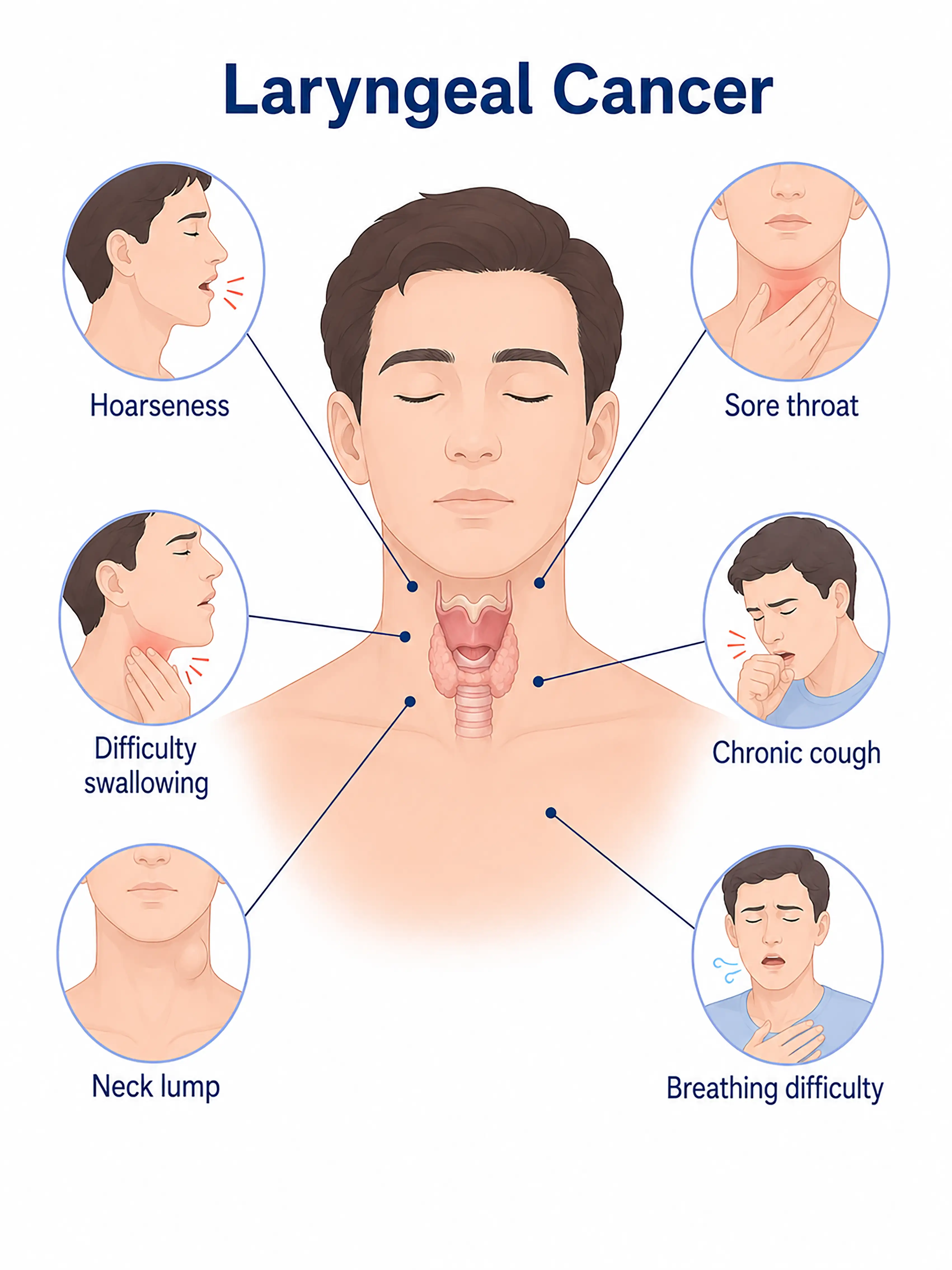
Laryngeal cancer prevalence worldwide
Laryngeal cancer accounts for a proportion of head and neck malignancies worldwide and shows a marked sex difference, with men affected significantly more often than women at a ratio of about 3-5:1. It usually occurs at ages 40-60. Smoking is the most important risk factor, and long-term drinking synergistically increases risk.
Laryngeal cancer symptoms by stage
1.Early-stage laryngeal cancer symptoms
Glottic cancer causes persistent hoarseness, supraglottic cancer causes a foreign body sensation and mild throat pain, and subglottic cancer has no obvious early symptoms. These nonspecific symptoms are easily overlooked.
2.Intermediate-stage laryngeal cancer symptoms
Hoarseness progressively worsens, with painful and difficult swallowing, blood streaks in sputum, palpable enlarged cervical lymph nodes, and mild breathing difficulty. Some patients experience referred ear pain.
3.Advanced-stage laryngeal cancer symptoms
Extensive invasion of surrounding tissues and distant metastasis cause severe breathing difficulty, persistent intense pain, massive coughing up of blood, extensive cervical lymph node metastasis, and distant organ damage.
When to Seek Medical Attention
Early signs of laryngeal cancer include persistent hoarseness lasting more than two weeks, a foreign body sensation in the throat, painful swallowing, and blood-stained sputum. Consult a doctor through "Chat with a Doctor" for early detection. During an online consultation, the doctor will ask about your smoking and drinking history and symptoms and guide you toward laryngoscopy.
Laryngeal cancer stages
Stage 0 laryngeal cancer
Cancer cells are confined to the laryngeal epithelium without crossing the basement membrane, representing carcinoma in situ. The glottic type causes persistent mild hoarseness without other obvious symptoms.
Stage I laryngeal cancer
The tumor is confined to one laryngeal subsite, with normal vocal cord movement. Glottic cancer causes persistent hoarseness, while supraglottic cancer causes a foreign body sensation in the throat.
Stage II laryngeal cancer
The tumor invades adjacent subsites or causes mildly restricted movement. Hoarseness worsens markedly, with swallowing discomfort and blood-stained sputum.
Stage III laryngeal cancer
The tumor is confined to the larynx but causes fixation, or invades surrounding tissue, producing severe hoarseness, difficulty swallowing, and enlarged cervical lymph nodes.
Stage IV laryngeal cancer
The tumor invades the thyroid or neck soft tissues, or spreads to the lungs, liver, and bones, causing severe breathing difficulty and systemic wasting.
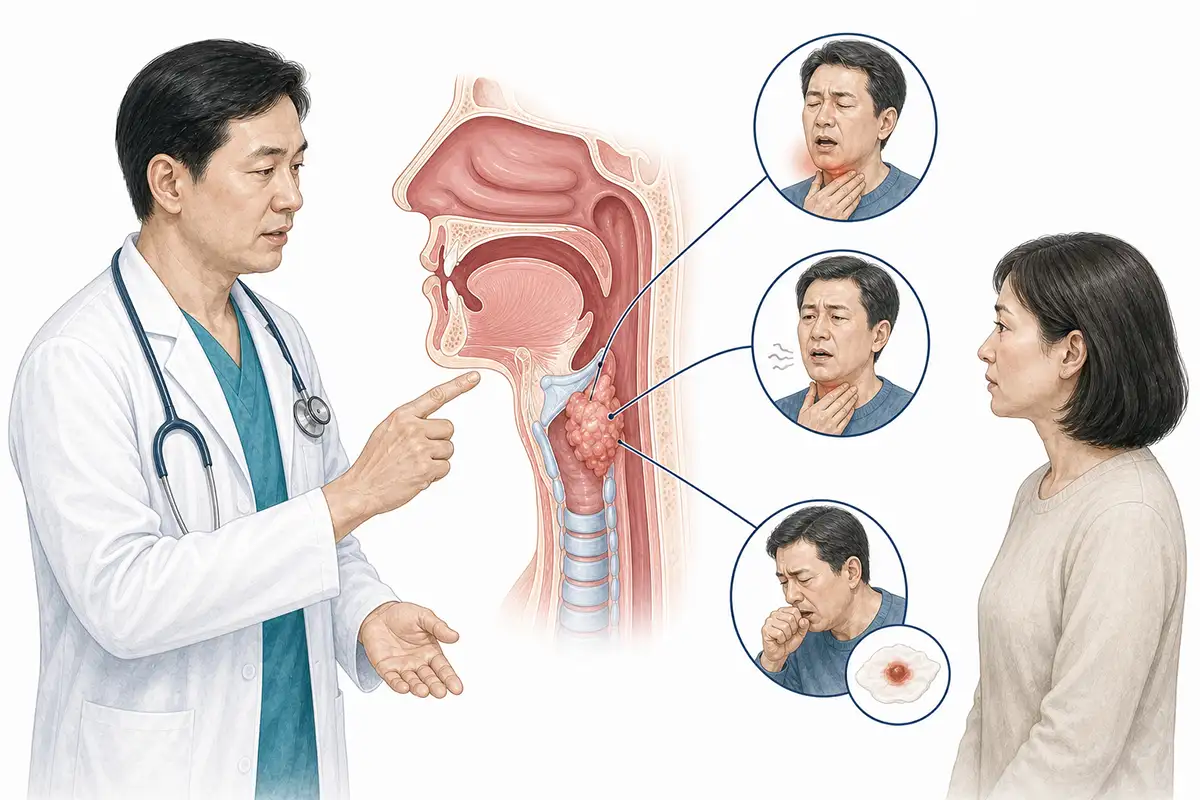
Laryngeal cancer symptoms in detail
1.Persistent hoarseness
Glottic cancer affects normal vocal cord vibration and closure, causing progressively worsening hoarseness. Persistence beyond two weeks warrants close attention. It is the most common symptom prompting patients to seek care.
2.Foreign body sensation in the throat
A common symptom of supraglottic cancer is a persistent sensation of a foreign body or retained food in the throat. Discomfort worsens on swallowing, with a feeling that cannot be swallowed down or coughed out.
3.Painful and difficult swallowing
Tumor enlargement and invasion of surrounding tissues cause painful swallowing and difficulty swallowing solids. In advanced disease, even liquids become difficult to consume, with pain radiating to the ear.
4.Blood streaks in sputum
Erosion and ulceration of the tumor surface cause minor bleeding, seen as blood streaks or old blood in sputum with an irritating dry cough, particularly in subglottic cancer.
5.Enlarged cervical lymph nodes
Supraglottic cancer readily spreads early to deep cervical lymph nodes, presenting as painless, hard lumps on the side of the neck that progressively enlarge and are poorly mobile.
6.Marked breathing difficulty
Tumor enlargement or restricted vocal cord movement narrows the glottic opening, causing inspiratory breathing difficulty with stridor. Severe cases can be life-threatening and require emergency management.
7.Severe throat pain
Invasion of deep tissues and nerves causes persistent throat pain that may radiate to the ear. Ordinary analgesics provide limited relief, and eating and sleep are affected.
8.Foul breath
Tumor necrosis with infection causes foul-smelling breath, more pronounced with poor oral hygiene, affecting social interaction and quality of life.
9.Rapid weight loss
Difficulty swallowing reduces food intake while the tumor increases energy consumption, causing marked short-term weight loss and generalized weakness. Advanced disease leads to cachexia.
Conclusion
Early diagnosis of laryngeal cancer is important for preserving voice and breathing functions. Persistent hoarseness warrants prompt medical evaluation. Quitting smoking and limiting alcohol are effective preventive measures.


