


1. Smoking factor
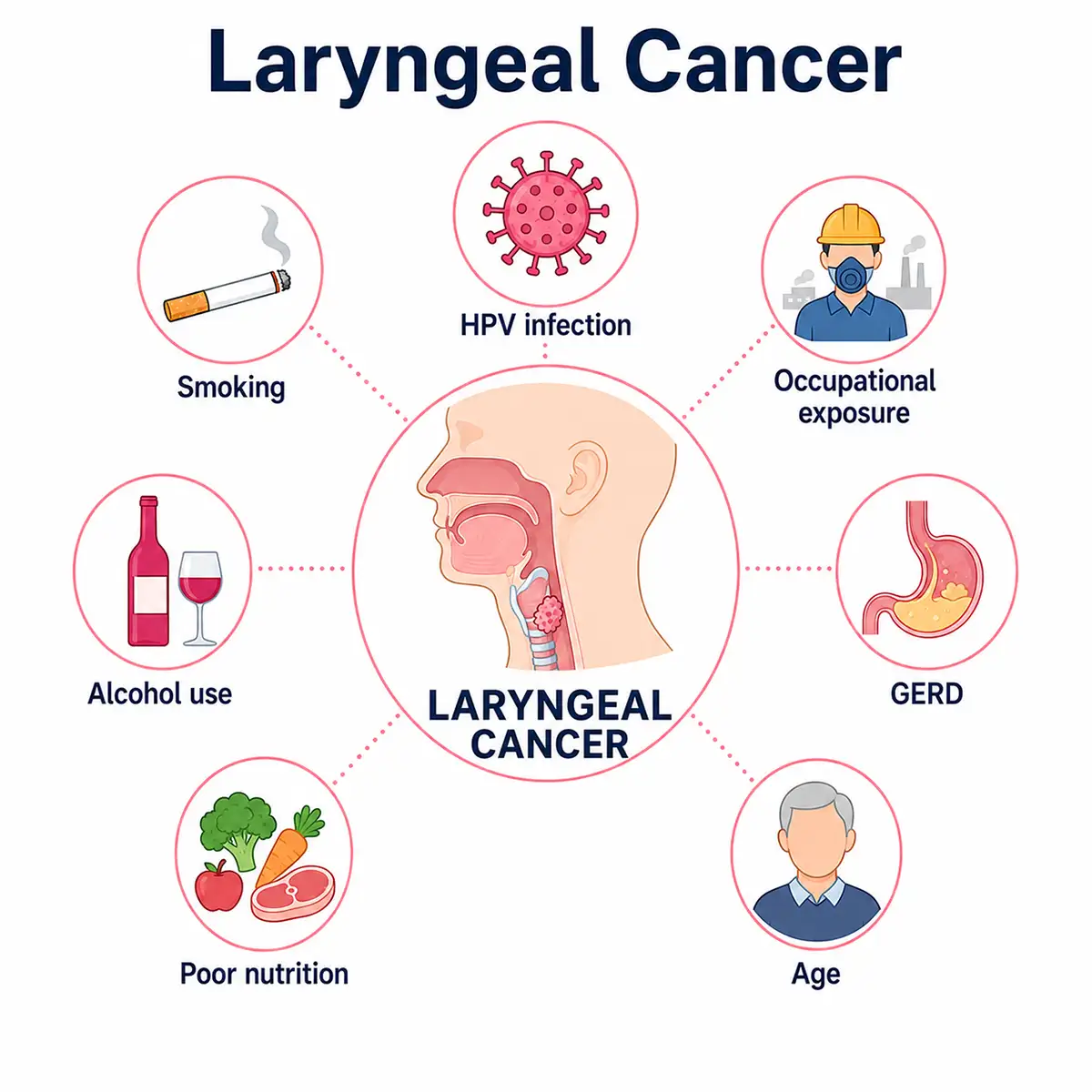
Smoking is the main risk factor for laryngeal cancer. Tobacco carcinogens directly irritate the laryngeal mucosa, and about 90% of patients have a long-term smoking history.
2. Alcohol consumption
Long-term heavy drinking increases laryngeal cancer risk. Alcohol acts as a solvent promoting carcinogen absorption and has a synergistic carcinogenic effect with smoking.
3. HPV infection
High-risk human papillomavirus infection is closely associated with some laryngeal cancers, especially supraglottic cancer. The virus can integrate into the host genome.
4. Occupational exposure
Workers with prolonged exposure to asbestos, mustard gas, nickel, leather dust, and other harmful substances have a significantly higher risk of laryngeal cancer than the general population.
5. Air pollution
Prolonged exposure to industrial emissions, sulfur dioxide, dust, and other pollutants repeatedly irritates the laryngeal mucosa and increases cancer risk.
6. Reflux factors
Laryngopharyngeal reflux caused by gastroesophageal reflux exposes the laryngeal mucosa to prolonged gastric acid irritation, causing chronic inflammation and increasing laryngeal cancer risk.
7. Sex and age
Laryngeal cancer is significantly more common in men, with a male-to-female ratio of about ten to one. It mainly affects middle-aged and older people aged 50 to 70.
Conclusion
Laryngeal cancer results from the combined effects of smoking, alcohol consumption, viral infection, and other factors, and can seriously impair breathing and voice. Quitting smoking, limiting alcohol, avoiding occupational exposure, and regular examinations for early detection and timely intervention are essential.


