


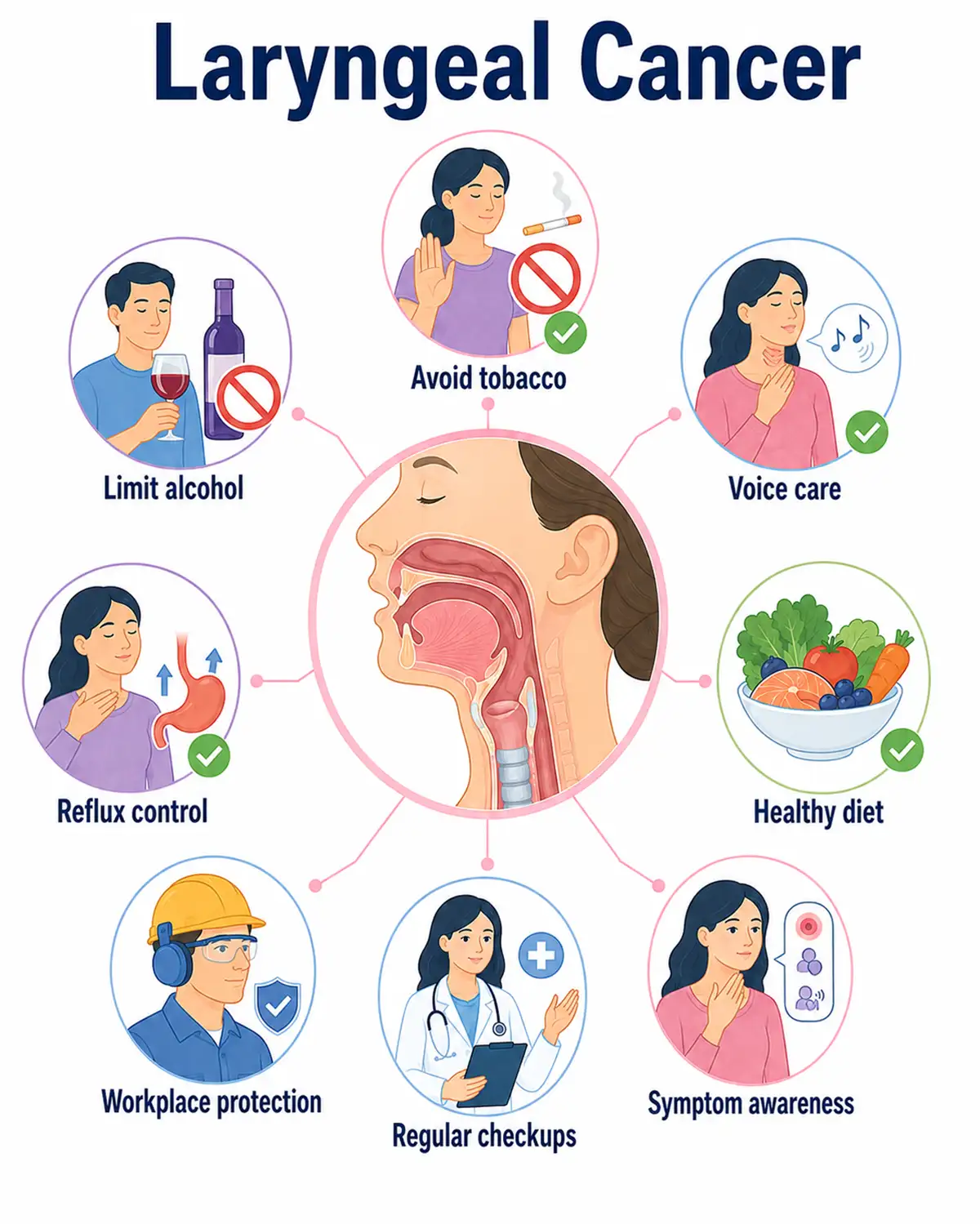
1. Stop smoking and limit alcohol
Smoking is the most important risk factor for laryngeal cancer, and about 90% of patients have a smoking history. Quitting significantly reduces risk and improves prognosis.
2. Avoid pollution
Reduce exposure to asbestos, mustard gas, nickel, leather dust, and other harmful substances. Workers in relevant occupations should use respiratory protection to reduce exposure risk.
3. Prevent and treat reflux
Actively treat gastroesophageal and laryngopharyngeal reflux. Prolonged gastric acid irritation of the laryngeal mucosa can cause chronic inflammation and increase cancer risk, warranting attention.
4. Avoid noise
Prolonged exposure to loud environments increases strain on the larynx. Professional voice users should learn proper voice techniques to avoid excessive vocal cord fatigue.
5. Dietary considerations
Eat more fresh fruit and vegetables rich in vitamins A and C and less spicy, irritating, and preserved food to protect the laryngeal mucosa and reduce irritation.
6. Maintain humidity
Keep indoor air moist to prevent throat dryness. Use a humidifier during dry seasons and avoid prolonged shouting to protect the vocal cords.
7. Regular physical examinations
Long-term smokers and drinkers, or people with hoarseness lasting more than two weeks, should promptly consult a laryngeal specialist and undergo electronic laryngoscopy when necessary to exclude early lesions.
Conclusion
Laryngeal cancer can seriously impair breathing and voice. Quitting smoking, limiting alcohol, avoiding occupational exposure, and actively treating laryngopharyngeal reflux, together with early detection and timely intervention, are crucial to improving prognosis.


