


Global disease prevalence: Germ cell tumor is a relatively rare malignant tumor worldwide; it is more common among adolescents and young adults and generally has a relatively favorable prognosis.
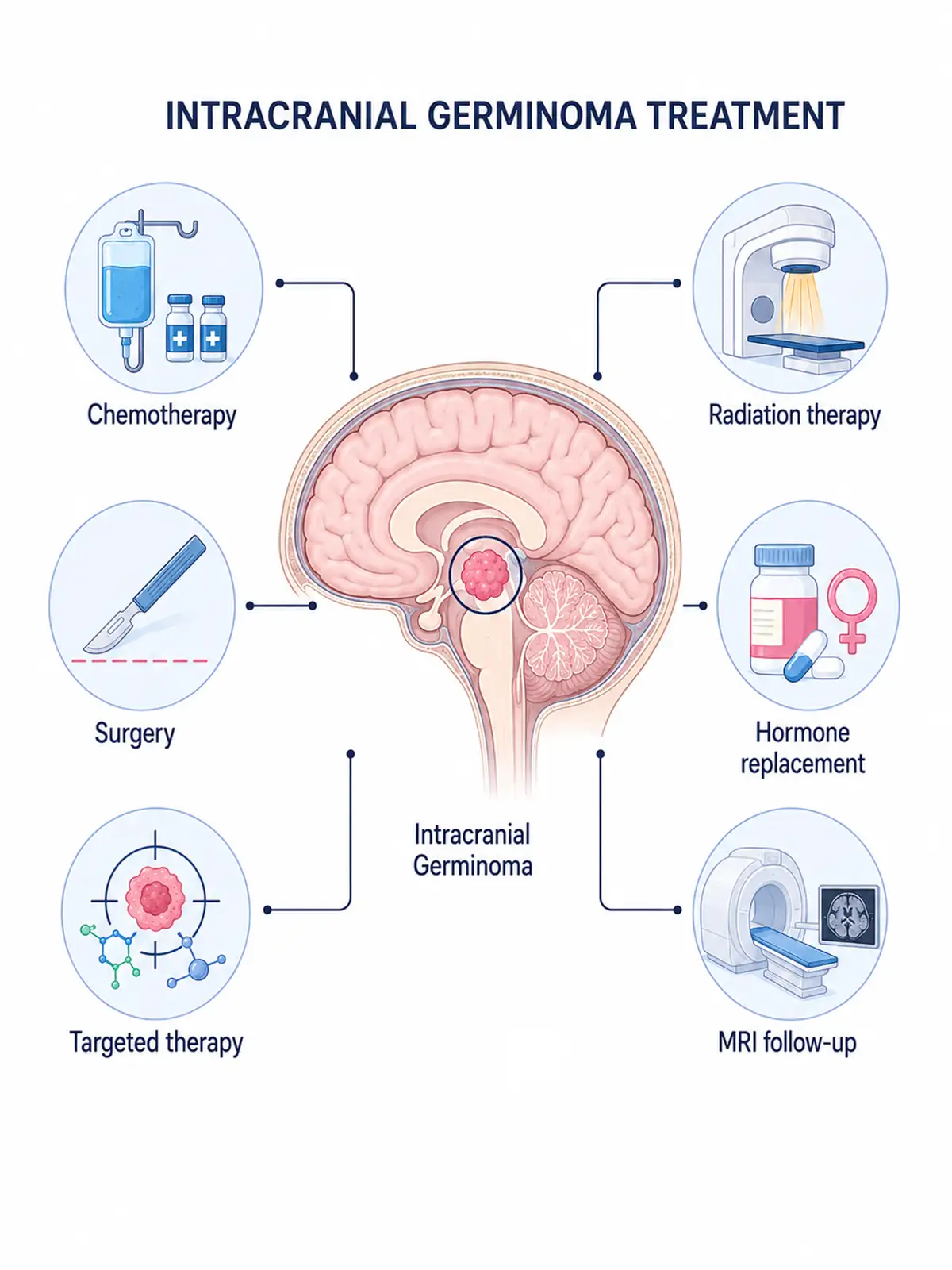
Staging-based treatment for germ cell tumors
Early treatment (involving a localized, smaller tumor with a favorable response)
consisting of surgical resection combined with adjuvant chemotherapy—can effectively control tumor progression, resulting in a relatively good prognosis for the patient.
Treatment for the intermediate stage (involving local spread; aiming to inhibit growth and delay progression)
employs a comprehensive approach—such as surgery combined with radiotherapy and chemotherapy—to control further tumor spread and slow the rate of disease deterioration.
Treatment for advanced-stage disease (involving distant metastasis, symptom relief, and survival prolongation)
primarily relies on systemic therapies such as radiotherapy and chemotherapy to alleviate clinical symptoms and extend patient survival as much as possible.
Consequences of failing to receive timely treatment in the early stage: If standardized treatment is not administered promptly in the early stage, the tumor will continue to grow and spread/metastasize to surrounding tissues and distant organs, resulting in a missed opportunity for optimal intervention and a worsening of the condition.
Why choose Fosun Health for germ cell tumor treatment
Germ cell tumors commonly affect children and adolescents and are highly sensitive to radiotherapy and chemotherapy; therefore, precise pathological diagnosis and standardized treatment protocols are crucial.The Department of Neurosurgery at Foshan Foshan-Chancheng Hospital (part of Fosun Health) was established in 1994. The department head, Professor Chen Baozhong, has performed over 3,000 surgeries and possesses profound expertise in the microsurgical gross total resection of intracranial tumors.
As part of its precision oncology center, the facility has introduced Foshan’s first 6th-generation CyberKnife M6 system.Utilizing real-time image tracking and sub-millimeter positioning technology, it delivers non-invasive, precise treatment for intracranial tumors, reducing a traditional radiotherapy course of several weeks to just 1–5 sessions. The center brings together top-tier national radiotherapy experts, including Professor Wang Enmin, former Director of the CyberKnife Center at Huashan Hospital, Fudan University.Additionally, Fosun Health has partnered with the Children's Hospital of Fudan University to establish China’s first pediatric proton therapy center, offering world-class proton therapy options for pediatric patients with germ cell tumors.
Fosun Health conducts weekly multidisciplinary team (MDT) consultations involving experts from both China and the U.S., systematically evaluating everything from imaging assessments and pathological classification to treatment pathways; this allows patients to benefit from collaborative decision-making by international experts without the need to travel abroad.Fumaining® (ruvometinib), an innovative drug developed in-house by Fosun Pharma, has been approved for treating rare pediatric diseases, offering additional innovative treatment options for patients with germ cell tumors.
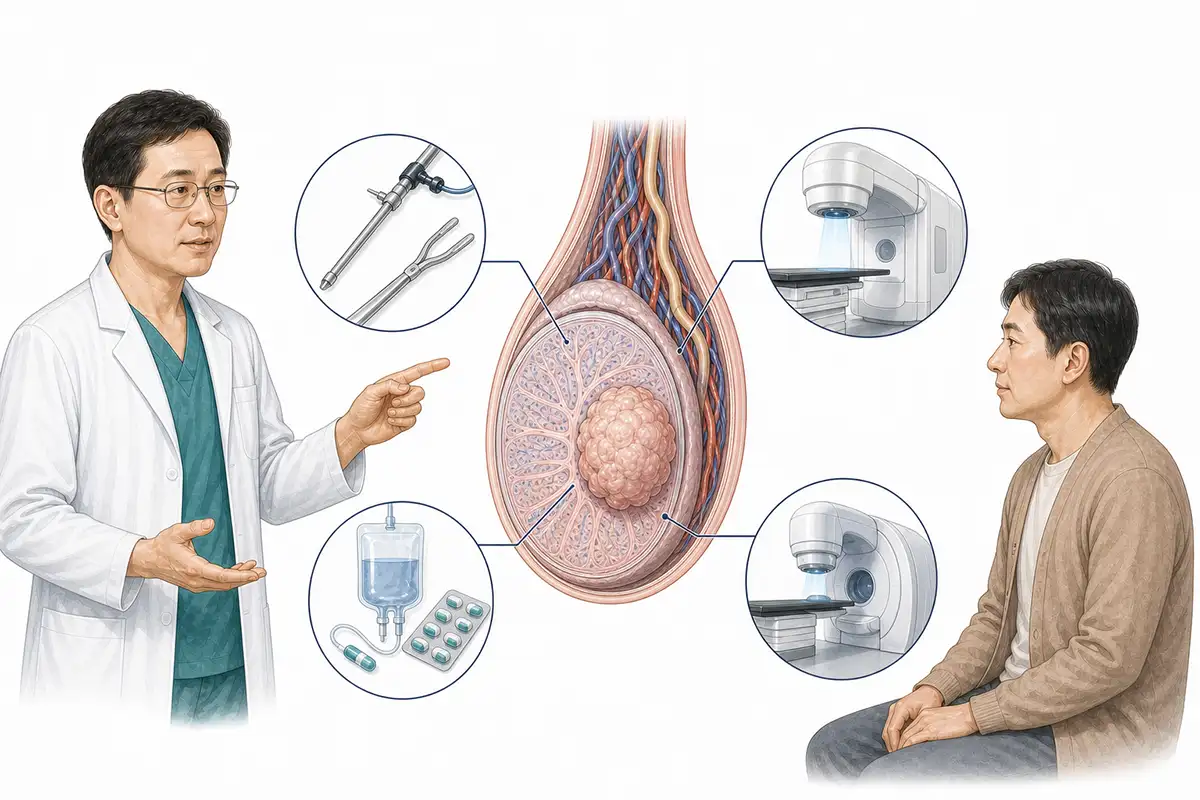
Germ Cell Tumor Treatment Methods
1.Neurosurgical biopsy and hydrocephalus treatment
For patients with an unclear pathological diagnosis, stereotactic or microsurgical biopsy may be performed based on the lesion's location and clinical status.For patients with obstructive hydrocephalus, treatments such as cerebrospinal fluid (CSF) shunting or endoscopic third ventriculostomy may be administered depending on the specific situation.
Treatment advantages:
① Definitive diagnosis: Histopathological examination helps distinguish between different types of germ cell tumors.
② Assist in classification: Integrates pathological findings and tumor markers to inform subsequent treatment plans.
③ Relief of hydrocephalus: Can improve cerebrospinal fluid circulation in patients with obstructive hydrocephalus.
④ Individualized management: Selection of an appropriate neurosurgical approach based on lesion location, clinical symptoms, and the severity of hydrocephalus.
2.VitalBeam linear accelerator precision radiotherapy
Germ cell tumors are generally quite sensitive to radiotherapy.Using the VitalBeam linear accelerator platform, precise radiotherapy plans can be formulated based on tumor location and the extent of cerebrospinal fluid (CSF) dissemination.
Treatment advantages:
① Precision irradiation: Formulate an individualized treatment plan based on the lesion and regions at risk.
② Dose optimization: Ensures appropriate coverage of the treatment area through dose distribution design.
③ Reduce radiation exposure to normal tissue: Minimize the radiation dose to surrounding normal tissues while meeting treatment requirements.
④ Suitable for combination therapy: Can be rationally combined with chemotherapy based on pathological type and treatment stage.
3.CyberKnife precision radiotherapy
For certain residual or recurrent lesions that are small in volume and located suitably for stereotactic radiotherapy, CyberKnife local therapy may be considered following multidisciplinary assessment; however, it is not a standard first-line treatment for all patients.
Treatment advantages:
① Precise localization: A local radiotherapy plan is formulated based on the location of residual or recurrent lesions.
② Non-craniotomy treatment: Does not require traditional craniotomy.
③ Localized dose concentration: Concentrates higher doses on the target lesion while minimizing radiation exposure to surrounding normal tissues.
④ Applicable to specific situations: Can provide a local treatment option for some localized residual or recurrent lesions.
4.Chemotherapy
Anti-cancer drugs such as platinum-based agents are used to kill cancer cells;germ cell tumors are sensitive to chemotherapy, allowing for effective control of tumor progression and achieving therapeutic results.
5.Targeted therapy
Delivers precision strikes against specific molecular targets; offers good efficacy with relatively mild side effects; suitable for select patients with advanced-stage disease.Helps improve therapeutic outcomes.
6.Immunotherapy
Activates the body's immune system to recognize and attack cancer cells, providing a new treatment option for patients with advanced germ cell tumors to improve therapeutic outcomes.
7.Neoadjuvant therapy
Using chemotherapy drugs preoperatively to shrink tumor volume creates more favorable conditions for subsequent surgical resection and increases the success rate, thereby enhancing therapeutic efficacy.
8.Comprehensive therapy
Formulate an individualized comprehensive treatment plan based on the patient's specific condition, combining modalities such as surgery, radiotherapy, and chemotherapy to enhance therapeutic efficacy.
9.Supportive care
Approaches such as nutritional support, psychological counseling, and symptom management can comprehensively improve the patient's physical condition and quality of life, as well as consolidate therapeutic efficacy.
Post-treatment care
Maintain a regular daily routine and a balanced diet; avoid strenuous exercise; attend scheduled follow-up appointments and actively cooperate with subsequent treatment as advised.
Post-treatment examinations
Regular tumor marker testing, follow-up imaging, and physical examinations are required after treatment to detect changes in the condition in a timely manner.
Conclusion
The risks associated with germ cell tumors cannot be overlooked; successful treatment hinges on early detection, diagnosis, and intervention, as well as selecting the appropriate treatment plan and adhering to follow-up care.


