


1. History of undescended testis
Cryptorchidism (undescended testicle) is the most significant risk factor for testicular germ cell tumors; the risk of developing the disease in individuals with undescended testicles is five to ten times higher than in the general population, and the risk remains elevated even after surgical correction.
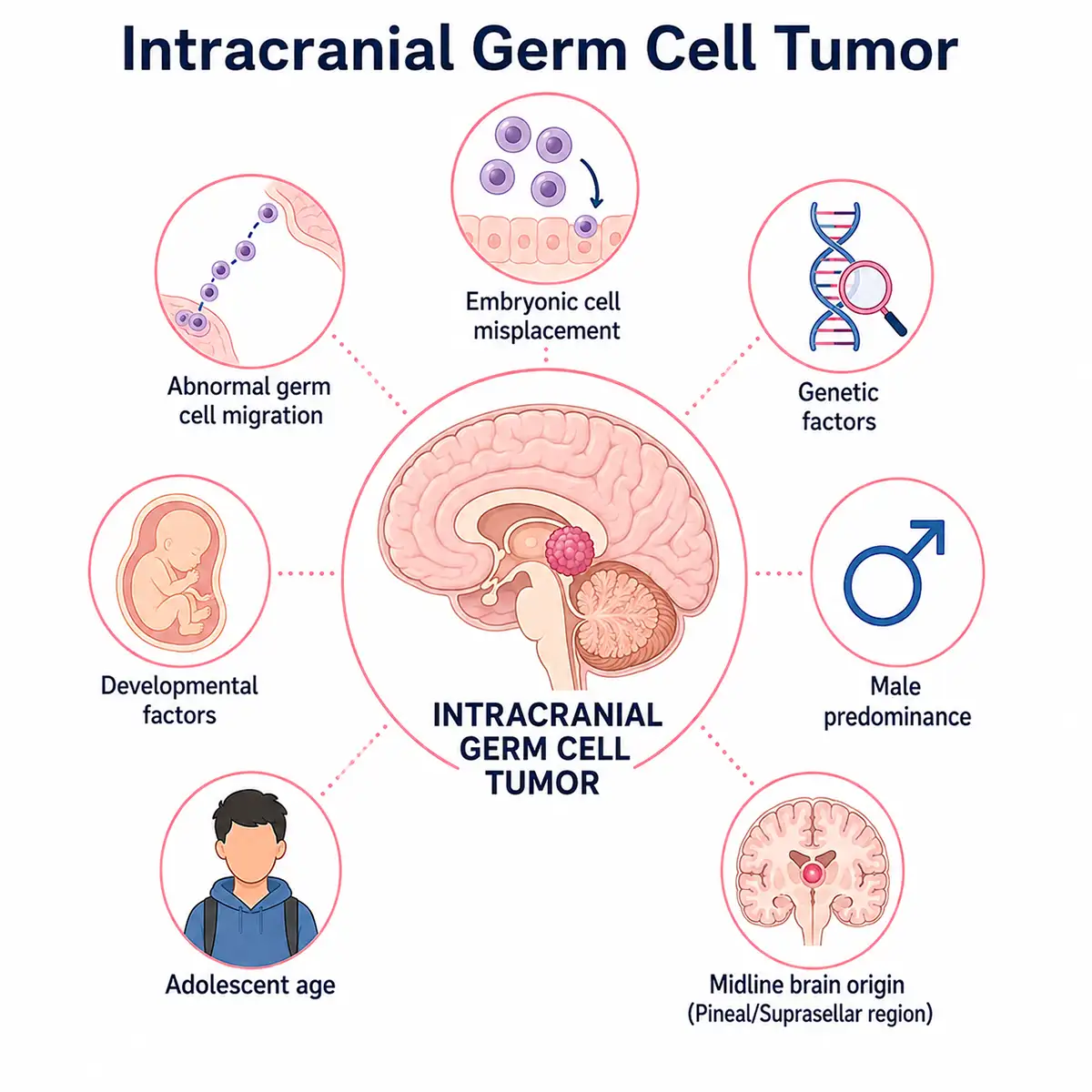
2. Genetic factors
A family history of testicular germ cell tumors increases the risk of developing the disease; certain genetic predispositions render individuals more sensitive to carcinogens.
3. Klinefelter syndrome
Patients with Klinefelter syndrome possess an extra X chromosome, placing them at a significantly higher risk of developing testicular germ cell tumors compared to the general male population.
4. Embryonic development
Abnormal migration or impaired differentiation of germ cells during embryonic development can lead to the persistence of primordial germ cells and their subsequent malignant transformation.
5. History of tumors
Patients with a history of germ cell tumor in the contralateral testis are at significantly increased risk of developing a tumor in the remaining testis and require long-term follow-up monitoring.
6. Viral infection
Certain viral infections, such as HIV, may increase the risk of testicular germ cell tumors; an immunosuppressed state is associated with tumor development.
7. Age factors
Testicular germ cell tumors are most common in young adults aged 15 to 35, whereas ovarian germ cell tumors are more frequently seen in children and young women.
Conclusion
Germ cell tumors result from the combined effects of various factors, such as undescended testes and genetic predisposition;they are serious malignancies common in young adult males.For children with undescended testes, early surgical correction and regular check-ups are crucial for early detection and timely intervention.


