


Prevalence worldwide
Gastric cancer has a high incidence worldwide, particularly in East Asia and parts of South America, and seriously threatens health.
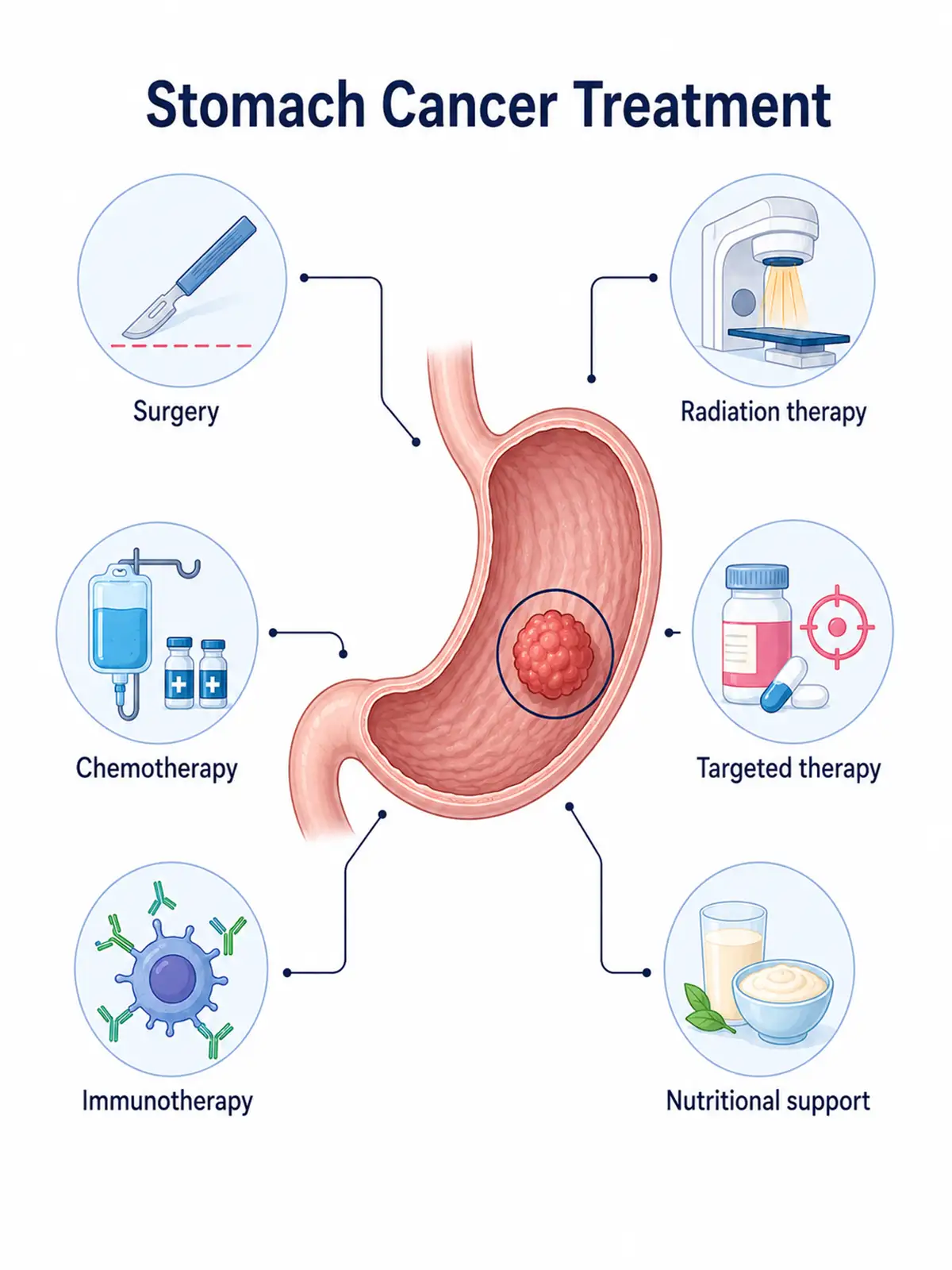
Gastric cancer treatment by stage
Early treatment (involving a localized, small tumor with a favorable response)
specifically surgical resection combined with adjuvant therapy—can effectively control tumor progression, and the patient's prognosis is relatively good.
Intermediate-stage treatment (addressing local spread, inhibiting growth, and delaying progression)
employs a comprehensive approach—such as surgery combined with chemoradiotherapy and targeted therapy—to control further tumor spread and slow the rate of disease deterioration.
Treatment for advanced disease (distant metastasis; aimed at symptom relief and survival prolongation)
primarily employs systemic therapies such as chemotherapy, targeted therapy, immunotherapy, and others to alleviate clinical symptoms and extend patient survival as much as possible.
Why choose Fosun Health for gastric cancer treatment
Fosun Health draws on its hospitals' da Vinci robotic systems, M6 CyberKnife, VitalBeam, molecular testing, and medical oncology platforms, alongside innovative drug resources from Fosun Pharma. Henlius' independently developed anti-PD-1 antibody HANSIZHUANG (serplulimab) has been approved for perioperative treatment of resectable gastric cancer with PD-L1 CPS≥5. The team assesses eligibility according to stage, PD-L1, and physical condition.
Gastrointestinal surgery, medical oncology, radiotherapy, pathology, imaging, and nutrition specialists jointly coordinate surgery, immunotherapy, and other systemic treatments. Robotic surgery reduces abdominal wall trauma, while precision radiotherapy minimizes liver, kidney, and bowel exposure to reduce some adverse effects. Fosun Health provides continuous management from preoperative treatment and surgery to postoperative medication, nutritional rehabilitation, and follow-up.
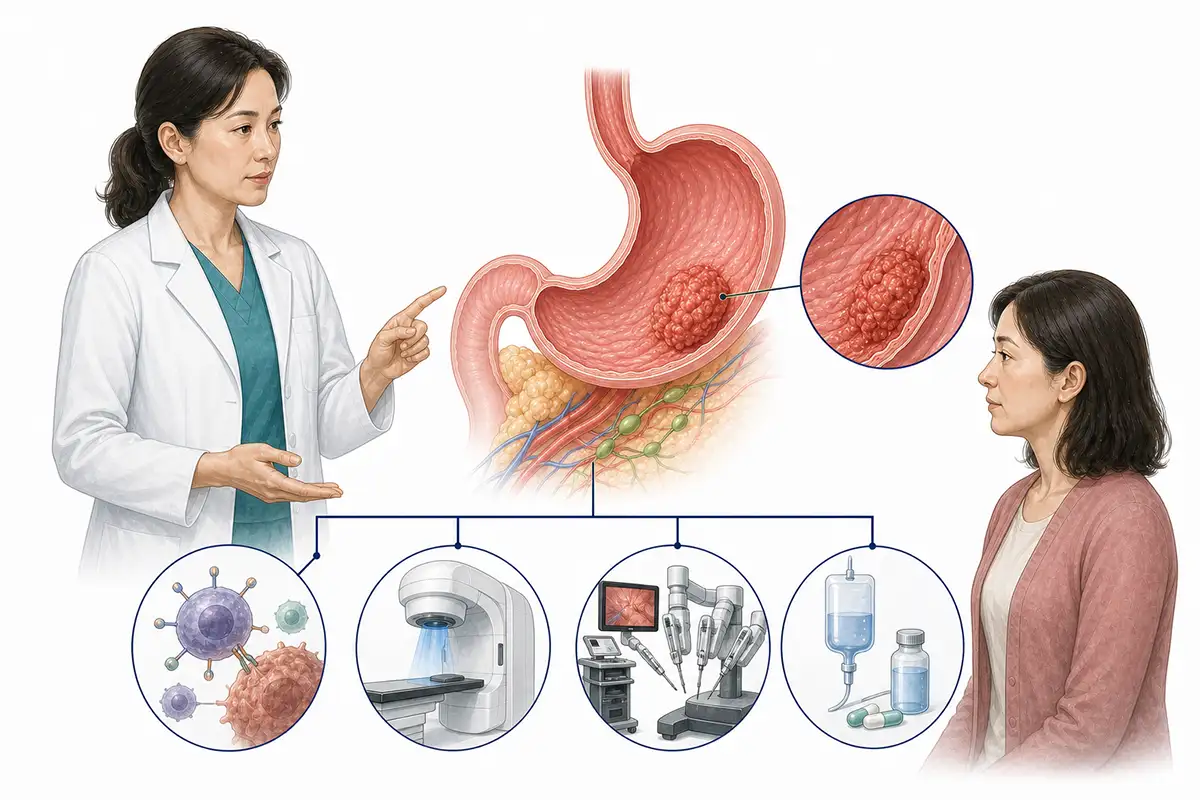
Gastric cancer treatment methods
1.CLDN18.2-targeted CAR-T cell therapy
The patient's own T cells are collected and modified to recognize CLDN18.2. Suitable for CLDN18.2-positive advanced gastric or gastroesophageal junction adenocarcinoma meeting approved indications.
Treatment advantages:
①Target-based selection: Confirm CLDN18.2 expression and eligibility before treatment.
②Offers a new mechanism: Suitable for eligible patients progressing after multiple systemic treatment lines.
③Full-process management: Covers collection, conditioning, cell infusion, and long-term follow-up.
④Enhanced risk monitoring: Focuses on cytokine release syndrome, infection, and related risks.
2.M6 CyberKnife treatment
Suitable for MDT-assessed small gastric bed or anastomotic recurrences, regional nodal recurrence, and liver or lung oligometastases.
Treatment advantages:
①Focuses on localized recurrence: Suitable for selected small lesions unsuitable for further surgery.
②Protects abdominal organs: Reduces doses to the stomach, duodenum, kidneys, and bowel.
③ Treatment in fewer fractions: Reduces disruption of systemic treatment schedules by local therapy.
④Strictly limited scope: Does not replace standard surgery for resectable gastric cancer.
3.VitalBeam precision radiotherapy
Suitable for selected chemoradiotherapy in locally advanced disease, supplementary postoperative high-risk treatment, and treatment of bleeding, pain, obstruction, or local recurrence.
Treatment advantages:
①Covers gastric bed and nodes: Adapts to complex anastomotic and retroperitoneal targets.
②Protects abdominal organs: Reduces doses to the liver, kidneys, small bowel, and spinal cord.
③Improves local symptoms: Helps control selected bleeding, pain, and obstruction.
④ Facilitates combination therapy: Can be integrated with chemotherapy, targeted therapy, or immunotherapy.
4.da Vinci robot-assisted or laparoscopic radical gastric cancer surgery
Suitable for staged, resectable early and intermediate disease and selected locally advanced gastric cancers.
Treatment advantages:
①Precise lymph node dissection: Facilitates management of perigastric vessels and complex lymphatic regions.
②Reduces abdominal wall trauma: Promotes early mobilization and gastrointestinal recovery.
③Provides complete pathology: Establishes margins, invasion depth, and lymph node status.
④Coordinates nutrition management: Helps patients begin postoperative rehabilitation and adjuvant treatment early.
5.Chemotherapy
Anticancer drugs systemically destroy potential cancer cells and effectively control progression, commonly in intermediate and advanced gastric cancer.
6.Targeted therapy
Precisely attacks molecular targets such as HER2, with good efficacy and relatively fewer side effects, suitable for advanced disease.
7.Immunotherapy
Activating the immune system to recognize and attack cancer cells offers a new effective treatment option for advanced gastric cancer.
8.Interventional therapy:
Suitable for selected patients with tumor bleeding, gastrointestinal obstruction, or inability to receive conventional treatment. Embolization, stenting, or selective infusion can relieve local symptoms.
Follow-up care after treatment
Eat regular, small, frequent meals, avoid irritating foods, attend follow-up appointments as instructed, and cooperate with subsequent treatment.
Post-treatment examinations
Regular gastroscopy, tumor marker testing, and follow-up imaging are needed to detect changes promptly.
Conclusion
Gastric cancer is a serious disease. Early detection, diagnosis, and intervention are central to treatment. An appropriate treatment plan and continued follow-up help improve quality of life and prolong survival.


