


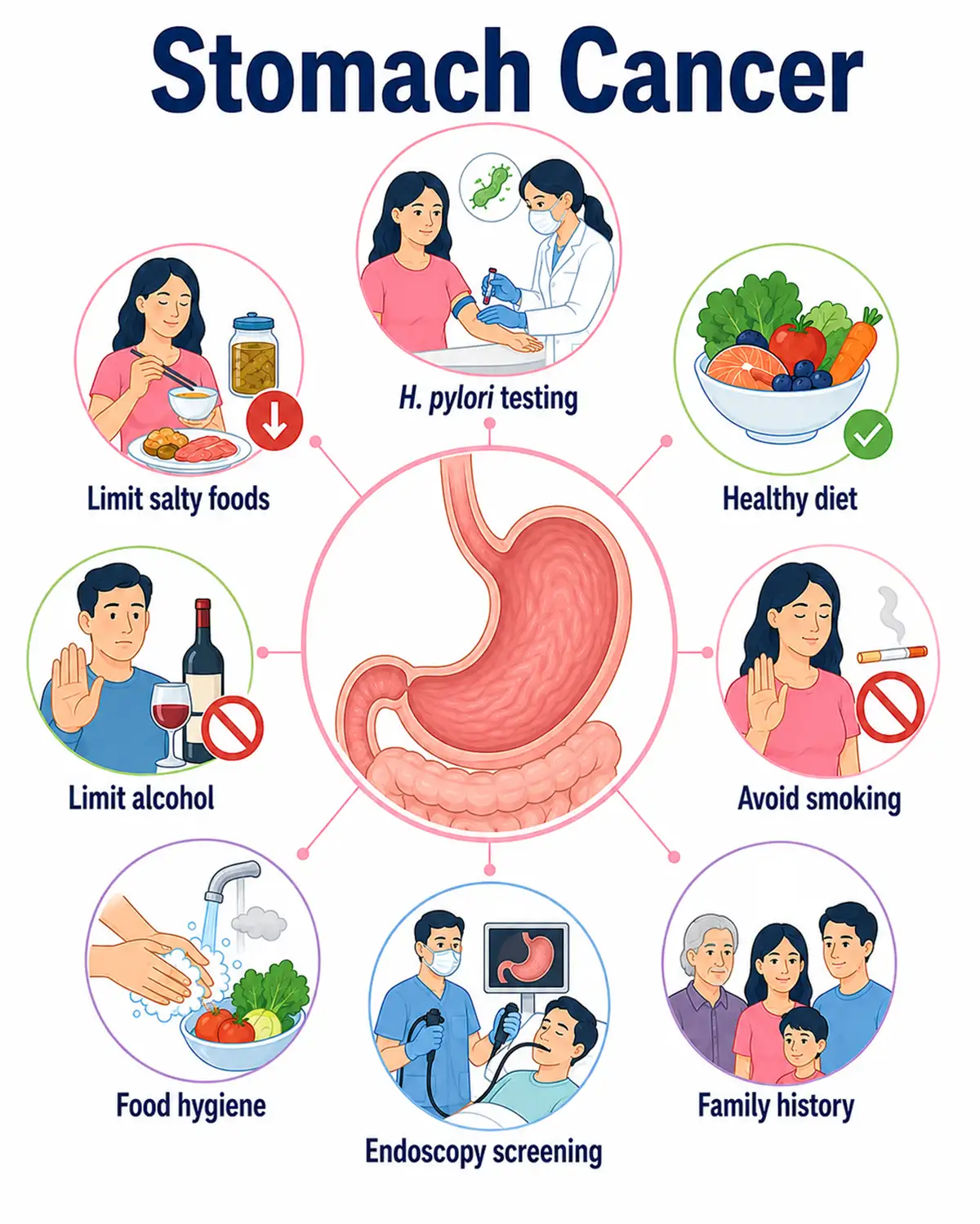
1. Eradicate Helicobacter pylori
H. pylori is a Group 1 carcinogenic factor for gastric cancer. Infected people should receive standardized eradication and confirmation testing, which effectively reduces risk.
2. Eat fewer pickled foods
Reduce preserved, smoked, and barbecued foods. They contain nitrites, benzo[a]pyrene, and other potent carcinogenic substances, and long-term consumption is highly harmful.
3. Eat more fruit and vegetables
Increase fresh fruit and vegetables. Their vitamin C and antioxidants inhibit nitrosamine formation, protect gastric mucosa, and lower risk.
4. Smoking and alcohol cessation
Smoking and heavy drinking damage gastric mucosa and increase cancer risk. Quitting smoking and limiting alcohol significantly reduce risk and improve prognosis.
5. Regular eating habits
Eat regular, measured meals without overeating. Avoid excessively hot or hard foods to reduce repeated mucosal injury and chronic inflammatory irritation.
6. Weight control
Obesity, especially abdominal obesity, increases gastric cancer risk. A healthy weight and moderate exercise help regulate gastrointestinal function and lower risk.
7. Regular gastroscopy
People over 40 or with a family history should have regular gastroscopy. Early detection of precancerous lesions and early gastric cancer significantly improves treatment outcomes.
Conclusion
Gastric cancer is a highly prevalent and harmful malignancy worldwide. H. pylori eradication, improved dietary habits, and regular gastroscopy for early detection and timely intervention are crucial to improving prognosis.


