


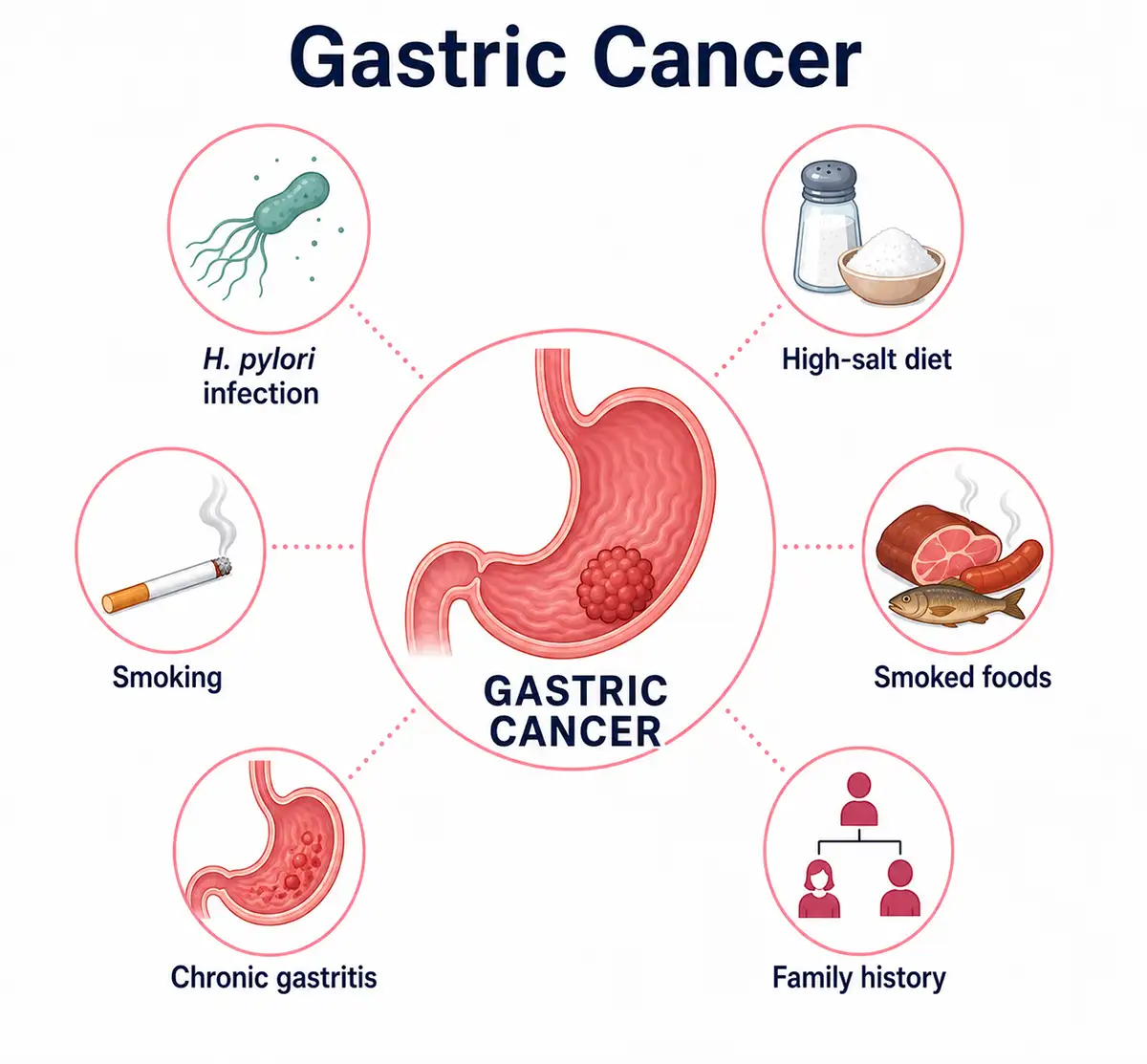
1. Helicobacter pylori
H. pylori infection is a Group 1 carcinogenic factor for gastric cancer. It causes chronic active gastritis and promotes mucosal atrophy and intestinal metaplasia, eventually leading to cancer.
2. Preserved foods
Long-term intake of high-salt preserved foods such as pickled vegetables and salted fish increases risk because their nitrites can become potent carcinogenic nitrosamines.
3. Barbecued and smoked foods
Barbecued and smoked foods contain potent carcinogenic polycyclic aromatic hydrocarbons such as benzo[a]pyrene. Long-term consumption damages gastric mucosa and significantly increases risk.
4. Smoking and alcohol
Tobacco carcinogens enter the stomach through saliva and directly irritate the mucosa, while alcohol damages the gastric barrier. Together, they increase gastric cancer risk.
5. Genetic factors
Gastric cancer shows familial clustering. Having a first-degree relative with gastric cancer increases risk by 1.5 to 2.5-fold.
6. Chronic gastric disease
Long-standing precancerous lesions such as chronic atrophic gastritis, gastric polyps, and gastric ulcers may undergo malignant transformation through repeated injury and repair.
7. Nutritional deficiencies
Insufficient fresh fruit and vegetable intake causes vitamin and antioxidant deficiencies, weakening gastric mucosal protection and increasing malignant transformation risk.
Conclusion
Gastric cancer results from the combined effects of H. pylori infection, unhealthy diets, and other factors and is a highly prevalent, harmful malignancy worldwide. Eradication, improved dietary habits, and regular gastroscopy screening for early detection and timely intervention are essential.


