


Gastric cancer arises from malignant transformation of gastric mucosal epithelial cells. Nonspecific early symptoms include upper abdominal discomfort, indigestion, and reduced appetite, easily mistaken for ordinary stomach disease.
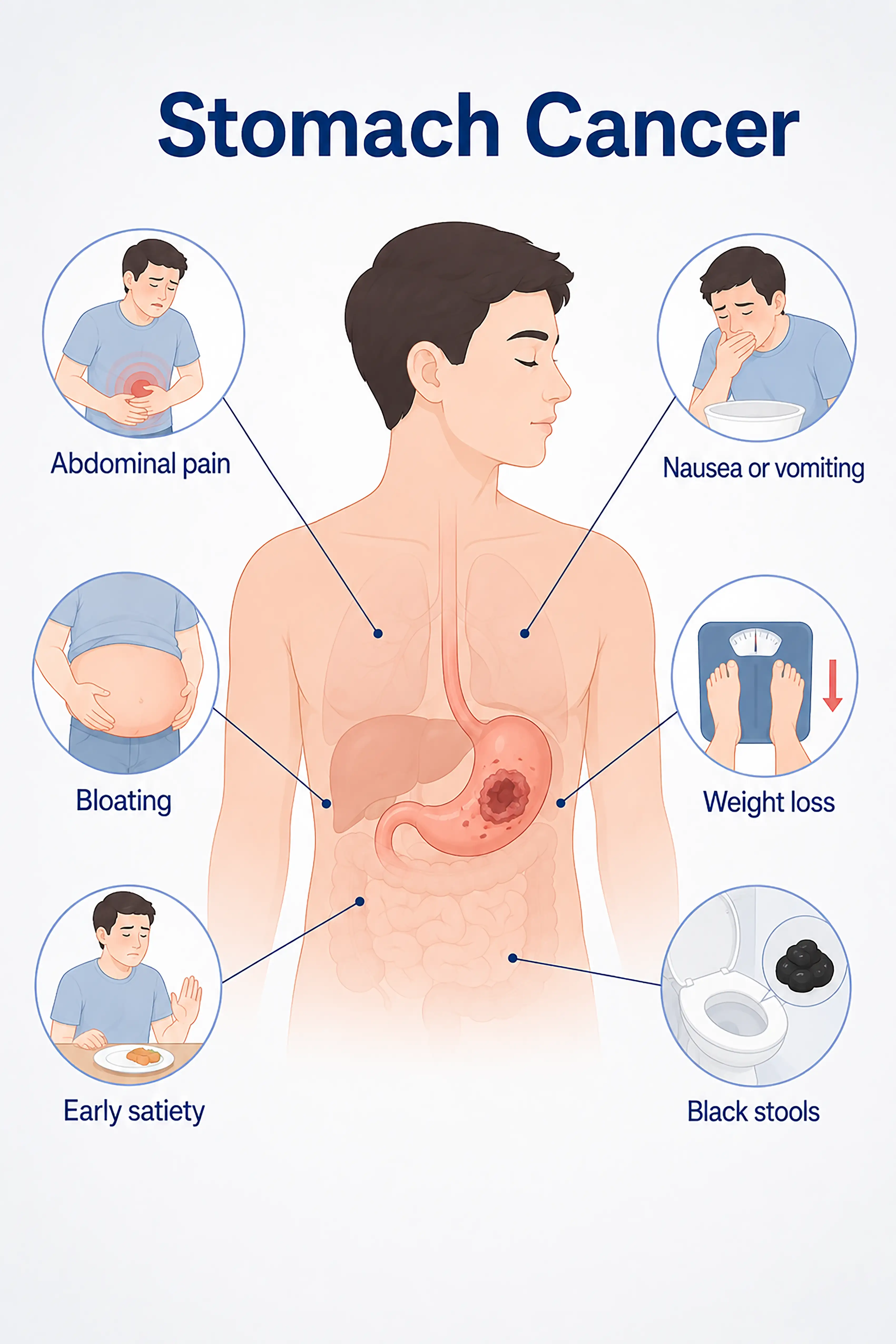
Gastric cancer prevalence worldwide
Gastric cancer is common worldwide and carries a substantial mortality burden. Incidence is higher in parts of East Asia, Eastern Europe, and South America and is associated with Helicobacter pylori infection, smoking, high-salt diets, preserved foods, and inherited susceptibility. Rates are generally higher in men, and risk increases with age.
Gastric cancer symptoms by stage
1.Early-stage gastric cancer symptoms
The tumor is confined to the gastric mucosa or submucosa and usually causes no obvious symptoms. Dull upper abdominal pain, fullness, reduced appetite, and mild nausea may resemble chronic gastritis or indigestion.
2.Intermediate-stage gastric cancer symptoms
Upper abdominal pain worsens and persists, fullness after meals becomes pronounced, black stools or positive fecal occult blood develop, and weight loss begins, with weakness and anemia.
3.Advanced-stage gastric cancer symptoms
Extensive local invasion and distant metastasis cause persistent severe pain, vomiting, vomiting blood, severe weight loss, abdominal masses, and symptoms of distant spread.
When to Seek Medical Attention
Early signs include persistent upper abdominal pain, worsening indigestion, black stools, and unexplained weight loss. Consult a doctor through "Chat with a Doctor" for early detection. During an online consultation, the doctor will ask about your diet and symptoms and guide you toward gastroscopy.
Gastric cancer stages
Stage 0 gastric cancer
Cancer cells are confined to the gastric mucosal epithelium, representing carcinoma in situ, usually without obvious symptoms and sometimes found incidentally through gastroscopy screening.
Stage I gastric cancer
The tumor is confined to the mucosa or submucosa and may cause nonspecific dull upper abdominal pain, fullness, and reduced appetite.
Stage II gastric cancer
The tumor invades the muscle layer, with local lymph node metastasis, worsening upper abdominal pain, black stools, and weight loss.
Stage III gastric cancer
The tumor penetrates the gastric wall or extensively invades surrounding tissue, with regional lymph node metastasis, persistent abdominal pain, vomiting, and marked weight loss.
Stage IV gastric cancer
Distant spread to the liver, lungs, bones, and peritoneum causes persistent severe pain, cachexia, and multiple organ failure.
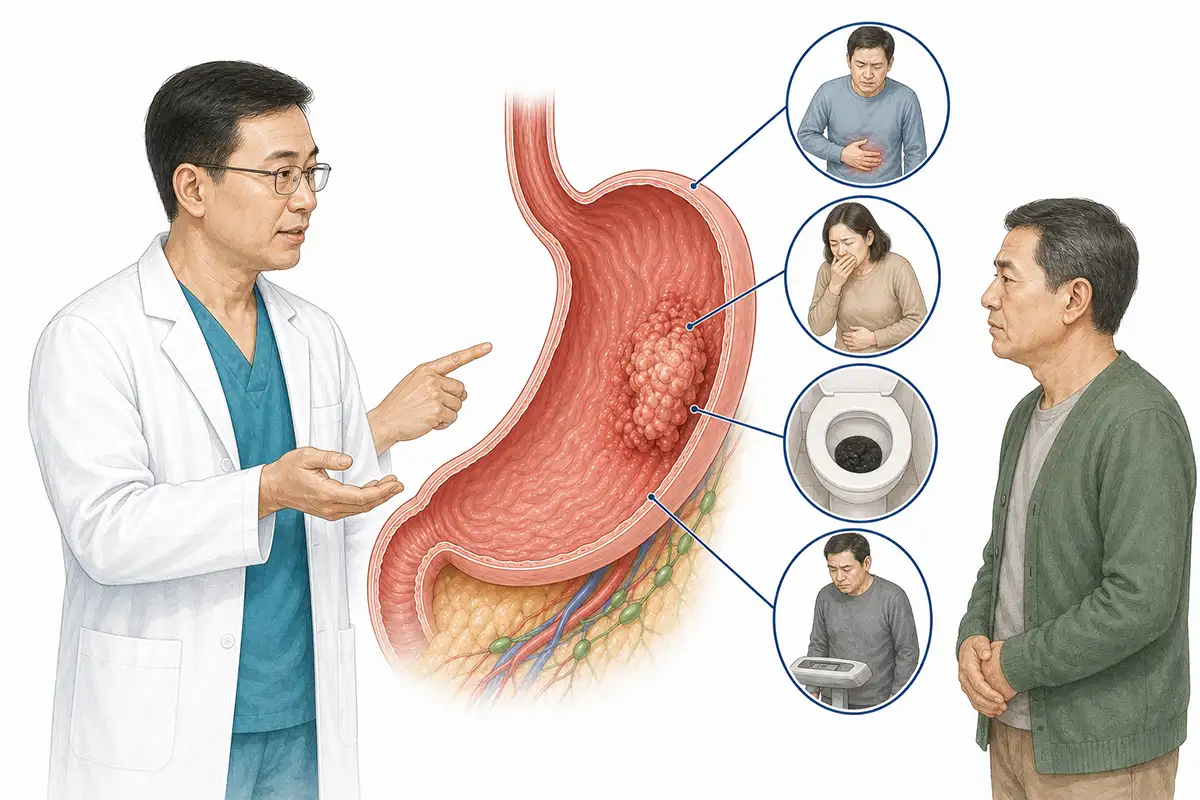
Gastric cancer symptoms in detail
1.Persistent dull upper abdominal pain
The most common early symptom is persistent dull or aching upper abdominal pain, worse after eating. It resembles indigestion or gastritis but does not resolve.
2.Fullness and poor appetite
Small amounts of food cause fullness, with markedly reduced appetite, nausea, and belching, and particular aversion to greasy foods.
3.Black stools and anemia
Erosion and bleeding on the tumor surface result in melena or a positive fecal occult blood test;chronic blood loss causes iron-deficiency anemia, manifesting as facial pallor and fatigue.
4.Rapid weight loss
Difficulty eating and tumor-related consumption may cause several kilograms of weight loss within months, with weakness and malnutrition.
5.Frequent nausea and vomiting
Antral tumors may cause pyloric obstruction and frequent vomiting of retained food or coffee-colored fluid with a foul odor.
6.Upper abdominal mass
Tumor enlargement or liver metastasis may produce a palpable hard upper abdominal mass with an uneven surface and tenderness, indicating progression.
7.Marked swallowing difficulty
Gastric cardia cancer causes difficulty swallowing, a retrosternal blockage sensation during eating, difficulty swallowing solids, and reflux.
8.Worsening persistent severe pain
Invasion of the pancreas or retroperitoneal nerve plexus causes persistent severe pain radiating to the back and poorly relieved by ordinary analgesics.
9.Ascites and abdominal distension
Peritoneal metastasis causes ascites, marked abdominal enlargement, bloating, and breathing difficulty, indicating advanced disease.
Conclusion
Nonspecific early symptoms are easily overlooked, and intermediate and advanced gastric cancer have poorer prognoses. H. pylori eradication, a low-salt diet, and regular gastroscopy help with prevention and early detection.


