


Gallbladder cancer is a relatively rare tumor arising from the malignant transformation of the gallbladder mucosal epithelial cells; early symptoms are inconspicuous and often resemble those of gallstones or chronic cholecystitis, making it prone to being overlooked.
Global incidence of gallbladder cancer
Gallbladder cancer is the most common malignant tumor of the biliary tract, although its overall incidence is low.It predominantly affects the elderly (over 70 years old) and is more common in women than in men (with a female-to-male ratio of approximately 2–3:1).Gallstones and gallbladder polyps are major risk factors.Due to the lack of obvious early symptoms, most patients are diagnosed at an advanced stage, resulting in a poor prognosis.
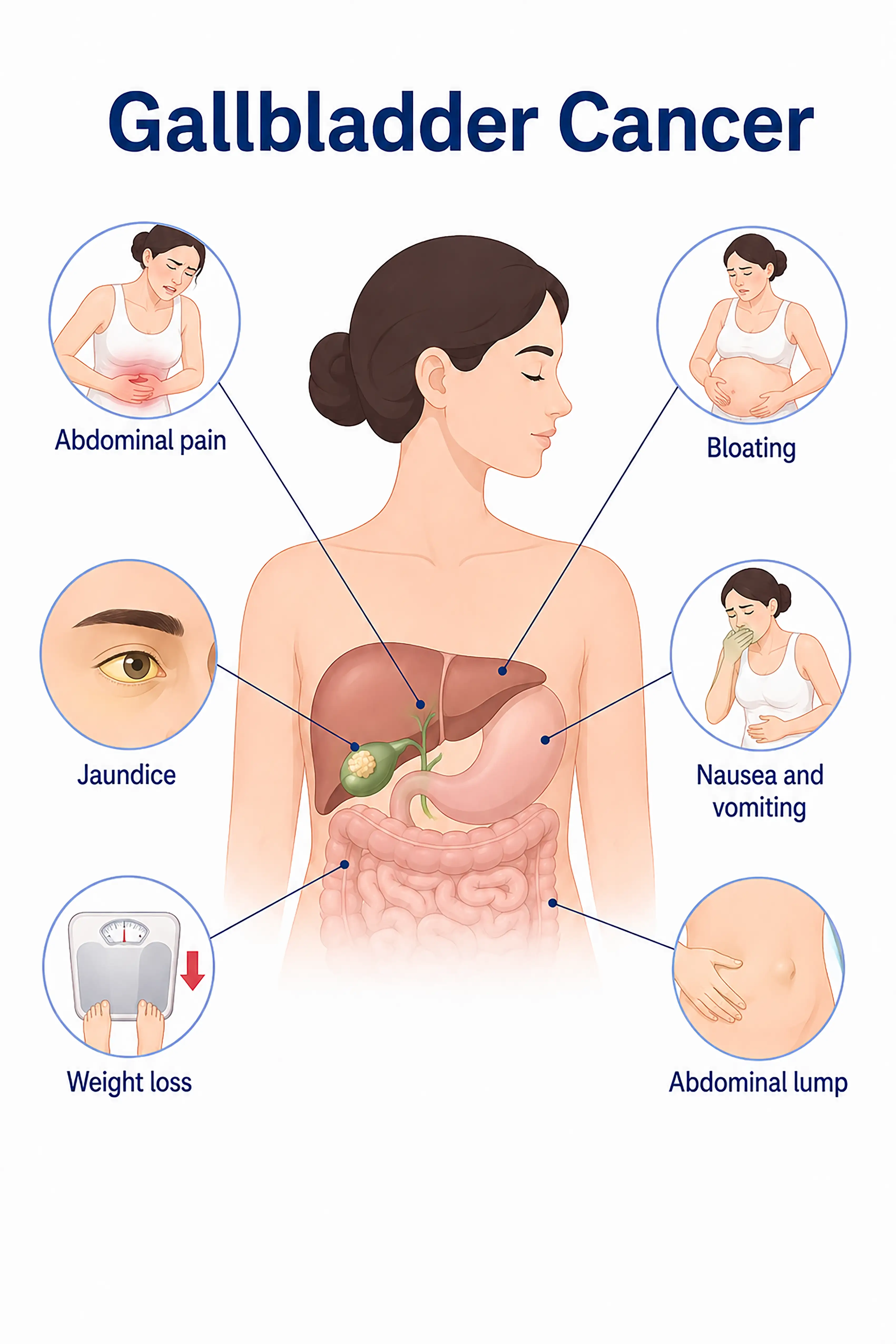
Symptoms associated with gallbladder cancer stages
1Early symptoms of gallbladder cancer
The tumor is confined to the gallbladder and typically presents without obvious symptoms, or manifests only as dull right upper quadrant pain and indigestion—symptoms similar to those of gallstones or chronic cholecystitis—making it easily overlooked.
2.Symptoms of mid-stage gallbladder cancer
Worsening and persistent right upper quadrant pain, accompanied by jaundice, abdominal distension, and weight loss; a palpable mass may be felt in the right upper quadrant.
3.Symptoms of advanced gallbladder cancer
Tumor extensively invades the liver and surrounding tissues; presents with persistent severe pain, severe jaundice, massive ascites, cachexia, and symptoms of distant metastasis.
When to Seek Medical Attention
Early signs of gallbladder cancer include persistent pain in the upper right abdomen, jaundice, an abdominal mass, and unexplained weight loss.Please consult a doctor via the "Chat with a Doctor" feature to facilitate early detection.During the online consultation, the doctor will ask about your history of gallbladder disease and your symptoms, and guide you through the process of getting abdominal ultrasound and CT scans.
Staging of gallbladder cancer
Stage 0 gallbladder cancer
Cancer cells are confined to the gallbladder mucosal epithelium; this is classified as carcinoma in situ. It is often asymptomatic and frequently detected incidentally during surgery for gallstones.
Stage I gallbladder cancer
The tumor is confined to the gallbladder wall without lymph node metastasis; patients may experience dull right upper quadrant pain or symptoms resembling cholecystitis.
Stage II gallbladder cancer
Tumor penetrates the gallbladder wall or invades surrounding tissues, accompanied by regional lymph node metastasis; symptoms include abdominal pain and jaundice.
Stage III gallbladder cancer
Tumor extensively invades the liver or adjacent organs, accompanied by regional lymph node metastasis; symptoms are severe and progressively worsening.
Stage IV gallbladder cancer
The tumor metastasizes to the lungs, bones, and peritoneum, presenting with persistent severe pain, cachexia, and multi-organ failure.
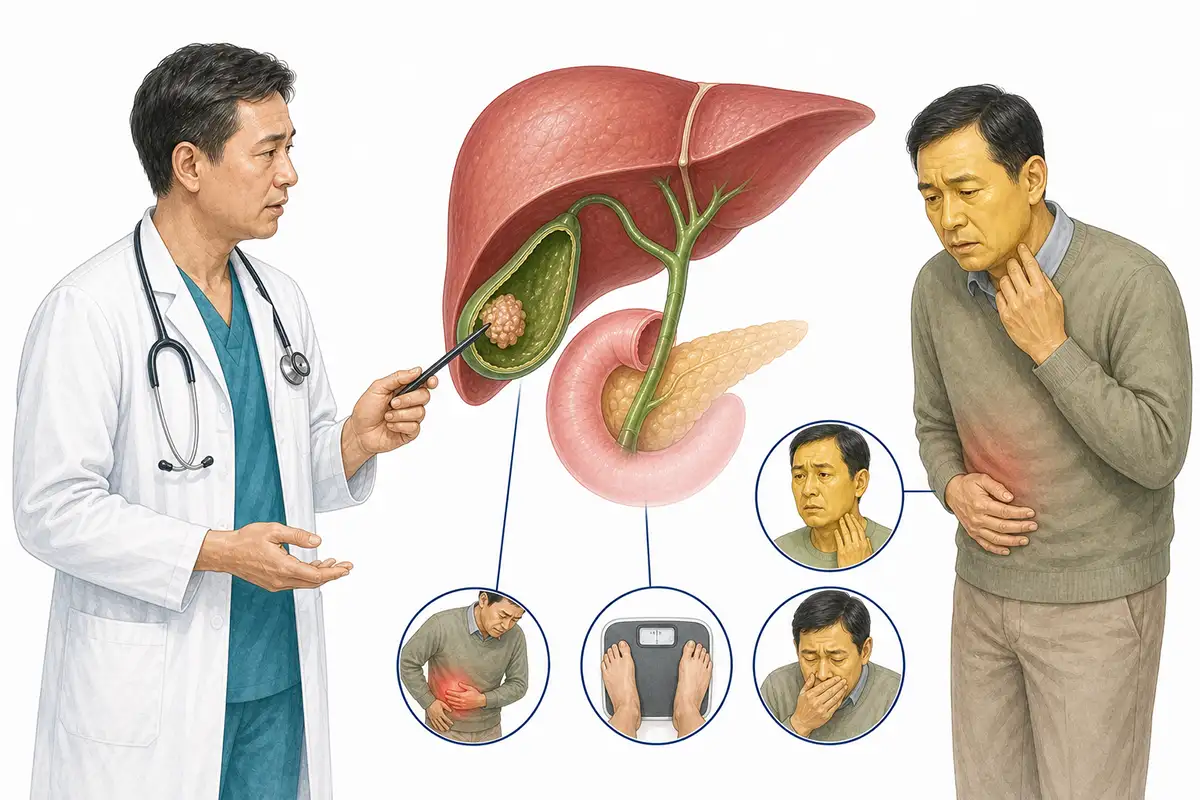
Detailed Symptoms of Gallbladder Cancer
1.Right upper quadrant abdominal pain
The most common initial symptom presents as persistent dull pain or colic in the right upper abdomen; symptoms resemble those of gallstones but progressively worsen, and the response to standard painkillers is limited.
2.Jaundice and yellowing of the skin
Tumor invasion of the common bile duct or compression of the biliary tract leads to obstructive jaundice, manifesting as yellowing of the skin and sclera, darkened urine, and pale stools.
3.Abdominal mass
A hard mass with an irregular surface is palpable in the right upper quadrant in cases of tumor enlargement or gallbladder hydrops/empyema; the mass is fixed due to adhesions with surrounding tissues.
4.Rapid weight loss
Significant short-term weight loss due to reduced food intake and tumor-induced metabolic consumption, accompanied by fatigue and loss of appetite; progresses to a cachectic state in the advanced stage.
5.Abdominal distension and indigestion
Impaired bile excretion leads to reduced digestive function, manifesting as symptoms such as a sensation of upper abdominal fullness, nausea, aversion to fatty foods, and indigestion.
6.Severe skin itching
Cholestasis causes bile salts to deposit in the skin, resulting in generalized, intractable pruritus that is difficult to relieve by scratching.
7.Frequent nausea and vomiting
Tumor compression of the stomach or duodenum causes gastrointestinal obstruction, resulting in frequent nausea and vomiting; the vomitus contains bile.
8.Ascites/abdominal distension
Peritoneal metastasis or portal vein compression leads to ascites accumulation, resulting in marked abdominal distension accompanied by bloating and dyspnea.
9.Fever and night sweats
Tumor necrosis complicated by infection or biliary inflammation causes fever; some patients experience systemic symptoms such as night sweats and fatigue.
Conclusion
Early symptoms of gallbladder cancer are often subtle and easily confused with other gallbladder diseases.Patients with gallstones should undergo regular follow-ups and seek medical attention promptly if they experience persistent abdominal pain or jaundice.Surgery is the only potentially curative treatment.


