


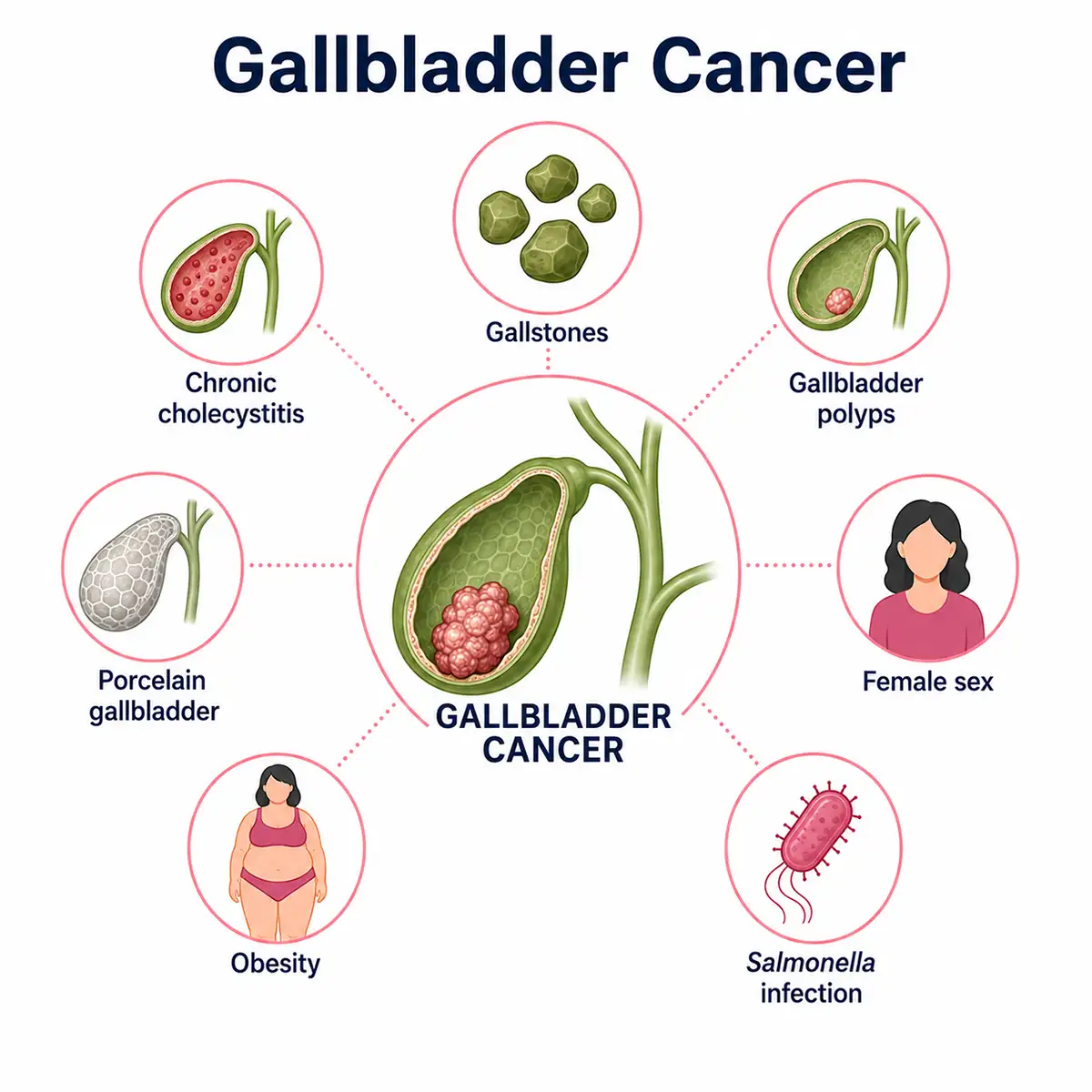
1. Gallstones
Approximately 85% of gallbladder cancer patients have concurrent gallstones; long-term mechanical irritation of the gallbladder mucosa by stones can lead to chronic inflammation and malignant transformation.
2. Chronic inflammation
Long-term chronic cholecystitis causes repeated injury and repair of the gallbladder mucosa; epithelial dysplasia may eventually progress to carcinoma in situ and invasive carcinoma.
3. Gallbladder polyps
Gallbladder polyps exceeding 1 cm in diameter, especially adenomatous polyps, carry a high risk of malignant transformation; this risk is further increased when accompanied by gallstones.
4. Porcelain gallbladder
Extensive calcification of the gallbladder wall results in "porcelain gallbladder";approximately 25% of cases of porcelain gallbladder are strongly associated with the development of gallbladder cancer.
5. Pancreaticobiliary abnormalities
Congenital anomalous pancreaticobiliary junction allows pancreatic juice to reflux into the gallbladder; chronic inflammatory irritation over time can lead to malignant transformation of the gallbladder mucosa.
6. Genetic susceptibility
Gallbladder cancer exhibits familial clustering; certain genetic mutations may increase an individual's susceptibility to the disease.
7. Age and gender
Gallbladder cancer is most common in older adults aged 60 to 80; the incidence rate is higher in women than in men, with a male-to-female ratio of approximately 1:3.
Conclusion
Gallbladder cancer results from the combined effects of multiple factors, such as gallstones and chronic inflammation;it is difficult to detect in the early stages and poses a serious health risk.For patients with gallstones or polyps, regular follow-up examinations are essential to ensure early detection and timely intervention.


