


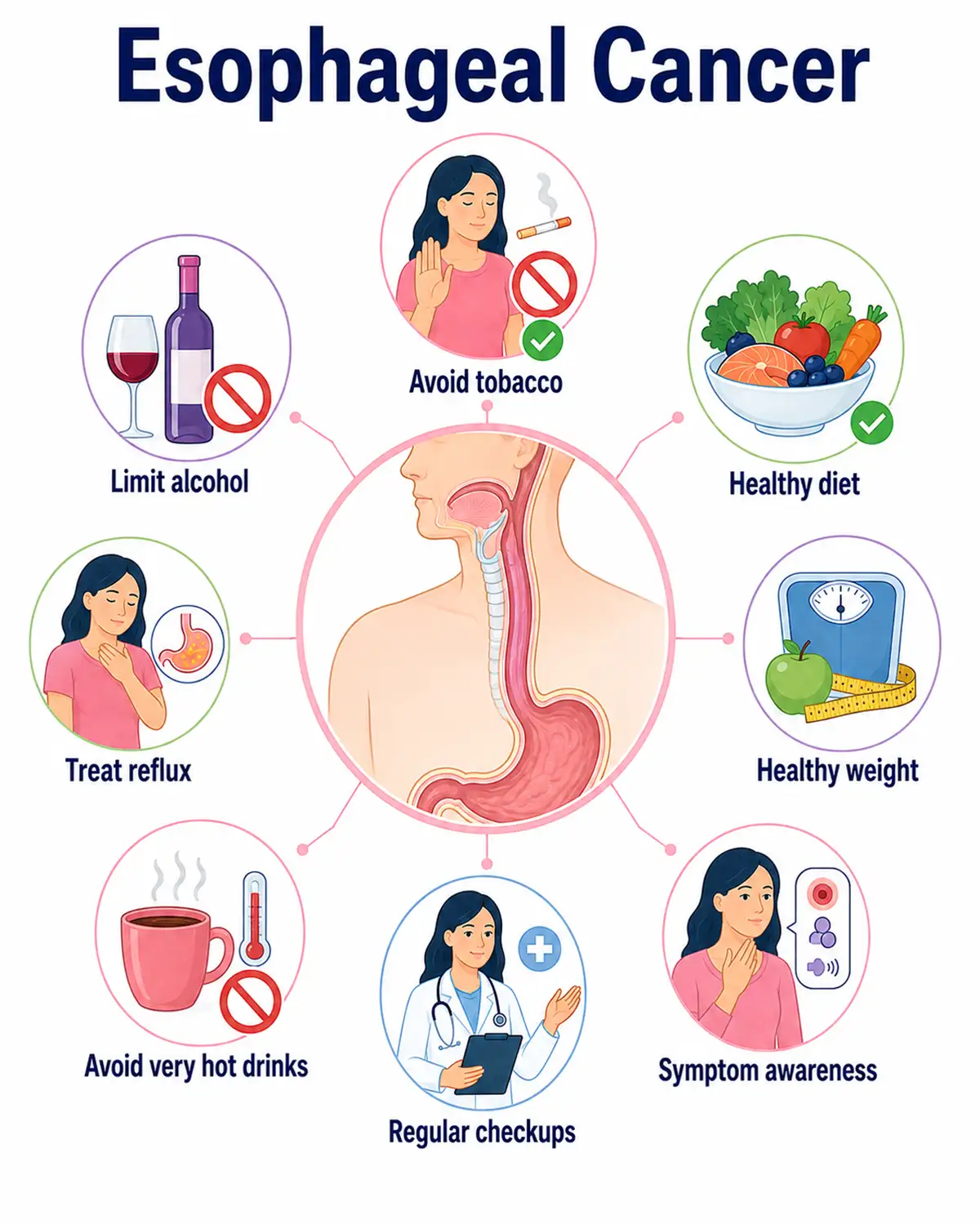
1. Avoid very hot food
Food should not exceed sixty degrees. Long-term consumption of excessively hot food repeatedly burns the esophageal mucosa, causing chronic inflammation and cellular dysplasia and increasing cancer risk.
2. Eat fewer pickled foods
Reduce pickled, smoked, and grilled foods, which contain strong carcinogens such as nitrites and polycyclic aromatic hydrocarbons and are highly harmful with long-term consumption.
3. Smoking cessation and alcohol restriction
Smoking and heavy drinking are important risk factors. Their synergistic effects can increase risk dozens of times, so they should be stopped immediately.
4. Eat more fruit and vegetables
Increase fresh fruit and vegetables. Their vitamins and antioxidants protect the esophageal mucosa and reduce carcinogen-induced cell damage.
5. Chew thoroughly and eat slowly
Chew thoroughly to prevent coarse food from scraping the mucosa. Avoid eating too quickly, which can expose the mucosa to overly hot food.
6. Oral hygiene
Maintain oral hygiene and actively treat tooth decay and periodontal disease. Carcinogens such as nitrosamines produced by oral bacteria can enter the esophagus with saliva and increase risk.
7. Regular screening
People over forty in high-incidence regions should have regular endoscopy, particularly those with a family history or long-term smoking and drinking, who should be examined annually.
Conclusion
Esophageal cancer is a common malignancy worldwide with subtle early symptoms and is often advanced when detected, causing major harm. Better dietary habits, smoking cessation, alcohol restriction, and regular endoscopy are essential for early detection and timely intervention.


