


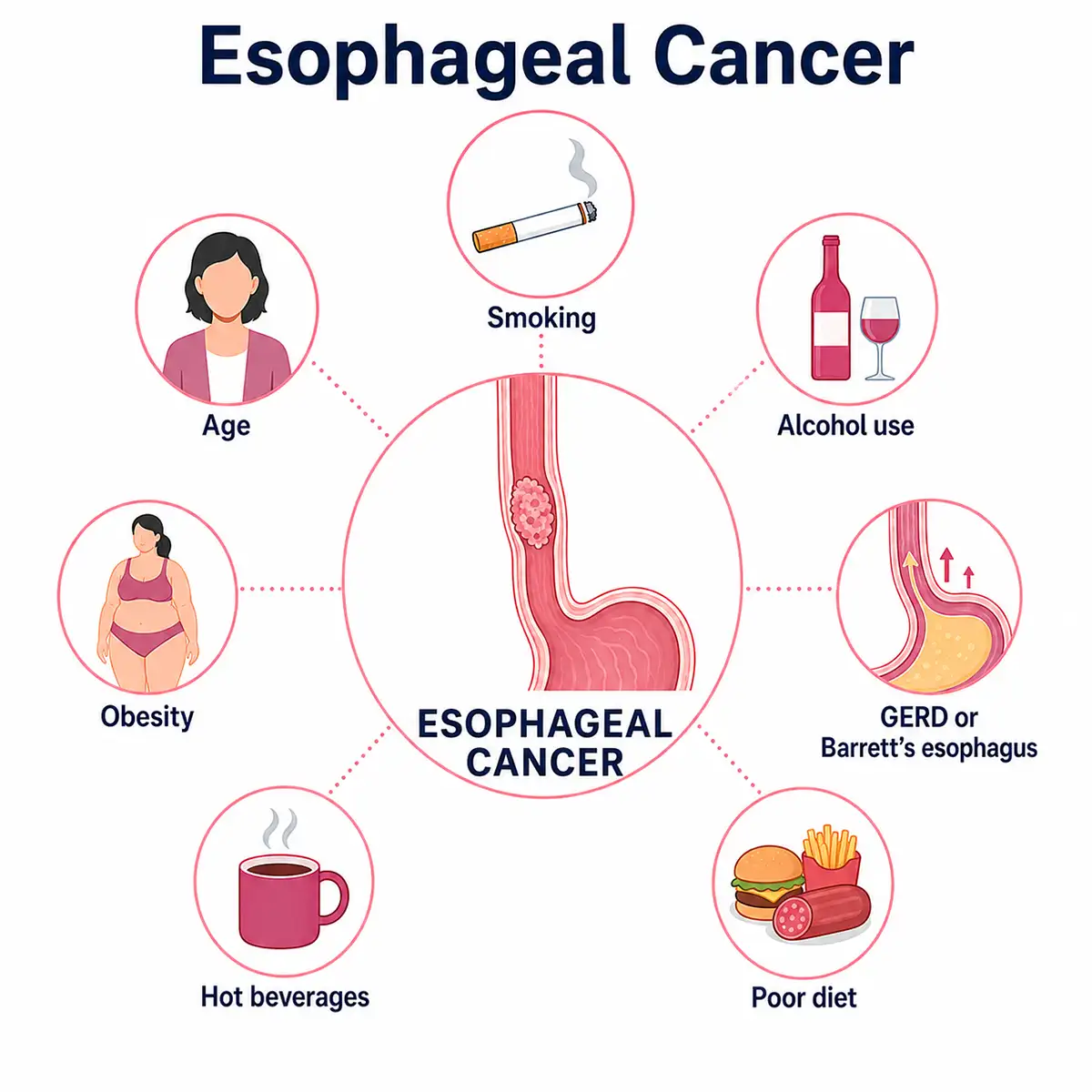
1. Dietary habits
Long-term consumption of very hot food repeatedly burns the esophageal mucosa. Repeated injury and repair can cause abnormal cell proliferation and subsequent malignant transformation.
2. Nitrosamine exposure
Pickled foods contain large amounts of nitrites, which can convert into strongly carcinogenic nitrosamines in the body, an important cause in high-incidence regions.
3. Moldy food
Aflatoxins produced in moldy food are strong carcinogens. Eating moldy corn, peanuts, and similar foods significantly increases esophageal cancer risk.
4. Smoking and alcohol
Tobacco carcinogens directly affect esophageal mucosa, while alcohol irritates and damages it. Their combined effects multiply cancer risk.
5. Nutritional deficiencies
Insufficient fresh fruit and vegetables cause vitamin and trace element deficiencies, weakening the esophageal mucosa's protective and repair mechanisms.
6. Genetic factors
Esophageal cancer shows familial clustering. Certain inherited variants increase susceptibility to carcinogens and disease risk.
7. Geographic factors
Low molybdenum and selenium levels in local water and soil are closely associated with high incidence, producing a clear geographic pattern.
Conclusion
Esophageal cancer results from multiple factors, including poor dietary habits and nitrosamine exposure, severely affecting eating and quality of life. Dietary improvement and regular screening supporting early detection and timely intervention are essential.


