


Global disease prevalence: Colorectal cancer is a common malignant tumor worldwide; it has a high incidence rate in developed countries and regions—such as Europe and North America—and poses a serious threat to patients' health and quality of life.
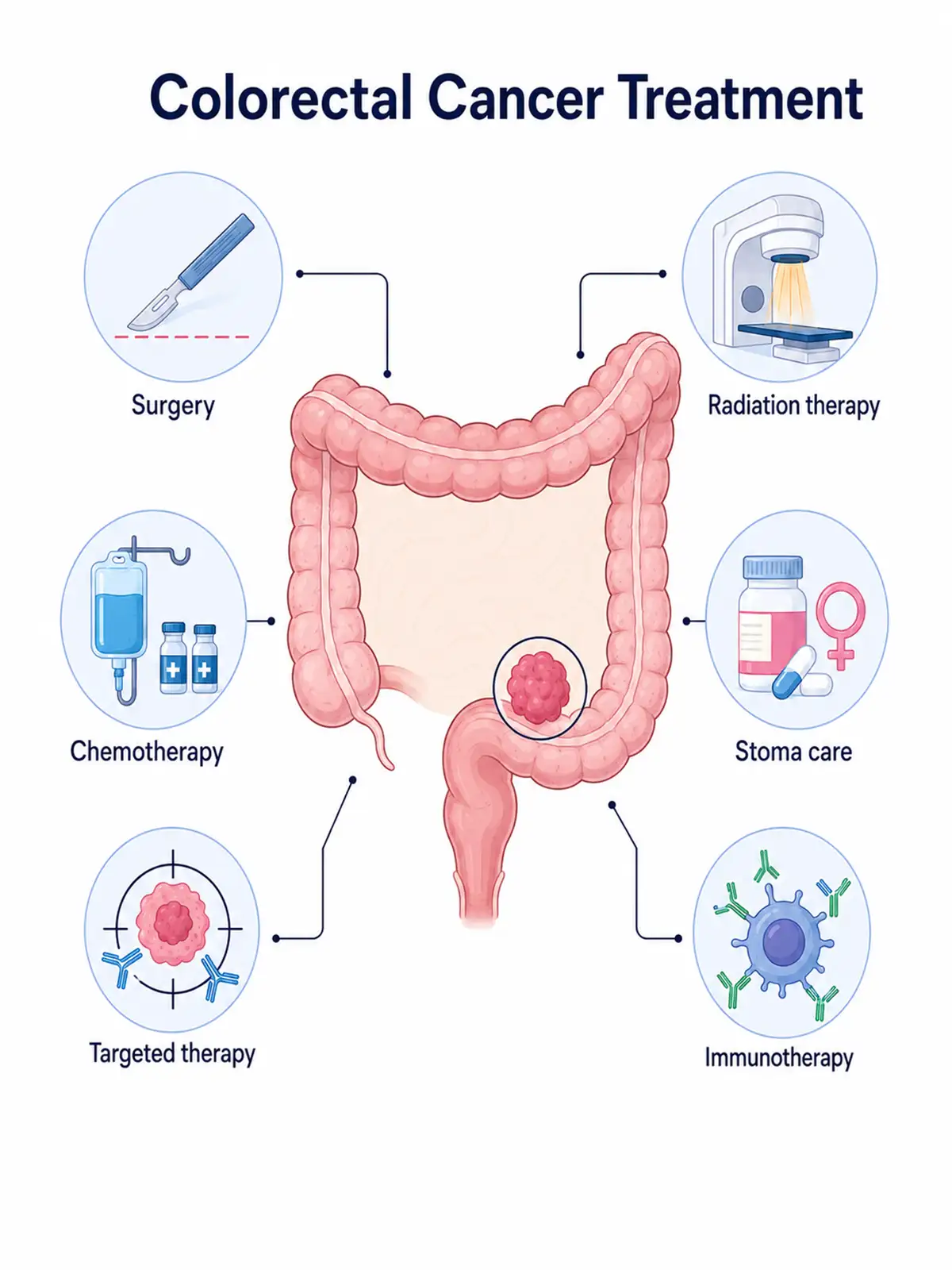
Stage-specific treatment for colorectal cancer
Early treatment (involving a localized, small tumor with a favorable response)
specifically surgical resection combined with adjuvant therapy—can effectively control tumor progression, and the patient's prognosis is relatively good.
Intermediate-stage treatment (addressing local spread, inhibiting growth, and delaying progression)
employs a comprehensive approach—such as surgery combined with chemoradiotherapy and targeted therapy—to control further tumor spread and slow the rate of disease deterioration.
Treatment for advanced disease (distant metastasis; aimed at symptom relief and survival prolongation)
primarily employs systemic therapies such as chemotherapy, targeted therapy, immunotherapy, and others to alleviate clinical symptoms and extend patient survival as much as possible.
Why choose Fosun Health for colorectal cancer treatment
Fosun Health leverages its affiliated hospitals' platforms for Da Vinci gastrointestinal surgery, VitalBeam, SCART, interventional ablation for liver metastases, and molecular testing, alongside drug resources like Hanbeitai (bevacizumab), independently developed by Henlius.With Hanbeitai approved for metastatic colorectal cancer, the team evaluates anti-angiogenic treatment plans based on tumor location, extent of metastasis, prior treatments, and approved indications.
Specialists in gastrointestinal surgery, radiotherapy, interventional radiology, pathology, and medical oncology can plan the clinical pathways for colon cancer and rectal cancer, respectively.Robotic surgery helps minimize abdominal wall trauma and preserve pelvic function; precision radiotherapy and local treatments for liver metastases can reduce damage to surrounding healthy tissue.Post-treatment care may include assessments for sphincter-sparing surgery, stoma care, nutritional support, and follow-up monitoring for recurrence.
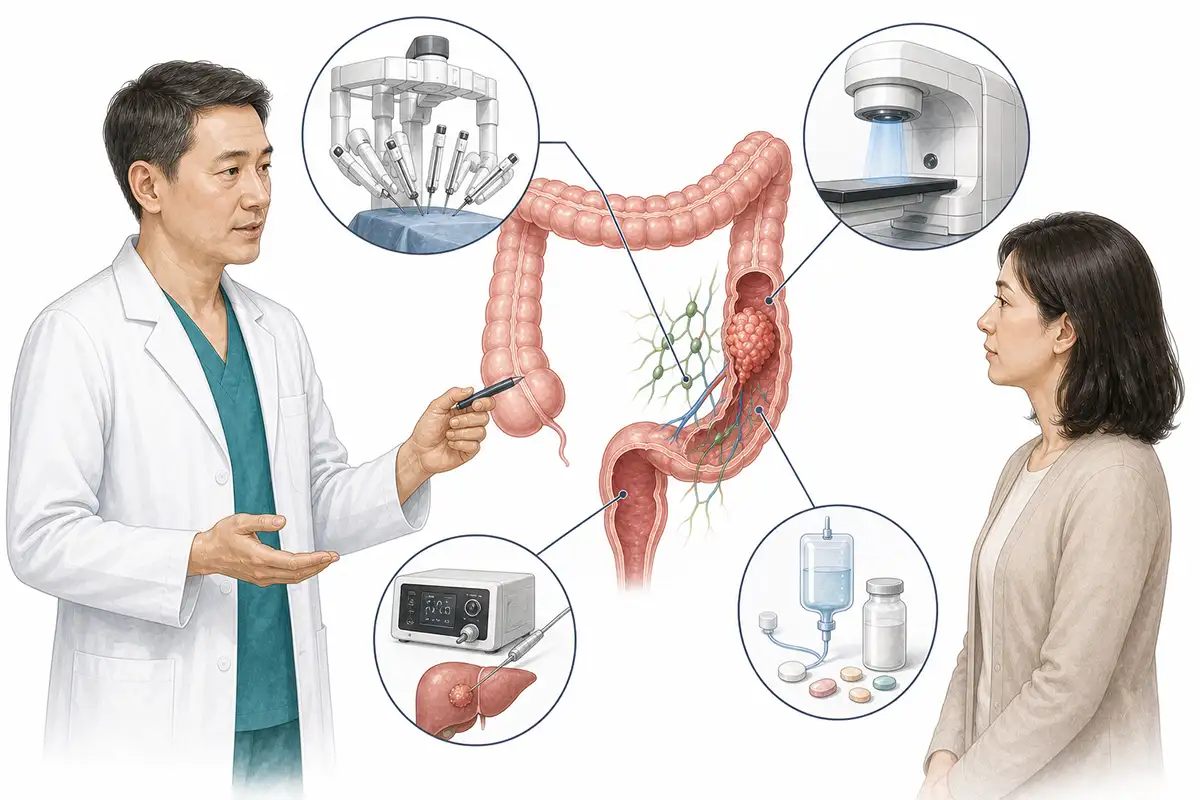
Colorectal Cancer Treatment Methods
1.SCART stereotactic central ablative radiotherapy
A higher radiation dose is concentrated in the central region of a large tumor; this approach is suitable for recurrent or metastatic lesions that have undergone rigorous assessment, are large in volume, and where conventional uniform dose escalation is restricted.
Treatment advantages:
① Targets large-volume lesions: Focuses on treating radioresistant regions within massive tumors.
② Protection of surrounding organs: Reduces radiation dose to the intestines, normal liver, and kidneys.
③ Facilitates subsequent treatment: Aims to shrink the lesion and bridge to surgery or systemic therapy.
④ Strict indications: A selective approach requiring comprehensive assessment by a multidisciplinary team (MDT).
2.VitalBeam precision radiotherapy
It is primarily used for locally advanced rectal cancer, pelvic recurrence, and the selective treatment of localized recurrence or metastatic lesions of colorectal cancer.
Treatment advantages:
① Covers high-risk pelvic areas: Suitable for the mesorectum and lateral lymph nodes.
② Protect pelvic organs: Reduce radiation dose to the small intestine, bladder, and reproductive organs.
③ Support anal-sparing therapy: Can be combined with chemotherapy and surgery to form a neoadjuvant regimen.
④ Accounts for site-specific differences: Rectal cancer radiotherapy protocols are not routinely applied to colon cancer.
3.Da Vinci robotic or laparoscopic colorectal cancer surgery
Suitable for resectable colon cancer and rectal cancer, as well as locally advanced cases that become resectable following conversion therapy.
Treatment advantages:
① Precise dissection: Facilitates management of mesenteric vessels and pelvic autonomic nerves.
② Protection of bowel and bladder function: Allows for the assessment of anal-sphincter-sparing surgery for low rectal cancer.
③ Standardized lymph node dissection: Obtain complete pathological staging.
④ Promotes postoperative recovery: Reduces abdominal wall trauma and facilitates early recovery of bowel function.
4.Microwave or radiofrequency ablation of liver metastases
Indicated for patients with a limited number and volume of liver metastases that are either unresectable or require treatment in combination with liver resection.
Treatment advantages:
① Direct local treatment: Targeting liver metastases under imaging guidance.
② Protection of residual liver: Reduces impact on normal liver parenchyma.
③ Can be combined with surgery: Treats limited liver metastases in various locations.
④ Does not replace systemic therapy: Patients with extensive disease progression cannot rely solely on ablation.
5.Chemotherapy
Systemic elimination of potential cancer cells using anti-cancer drugs to effectively control the rate of tumor progression; commonly used for patients with intermediate-to-advanced colorectal cancer.
6.Targeted therapy
Targets specific molecular markers such as VEGF for precision therapy; offers good efficacy with relatively mild side effects, making it suitable for patients with advanced-stage disease.
7.Immunotherapy
Activates the body's immune system to recognize and attack cancer cells, providing a new, effective treatment option for patients with advanced colorectal cancer.
8.Interventional therapy:
For colorectal cancer patients presenting with intestinal obstruction, tumor hemorrhage, or limited hepatic metastasis, interventions such as stent placement, vascular embolization, or local hepatic artery therapy may be used.
9.Seed implantation:
Indicated for patients with colorectal cancer who have undergone multidisciplinary assessment and present with locally recurrent or limited metastatic disease, where surgery and external beam radiotherapy are not feasible, and the extent of the lesion is clearly defined.
Post-treatment care
Maintain a regular daily routine and a high-fiber diet; avoid prolonged sedentary behavior; attend scheduled follow-ups and actively cooperate with further treatment as advised.
Post-treatment examinations
Regular colonoscopy, tumor marker testing, and follow-up imaging are required after treatment to detect changes in the condition in a timely manner.
Conclusion
Colorectal cancer poses a serious threat; the key to treatment lies in early detection, diagnosis, and intervention. Selecting an appropriate treatment plan and adhering to follow-up care helps improve quality of life and extend survival time.


