


Colorectal cancer arises from the malignant transformation of mucosal epithelial cells in the colon and rectum. Early symptoms are subtle; common manifestations include blood in the stool, changes in bowel habits, and abdominal pain.Approximately 80% of patients are diagnosed at an intermediate or advanced stage.
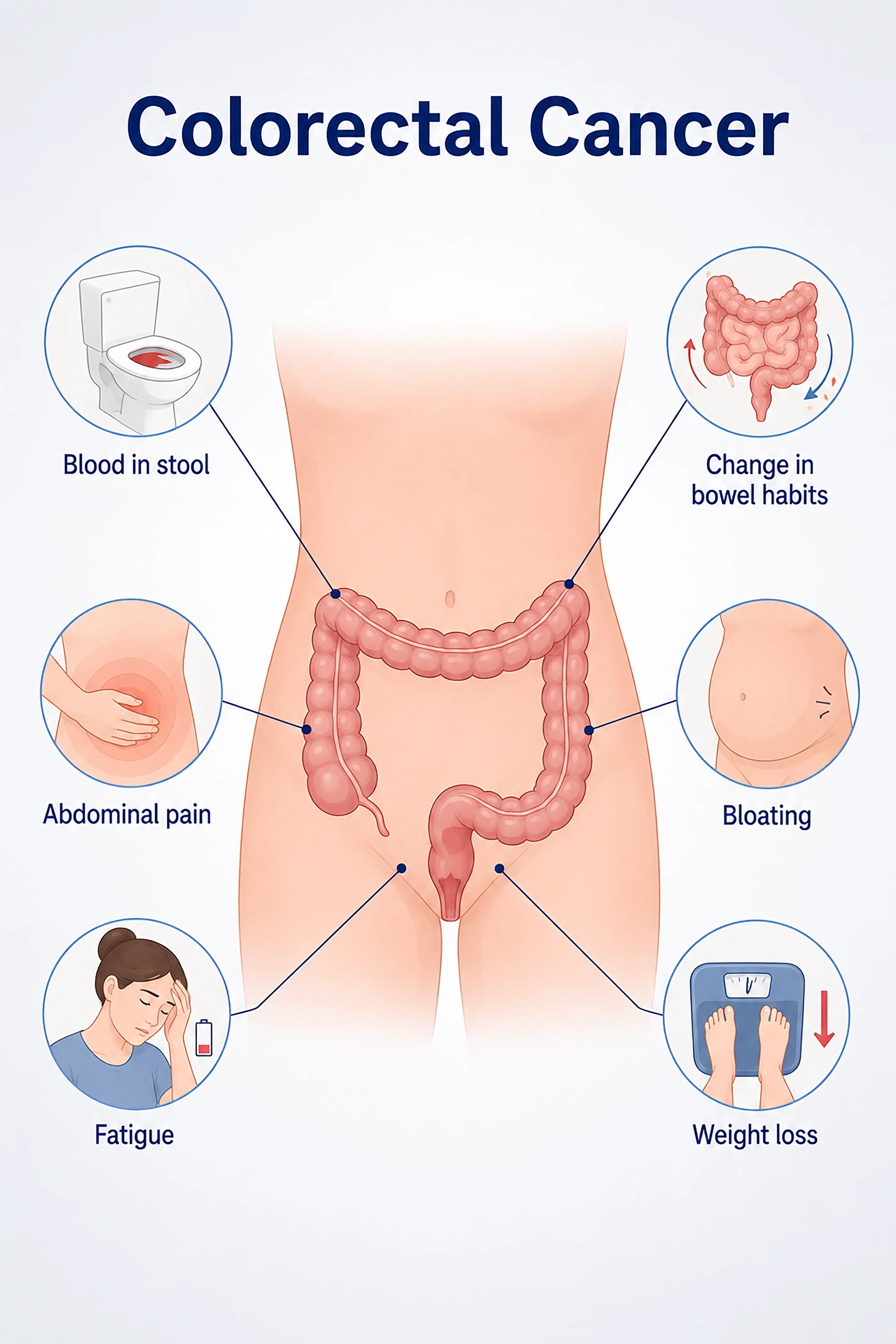
Global prevalence of colorectal cancer
Colorectal cancer is the third most common malignant tumor globally, with approximately 1.93 million new cases reported in 2020. In my country, the incidence of colorectal cancer is rising annually, ranking between third and fifth among all malignant tumors.It predominantly affects individuals over the age of 40, with a higher incidence in men than in women; the disease is associated with high-fat, low-fiber diets, obesity, and physical inactivity.
Symptoms associated with colorectal cancer stages
1 Early symptoms of colorectal cancer
The tumor is confined to the intestinal mucosal layer; there are often no obvious symptoms, though mild changes in bowel habits, a positive fecal occult blood test, or slight abdominal discomfort may occur, making it easy to overlook.
2 Symptoms of intermediate-stage colorectal cancer
Symptoms include increased bloody stools, narrowing or deformation of the stool, significant changes in bowel habits, abdominal pain, bloating, and palpable abdominal masses, accompanied by weight loss and anemia.
3 Symptoms of advanced colorectal cancer
Tumor causing intestinal obstruction, presenting with severe abdominal pain, abdominal distension, and cessation of bowel movements and flatus, accompanied by severe weight loss, cachexia, and symptoms of distant metastasis.
When to Seek Medical Attention
Early signs of colorectal cancer include blood in the stool, changes in bowel habits, abdominal pain, and unexplained weight loss.Please consult a doctor via the "Chat with a Doctor" feature for early detection.During the online consultation, the doctor will ask about your dietary habits and symptoms, and guide you through the process of undergoing a colonoscopy.
Staging of colorectal cancer
Colorectal cancer: Stage 0
Cancer cells are confined to the intestinal mucosal epithelium; this is classified as carcinoma in situ. It is often asymptomatic and may be incidentally detected during colonoscopy screening.
Colorectal cancer: Stage I
The tumor is confined to the intestinal wall without lymph node metastasis; mild changes in bowel habits or a positive fecal occult blood test may be present.
Colorectal cancer: Stage II
Tumor penetrates the bowel wall without lymph node metastasis; symptoms include bloody stools, abdominal pain, and narrowing of the stool.
Colorectal cancer: Stage III
The tumor is associated with regional lymph node metastasis, increased bloody stools, intestinal obstruction, and significant emaciation.
Colorectal cancer: Stage IV
Distant metastasis to the liver, lungs, and bones occurs, leading to persistent severe pain, cachexia, and multiple organ failure.
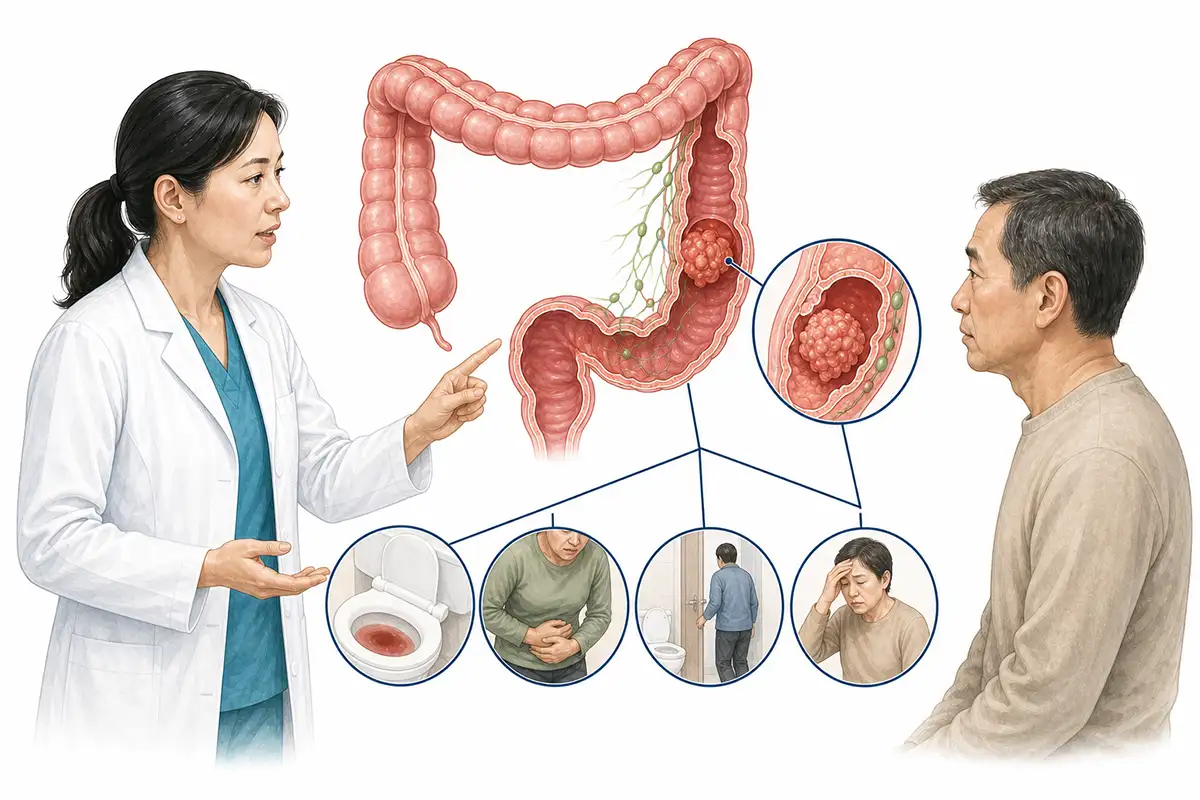
Detailed Overview of Colorectal Cancer Symptoms
1 Dark-colored stool (hematochezia)
Ulceration and bleeding on the tumor surface cause bloody stools; the blood is typically dark red or jam-like, mixed with the stool, and appears intermittently;while easily confused with hemorrhoids, the color is darker.
2 Change in bowel habits
Alteration of established bowel habits; increased or decreased frequency of bowel movements; alternating constipation and diarrhea; and a distinct sensation of tenesmus.
3 Change in stool shape
The tumor occupies space within the intestinal lumen, causing the stool to become thin, flattened, or grooved; defecation becomes difficult, and the stool narrows to a pencil-like shape.
4Abdominal pain and distension
When the tumor causes narrowing or partial obstruction of the intestinal lumen, dull abdominal pain or a sensation of distension occurs; symptoms worsen after eating and are accompanied by bloating and indigestion.
5 Abdominal mass
In right-sided colon cancer, a hard mass with an uneven surface and tenderness can be palpated in the right lower quadrant, indicating a large tumor.
6 Anemia and fatigue present
Chronic tumor bleeding leads to iron-deficiency anemia, manifesting as pallor, fatigue, dizziness, and palpitations; this is a common initial symptom in female patients.
7 Symptoms of intestinal obstruction
Tumor causing complete intestinal obstruction, presenting with severe abdominal pain, abdominal distension, vomiting, and cessation of bowel movements and flatus; requires emergency surgical treatment.
8 Rapid weight loss
Significant short-term weight loss due to tumor-induced metabolic consumption and reduced food intake, accompanied by fatigue and loss of appetite; progresses to a cachectic state in the advanced stage.
9 Anal heaviness/tenesmus
Patients with rectal cancer often experience a sensation of anal fullness or incomplete evacuation, frequent urges to defecate with minimal output, and tenesmus.
Conclusion
Early symptoms of colorectal cancer are often subtle; regular colonoscopy is key to early detection.A high-fiber diet, regular exercise, and quitting smoking or limiting alcohol intake can help reduce the risk.Early treatment leads to a better prognosis.


