


Chondrosarcoma is a malignant tumor arising from the malignant transformation of chondrocytes; it ranks second in incidence among primary malignant bone tumors.Most chondrosarcomas grow slowly, and symptoms vary depending on the tumor's location and size.
Global prevalence of chondrosarcoma
Chondrosarcoma ranks second in incidence among primary malignant bone tumors, accounting for approximately 9.2% of all such cases, with an annual incidence rate of about 1 in 200,000. Conventional chondrosarcoma accounts for 85% of all chondrosarcoma cases.It can occur at any age, with a mean onset age of around 50 years;it is slightly more common in men than in women.It most frequently affects the pelvis, hip joint, and shoulder.
Symptoms associated with chondrosarcoma stages
1.Early symptoms of chondrosarcoma
The tumor grows slowly; initially, there are often no obvious symptoms, though mild intermittent pain or local discomfort may occur, making it easily overlooked.Symptoms typically persist for an average of 1–2 years.
2.Intermediate-stage symptoms of chondrosarcoma
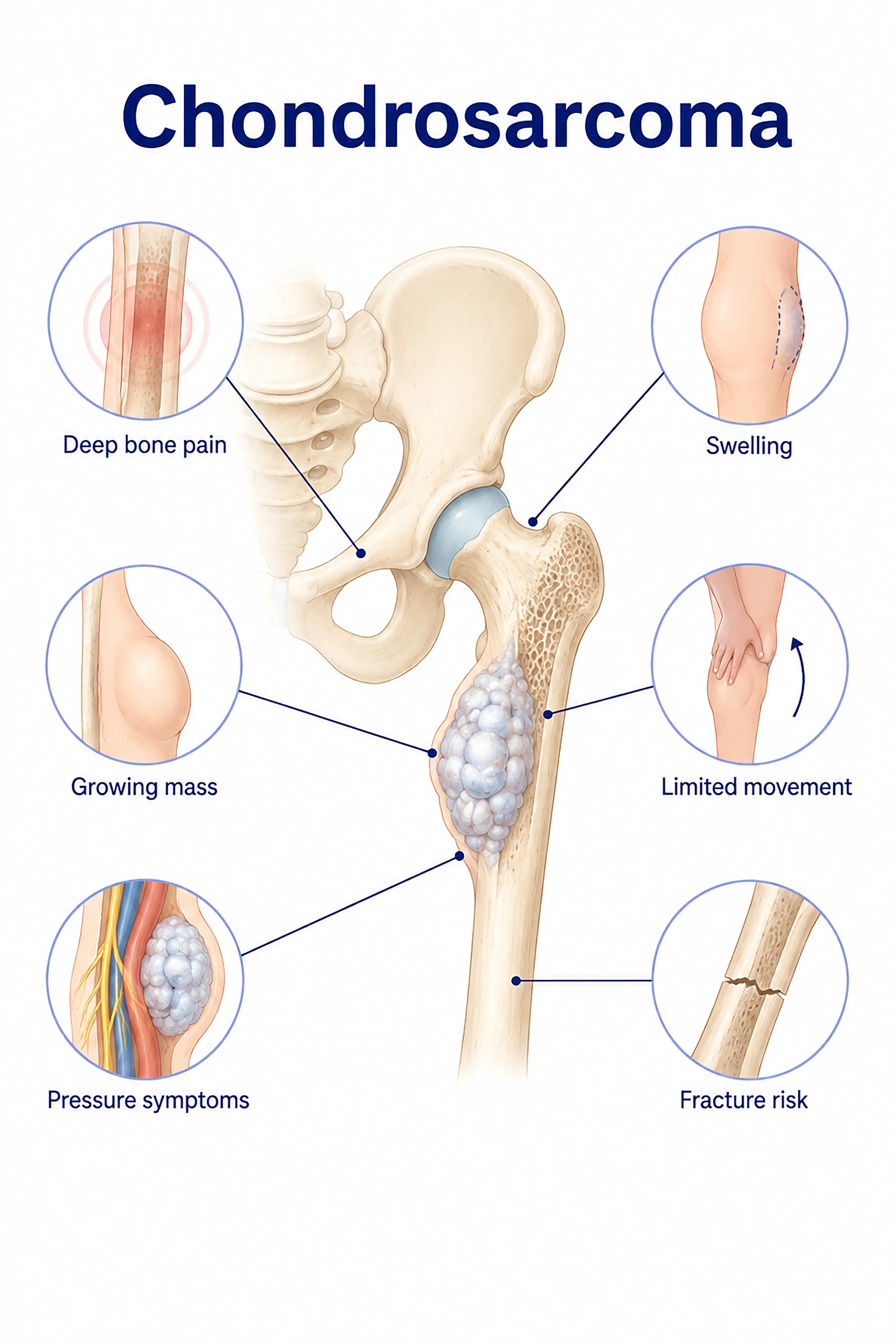
Pain gradually worsens into a persistent dull ache; localized swelling or a mass develops; compression of surrounding nerves causes numbness or radiating pain; and joint mobility is restricted.
3.Symptoms of advanced chondrosarcoma
Extensive tumor invasion of surrounding tissues, presenting with severe pain, pathological fractures, incontinence (in cases of spinal involvement), and symptoms of distant metastasis.
When to Seek Medical Attention
Early signs of chondrosarcoma include persistent bone pain, enlargement of a localized mass, and restricted movement.Please consult a doctor via the "Chat with Doctor" feature to facilitate early detection.During the online consultation, the doctor will ask about the characteristics of your pain and any changes in the mass, and guide you regarding imaging tests and biopsies.
Staging of chondrosarcoma
Stage 0 chondrosarcoma
This staging system is not applicable to chondrosarcoma.Chondrosarcomas are staged using the TNM staging system, based on tumor size, grade, and distant metastasis.
Stage I chondrosarcoma
The tumor is confined to the bone and is low-grade; it presents with intermittent pain and slow growth.
Stage II chondrosarcoma
The tumor is confined to the bone and is high-grade; pain intensifies, accompanied by a palpable local mass.
Stage III chondrosarcoma
The tumor is associated with local lymph node metastasis, presenting with persistent pain and a palpable mass.
Stage IV chondrosarcoma
Distant metastasis to the lungs, bones, and other organs occurs, manifesting as symptoms related to the metastatic lesions.
Detailed Symptoms of Chondrosarcoma
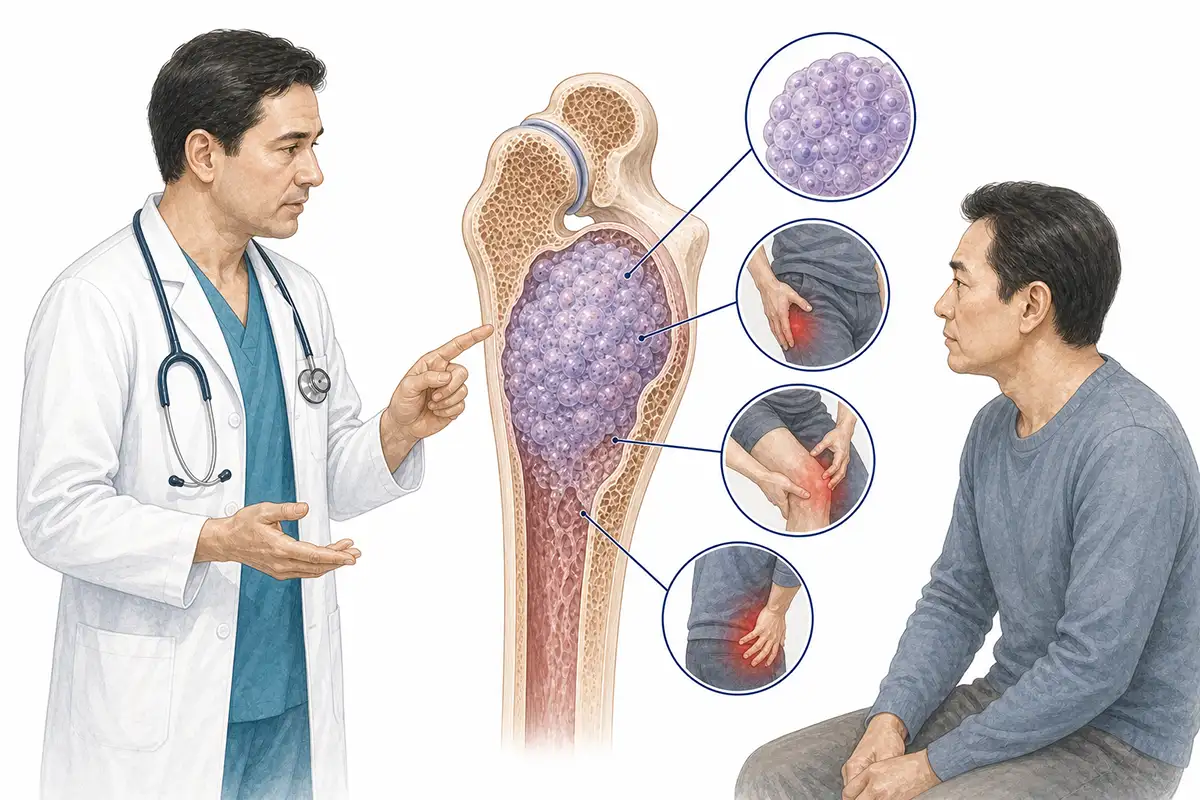
1.Progressively worsening bone pain
The most common symptom begins as a dull, intermittent ache that gradually worsens into continuous pain; ordinary painkillers have limited effectiveness.
2.Slow-growing mass
A slowly growing, hard, locally ill-defined mass appears; the overlying skin is initially normal, but in advanced stages, skin redness and venous engorgement may be observed.
3.Signs of compression
Tumor compression of the spinal cord or nerve roots causes limb numbness, weakness, or bowel and bladder incontinence; compression of blood vessels causes limb edema.
4.Limited joint mobility
When the tumor is located around a joint, it causes impaired joint mobility, painful limping, and joint deformity.
5.Pathological fracture
Fracture occurs under minimal external force following tumor-induced destruction of bone structure, manifesting as sudden severe pain and deformity.
6.Weight loss observed
Due to tumor-induced wasting and reduced food intake, patients in the advanced stage experience weight loss accompanied by fatigue and loss of appetite.
7.Localized tenderness
Marked tenderness at the tumor site, with pain intensifying upon touch; local skin temperature may be elevated.
8.Neuroradiological pain
Tumor compression of nerve roots causes radiating pain and paresthesia along the distribution of the affected nerves.
9.Pulmonary metastasis present
In the advanced stage, pulmonary metastasis may occur, presenting with symptoms such as cough, chest pain, and dyspnea.
Conclusion
Chondrosarcoma grows relatively slowly but is locally invasive.Complete surgical resection is the primary treatment, as the tumor responds poorly to radiotherapy and chemotherapy.Regular follow-up to monitor for recurrence is crucial.


