


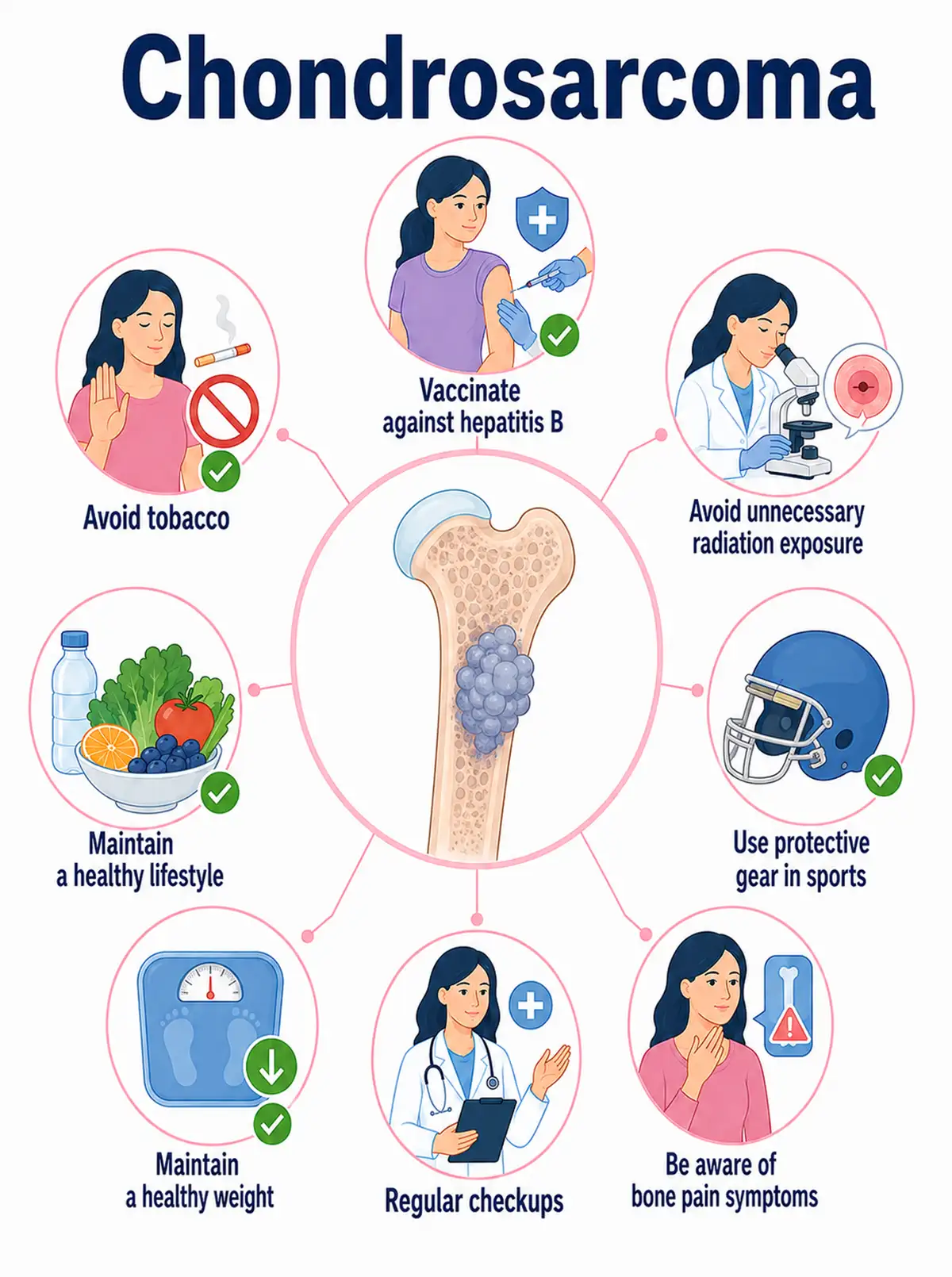
1. Monitoring of chondroma
Individuals with multiple enchondromas or Ollier disease should undergo regular imaging monitoring; vigilance is required as these benign lesions can undergo malignant transformation into chondrosarcoma.
2. Genetic screening
Individuals with a family history of Ollier disease or Maffucci syndrome should undergo genetic counseling and regular monitoring of chondromas to detect early signs of malignant transformation.
3. Avoiding radiation
Minimize unnecessary radiological examinations; a history of radiotherapy can increase the risk of developing chondrosarcoma, with particular sensitivity during childhood.
4. Monitoring bone pain
Persistent bone pain, a localized mass, or limited joint mobility warrants timely medical consultation; the pelvis and long bones of the limbs are common sites and require attention.
5. Osteochondroma
Individuals with multiple hereditary osteochondromas should undergo regular follow-up; monitoring is necessary as larger osteochondromas can undergo malignant transformation into secondary chondrosarcoma.
6. Healthy lifestyle
Maintaining a regular routine and a balanced diet, along with moderate exercise to strengthen bones, helps avoid the negative impact of poor lifestyle habits on immune function.
7. Regular imaging
Individuals with a history of chondroma or those in high-risk groups should undergo regular X-ray and MRI examinations to monitor changes in chondroma size and morphology, enabling the timely detection of malignant transformation.
Conclusion
Chondrosarcoma arises from a combination of factors, including the malignant transformation of enchondromas and genetic influences;it is highly dangerous and generally unresponsive to radiotherapy or chemotherapy.Monitoring enchondromas, undergoing genetic screening, and scheduling regular imaging examinations are vital for early detection and timely intervention.


