


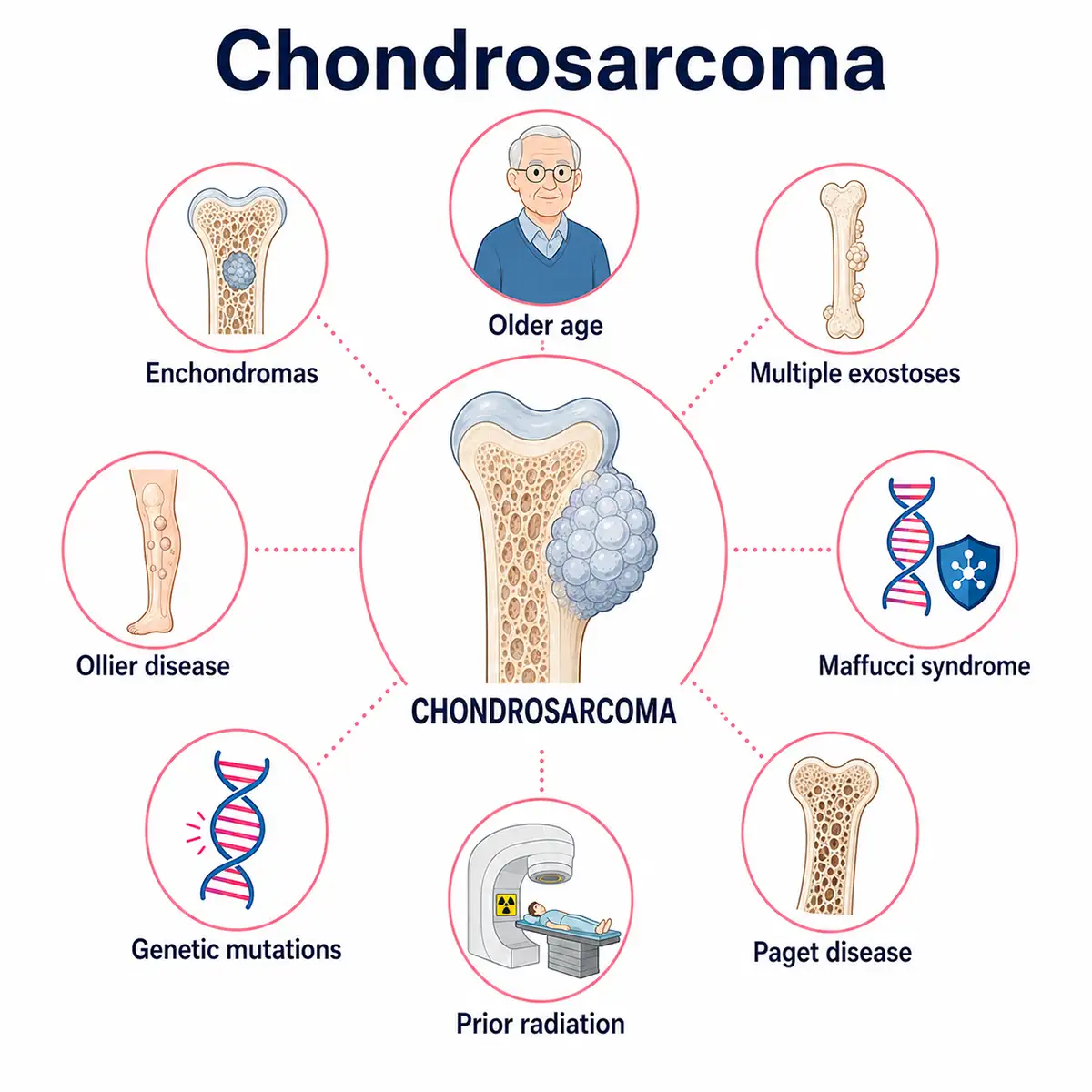
1. Enchondroma
Solitary enchondroma and multiple enchondromatosis can undergo malignant transformation into chondrosarcoma and are significant sources of secondary chondrosarcoma.
2. Genetic syndromes
Patients with Ollier disease and Maffucci syndrome face a high risk of malignant transformation of multiple enchondromas; these are hereditary disorders of abnormal cartilage development.
3. Radiation exposure
A history of radiotherapy can increase the risk of developing chondrosarcoma; the latency period following radiotherapy typically ranges from several years to several decades.
4. Age factor
Chondrosarcoma is most common in middle-aged and elderly individuals (aged 40 to 70);incidence increases with age, and the disease is rare in children.
5. Gender differences
The incidence of chondrosarcoma is slightly higher in men than in women, with a male-to-female ratio of approximately 1.5:1; the underlying mechanism for this gender difference remains unclear.
6. Genetic factors
Certain genetic mutations, such as IDH1 and IDH2 mutations, are associated with the development of chondrosarcoma, particularly central chondrosarcoma.
7. Osteochondroma
Approximately 1% of cases of multiple hereditary osteochondromas undergo malignant transformation into chondrosarcoma, representing a significant type of secondary chondrosarcoma.
Conclusion
Chondrosarcoma arises from a combination of factors, including the malignant transformation of enchondromas and genetic influences; it is highly dangerous and generally unresponsive to radiotherapy or chemotherapy.Prompt medical attention upon the appearance of bone pain or a mass is crucial for early detection and timely intervention.


