


Cholangiocarcinoma is a tumor arising from the malignant transformation of bile duct epithelial cells; it has an insidious onset, and early symptoms are often inconspicuous.Based on location, it is classified into intrahepatic, hilar, and distal cholangiocarcinoma, with hilar cholangiocarcinoma being the most common type.
Global incidence of cholangiocarcinoma
Cholangiocarcinoma is a relatively rare malignant tumor, accounting for approximately 3% of all gastrointestinal malignancies.It predominantly affects individuals over the age of 50, with a slightly higher incidence in men than in women.Liver fluke infection, primary sclerosing cholangitis, and gallstones are major risk factors.Most patients are diagnosed at an advanced stage.
Symptoms associated with cholangiocarcinoma stages
1.Early symptoms of bile duct cancer
When the tumor is small and does not obstruct the bile duct, there are often no obvious symptoms; mild right upper quadrant discomfort or fatigue may occur but is easily overlooked.
2.Symptoms of mid-stage bile duct cancer
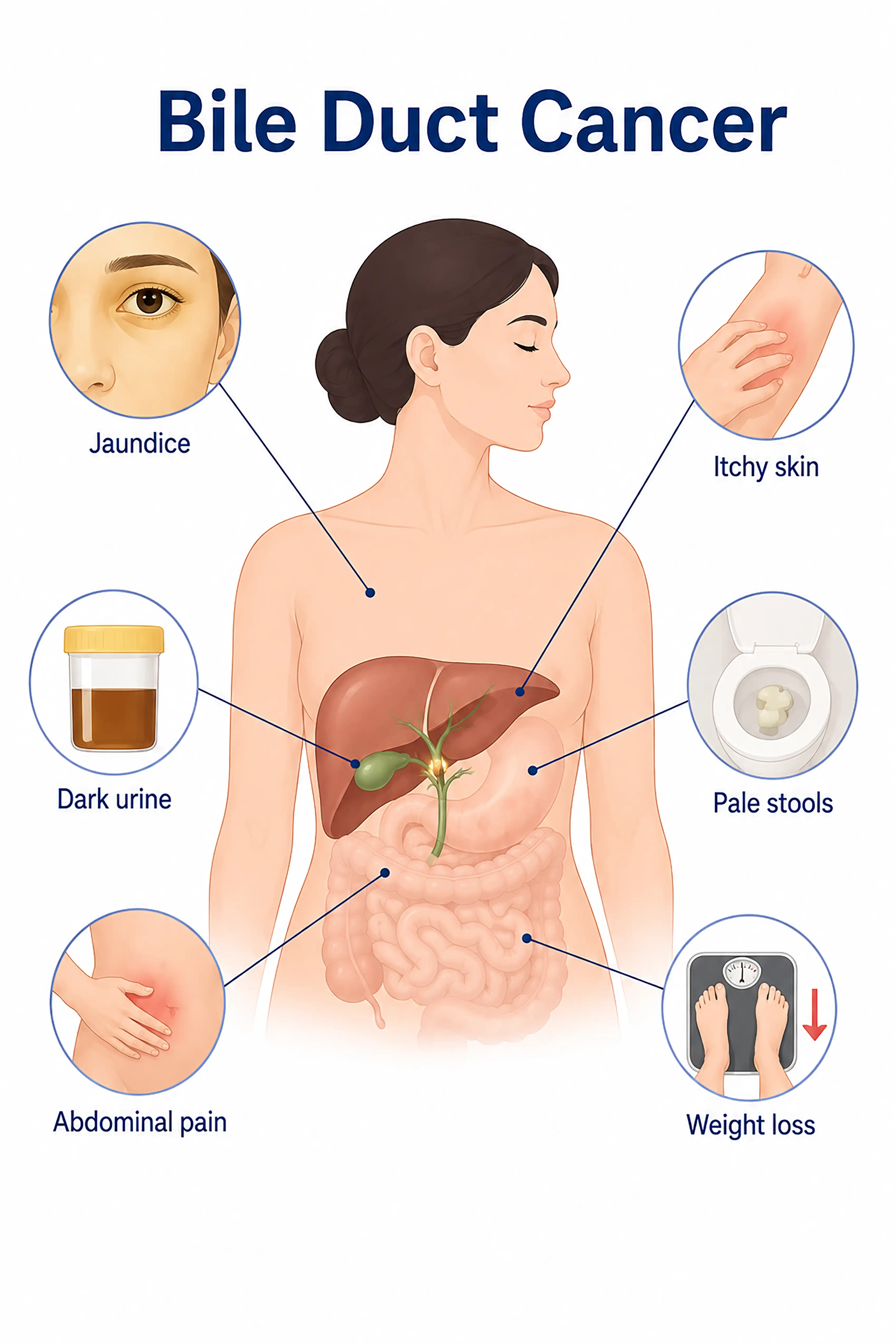
Obstruction of the bile duct by the tumor leads to progressive jaundice, accompanied by pruritus, dark urine, clay-colored stools, persistent right upper quadrant abdominal pain, and weight loss.
3.Symptoms of advanced bile duct cancer
Tumor extensively invades surrounding tissues and metastasizes distantly; symptoms include severe abdominal pain, persistent high fever, massive ascites, biliary hemorrhage, and systemic failure.
When to Seek Medical Attention
Early signs of cholangiocarcinoma include yellowing of the skin and eyes, itchy skin, dark urine, and abdominal pain.Please consult a doctor via the "Chat with Doctor" feature for early detection.During the online consultation, the doctor will ask about your symptoms and medical history, and guide you through liver function tests and biliary imaging.
Staging of cholangiocarcinoma
Stage 0 cholangiocarcinoma
Cancer cells are confined to the bile duct epithelium; this is classified as carcinoma in situ. It is often asymptomatic and may be incidentally detected via imaging screening.
Stage I cholangiocarcinoma
The tumor is confined to the bile duct wall without lymph node metastasis; patients may present with mild jaundice or abdominal discomfort.
Stage II cholangiocarcinoma
Tumor penetrates the bile duct wall or invades surrounding tissues, accompanied by regional lymph node metastasis; symptoms include marked jaundice and abdominal pain.
Stage III cholangiocarcinoma
Tumor invasion of adjacent blood vessels or organs, accompanied by regional lymph node metastasis; jaundice worsens and severe abdominal pain occurs.
Stage IV cholangiocarcinoma
Distant metastasis to the liver, lungs, and bones occurs, leading to persistent severe pain, cachexia, and multiple organ failure.
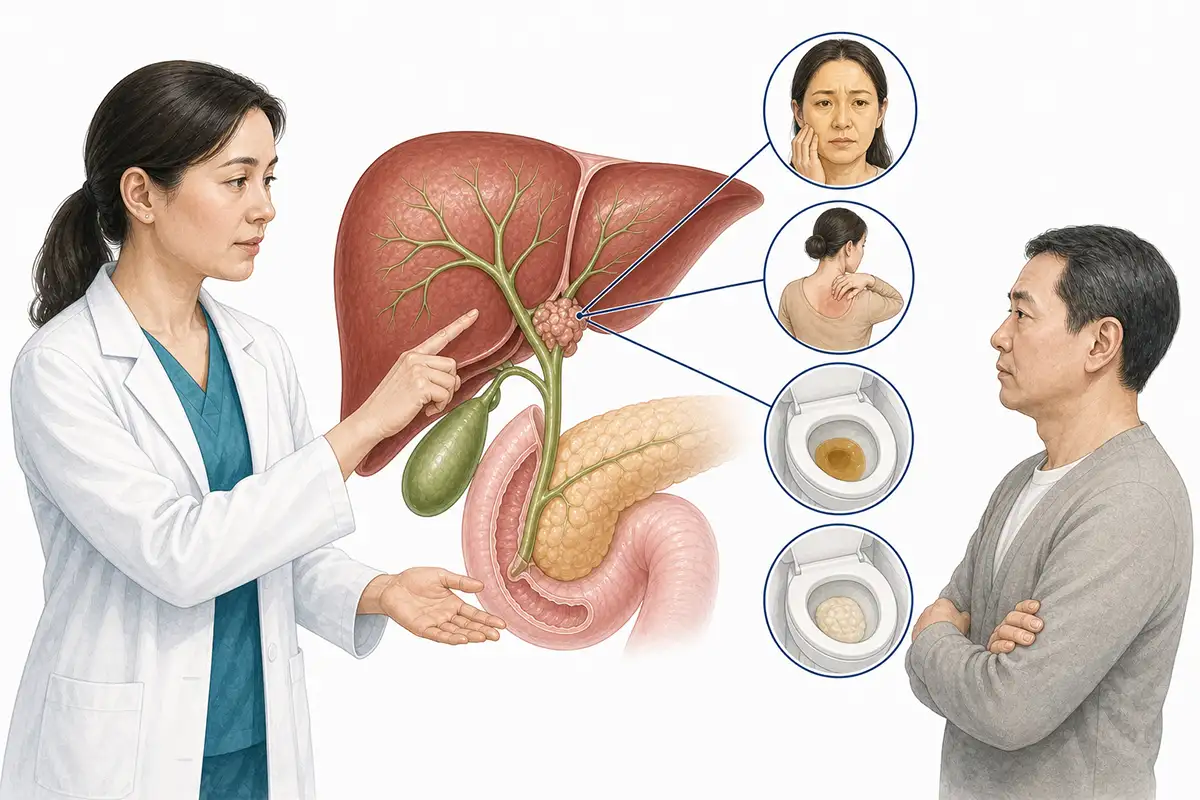
Detailed Symptoms of Cholangiocarcinoma
1.Jaundice (yellowing of the skin)
Approximately 90%–98% of patients exhibit varying degrees of progressive jaundice (yellowing of the skin and sclera); this is the most common and characteristic symptom of cholangiocarcinoma.
2.Severe skin itching
Cholestasis causes bile salts to deposit in the skin, resulting in generalized, intractable pruritus; scratching easily leads to excoriations and secondary infections.
3.Clay-colored stool
After biliary obstruction occurs, bile cannot enter the intestine, causing stool to become pale (gray-white or clay-colored); this is a key feature of obstructive jaundice.
4.Dark, tea-colored urine
Increased renal excretion of bilirubin causes the urine to darken significantly—resembling strong tea or soy sauce—which is an early sign of jaundice.
5.Right upper quadrant pain
Approximately half of the patients experience persistent distending pain or dull aching in the right upper quadrant, which may radiate to the right shoulder or back and worsens after eating.
6Rapid weight loss
Significant short-term weight loss resulting from maldigestion and malabsorption caused by impaired bile excretion, compounded by tumor-induced metabolic consumption.
7.Fever and chills
Biliary obstruction complicated by a secondary bacterial infection leads to cholangitis, presenting with Charcot's triad: high fever, chills, and abdominal pain.
8Gallbladder enlargement
Distal bile duct carcinoma causes significant gallbladder enlargement with a smooth, non-tender surface—a condition known as Courvoisier's sign—which is characteristic of periampullary carcinoma.
9.Biliary hemorrhage present
Tumor ulceration invades blood vessels, causing biliary hemorrhage; manifests as melena, a positive fecal occult blood test, or hematemesis.
Conclusion
Early symptoms of cholangiocarcinoma are often inconspicuous, and most patients are diagnosed at an advanced stage.Regular check-ups and screening for high-risk groups facilitate early detection.Surgery is the only potentially curative treatment.


