


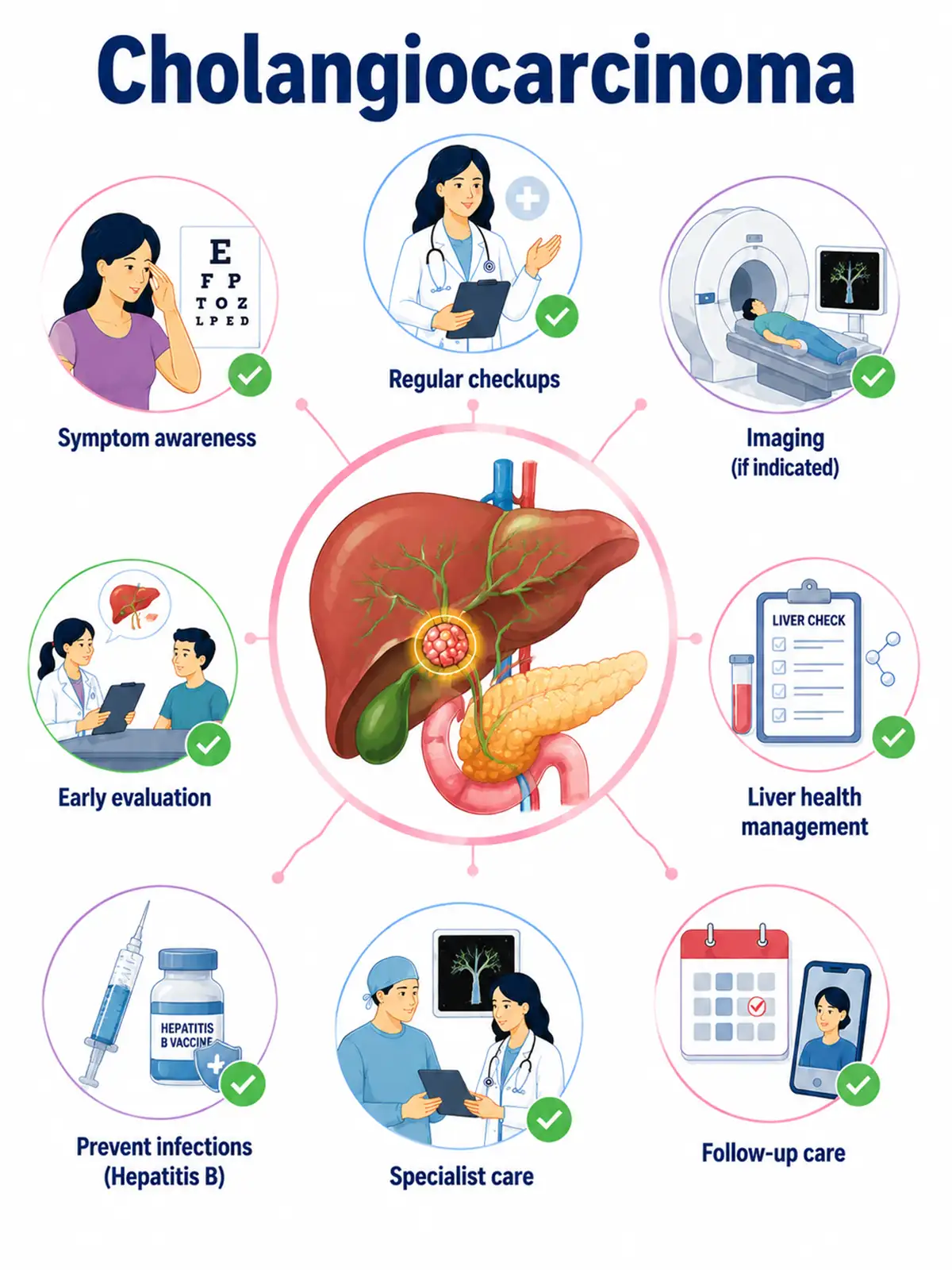
1. Treatment of gallstones
Actively treat intrahepatic bile duct stones and gallstones; long-term irritation of the bile duct mucosa by gallstones is a major risk factor for cholangiocarcinoma.
2. Avoiding raw food
Avoid eating raw freshwater fish or shrimp; *Clonorchis sinensis* infection is a major cause of bile duct cancer in Asia. Food should be thoroughly cooked before consumption.
3. Treatment of cholangitis
Patients with primary sclerosing cholangitis require regular endoscopic monitoring and treatment; vigilance is necessary due to a lifetime risk of cholangiocarcinoma reaching 10%–20%.
4. Cyst management
Congenital bile duct cysts require timely surgical treatment, as bile stasis and recurrent infections within the cyst can significantly increase the risk of malignant transformation in the bile duct mucosa.
5. Avoid contamination
Consume safe and sanitary water and avoid exposure to chemical carcinogens such as nitrosamines to reduce the risk of DNA damage to bile duct epithelial cells.
6. Treatment of ulcerative conditions
Patients with ulcerative colitis, particularly those with concurrent sclerosing cholangitis, require regular follow-up and monitoring; inflammatory bowel disease is a risk factor for cholangiocarcinoma.
7. Regular imaging
Individuals with a history of biliary tract disease or those in high-risk groups should undergo regular abdominal ultrasound and MRCP examinations to facilitate the early detection of space-occupying lesions in the bile ducts.
Conclusion
Cholangiocarcinoma is caused by the interplay of multiple factors, such as biliary stones and liver fluke infections; early symptoms are often inconspicuous, yet the condition poses serious risks.Treating biliary diseases, avoiding the consumption of raw foods, and undergoing regular imaging examinations are crucial for early detection and timely intervention.


