


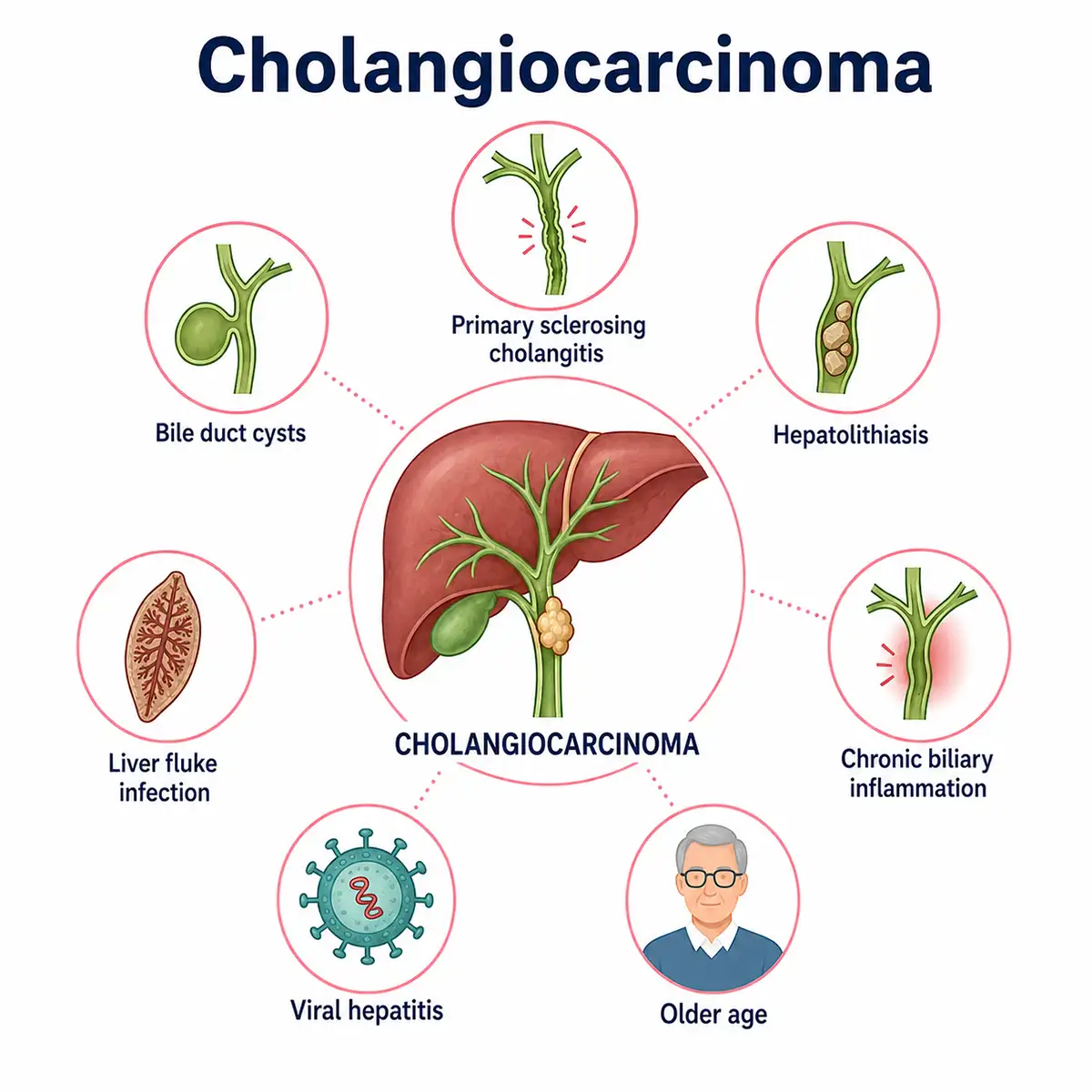
1. Bile duct stones
Long-term irritation of the bile duct mucosa by intrahepatic bile duct stones causes chronic inflammation and epithelial hyperplasia, making it a major causative factor for bile duct cancer in Asia.
2. Liver fluke infection
Infections with *Clonorchis sinensis* and *Opisthorchis viverrini* are major causes of cholangiocarcinoma in Southeast Asia; these parasites are classified by the WHO as Group 1 carcinogens.
3. Sclerosing cholangitis
Patients with primary sclerosing cholangitis experience persistent bile duct fibrosis and inflammation, with a lifetime risk of developing cholangiocarcinoma of up to 10%–20%.
4. Bile duct cyst
Congenital bile duct cysts—particularly Type I cysts—significantly increase the risk of developing cholangiocarcinoma due to bile stasis and recurrent infections.
5. Causes of liver cirrhosis
Cirrhosis resulting from various causes is associated with the development of intrahepatic cholangiocarcinoma; extensive fibrosis of hepatocytes can promote the malignant transformation of bile duct epithelium.
6. Inflammatory bowel disease
In patients with ulcerative colitis—particularly those with concurrent primary sclerosing cholangitis—the risk of developing cholangiocarcinoma is significantly higher than in the general population.
7. Age and gender
Cholangiocarcinoma is most common in people over the age of 50; the incidence is slightly higher in men than in women, and hilar cholangiocarcinoma is the most common type.
Conclusion
Cholangiocarcinoma is caused by the interplay of multiple factors, such as bile duct stones and parasitic infections;early symptoms are often inconspicuous, yet the condition poses serious risks.In high-incidence areas, it is crucial to maintain dietary hygiene, avoid consuming raw fish, and undergo regular medical check-ups to ensure early detection and timely intervention.


