


Prevalence worldwide
Cervical cancer is a common female malignancy worldwide, with higher incidence in developing countries and regions, seriously threatening women's health and quality of life.
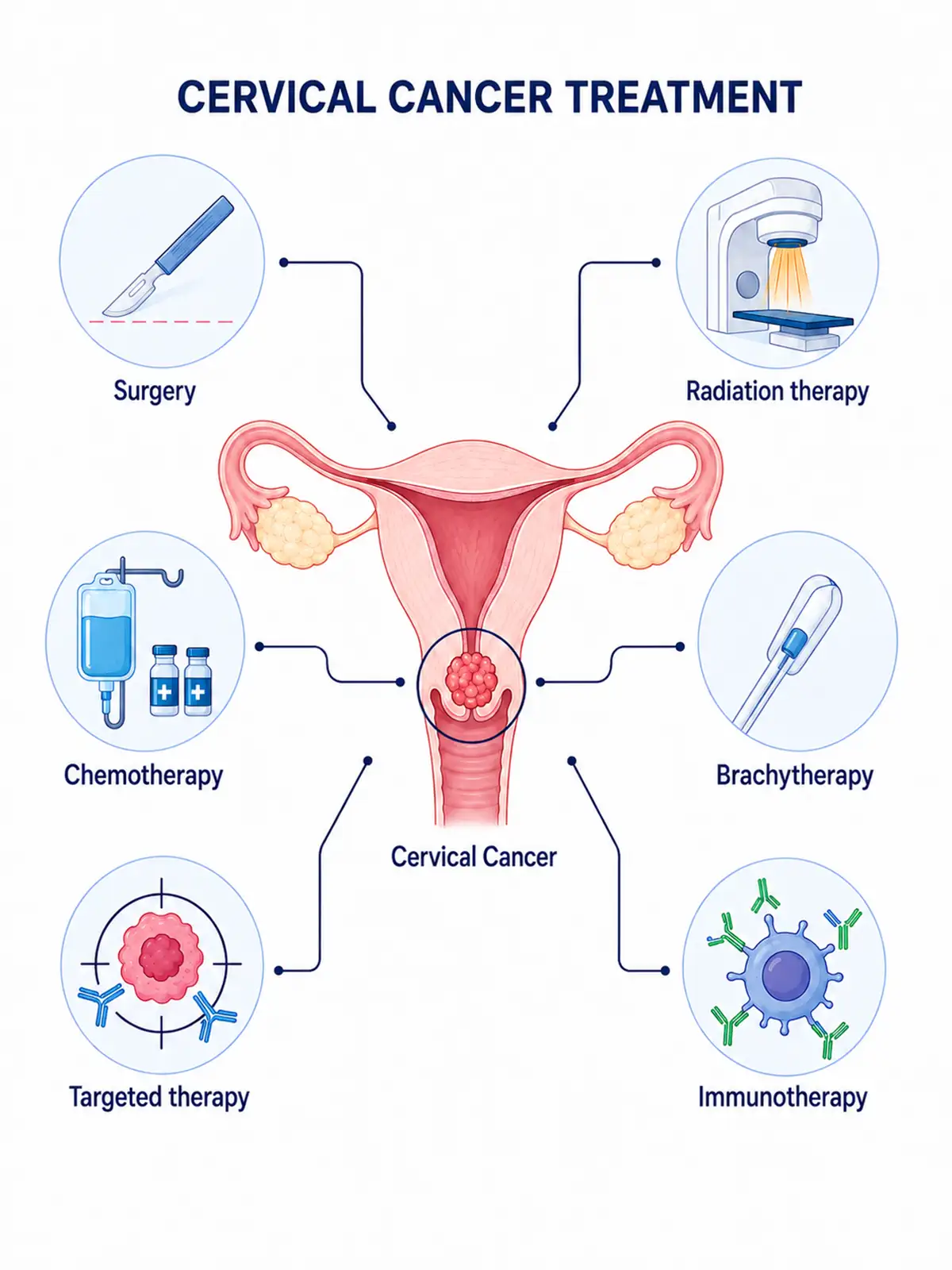
Cervical cancer treatment by stage
Early treatment (localized tumor, reduced volume, favorable outcome)
Surgical removal combined with adjuvant treatment can effectively control tumor progression, with a relatively favorable prognosis.
Intermediate-stage treatment (addressing local spread, inhibiting growth, and delaying progression)
Combined surgery and chemoradiotherapy control further spread and slow disease deterioration.
Treatment for advanced disease (distant metastasis; aimed at symptom relief and survival prolongation)
Chemoradiotherapy and systemic treatments such as targeted therapy are the main approaches, relieving symptoms and extending survival as much as possible.
Consequences of failing to receive timely treatment in the early stage: If standardized treatment is not administered promptly in the early stage, the tumor will continue to grow and spread/metastasize to surrounding tissues and distant organs, resulting in a missed opportunity for optimal intervention and a worsening of the condition.
Why choose Fosun Health for cervical cancer treatment
Fosun Health draws on gynecologic oncology surgery, VitalBeam precision radiotherapy, image-guided brachytherapy, and medical oncology platforms at its hospitals. Specialists in gynecologic oncology, radiotherapy, imaging, pathology, and medical oncology conduct multidisciplinary consultations. Surgery, concurrent chemoradiotherapy, or systemic treatment is coordinated according to FIGO stage, pathological type, nodal status, and relevant molecular markers.
Precision radiotherapy covers cervical lesions, the parametrium, and high-risk pelvic regions while minimizing exposure of the bladder, rectum, small bowel, and bone marrow, reducing some gastrointestinal, urinary, and hematological adverse-event risks. Fosun Health provides continuous, one-stop support from diagnosis and treatment through nutrition, pain management, pelvic floor rehabilitation, and regular follow-up.
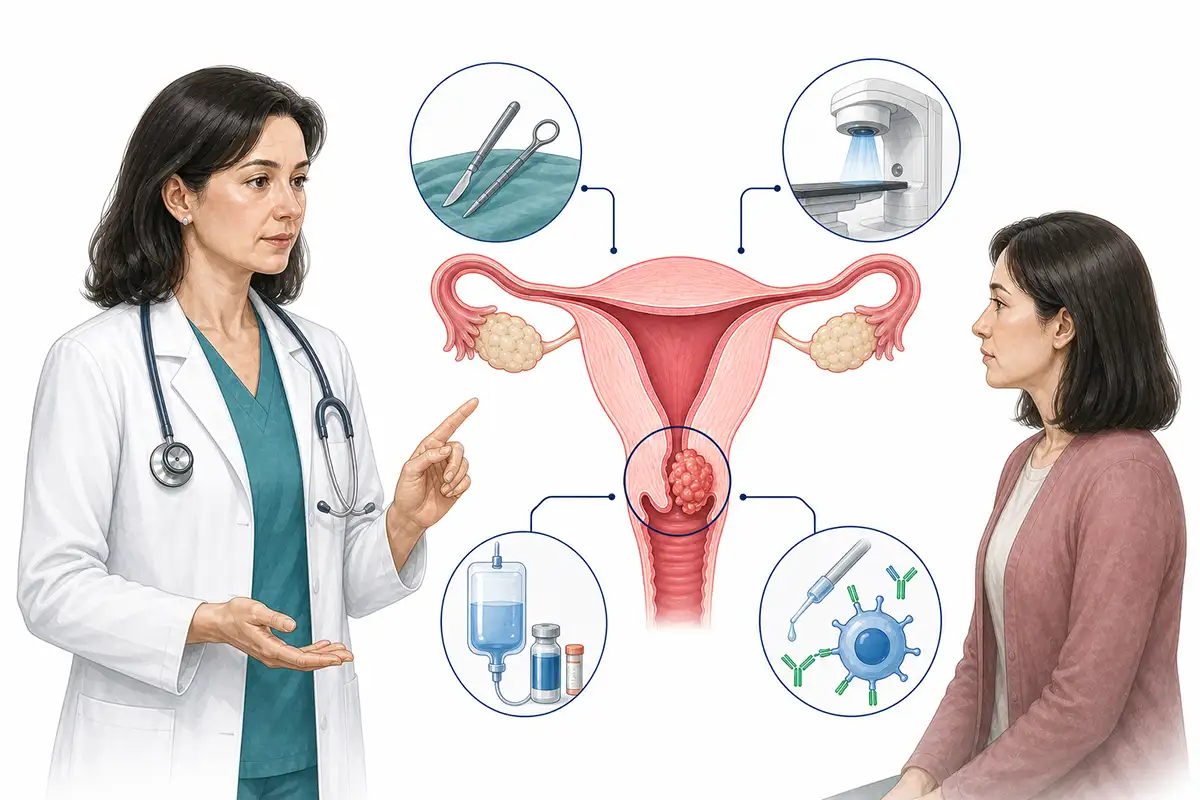
Cervical cancer treatment methods
1.Vital Beam precision radiotherapy
Image guidance and intensity-modulated radiotherapy target the primary cervical lesion, parametrium, and pelvic lymphatic drainage regions. Suitable for definitive chemoradiotherapy in locally advanced disease, high-risk postoperative adjuvant treatment, and selected recurrent cases.
Treatment advantages:
① Target coverage: Includes cervical lesions, parametrial invasion, and high-risk lymph nodes.
② Organ protection: Reduces unnecessary exposure of the bladder, rectum, small bowel, and bone marrow.
③ Flexible combinations: Can be coordinated with brachytherapy and concurrent chemotherapy.
④ Individualized plans: Dose is determined by disease extent, previous treatment, and organ tolerance.
2.Image-guided brachytherapy
Placing a radiation source near the cervical tumor provides a local dose boost and is an important component of definitive radiotherapy for cervical cancer.
Treatment advantages:
① Local dose boost: Concentrates a higher dose on the cervical lesion.
② Reduced external beam burden: Reduces the limitations of simply increasing the external beam dose.
③ Pelvic organ protection: Three-dimensional planning controls bladder and rectal doses.
④ Adaptation to lesion shape: Applicators can be adjusted to tumor size and uterine cavity anatomy.
3.Cervical cancer surgery
Suitable for early cervical cancer deemed resectable after staging. The procedure depends on tumor size, pathological type, and fertility needs.
4.Chemotherapy
Anticancer drugs systemically destroy potential cancer cells and effectively control progression. They are commonly used in combined treatment for intermediate and advanced cervical cancer.
5.Targeted therapy
Precise treatment of specific molecular targets in cancer cells offers good efficacy with relatively fewer side effects and is suitable for selected advanced cases.
6.Immunotherapy
Activation of the body's immune system to recognize and attack cancer cells offers advanced cervical cancer patients a new effective treatment option and a chance of survival.
7.Neoadjuvant therapy
Chemotherapy before surgery shrinks the tumor, creates more favorable conditions for subsequent resection, and improves the likelihood of complete surgical removal.
8. Radioactive seed implantation
Following multidisciplinary assessment, patients with localized recurrent cervical cancer, clearly defined lesions, and limitations from previous radiotherapy may receive image-guided continuous local irradiation.
Follow-up care after treatment
Maintain a regular daily routine and balanced diet, exercise moderately, attend scheduled examinations as advised, and cooperate actively with subsequent treatment.
Post-treatment examinations
Regular cervical cytology, tumor marker testing, and imaging follow-up are needed to detect abnormalities promptly.
Conclusion
Cervical cancer is a serious disease. Early detection, diagnosis, and intervention are central to treatment. An appropriate treatment plan and continued follow-up help improve quality of life and prolong survival.


