


Cervical cancer arises from malignant transformation of cervical mucosal epithelial cells. Early symptoms are concealed; common manifestations include contact vaginal bleeding, abnormal discharge, and menstrual irregularities.
Cervical cancer prevalence worldwide
Cervical cancer ranks fourth worldwide in both incidence and mortality among female malignancies and is one of the most common female genital tract cancers. Incidence is higher in developing countries. Screening coverage directly affects early detection, and HPV vaccination offers effective prevention.
Cervical cancer symptoms by stage
1.Early-stage cervical cancer symptoms
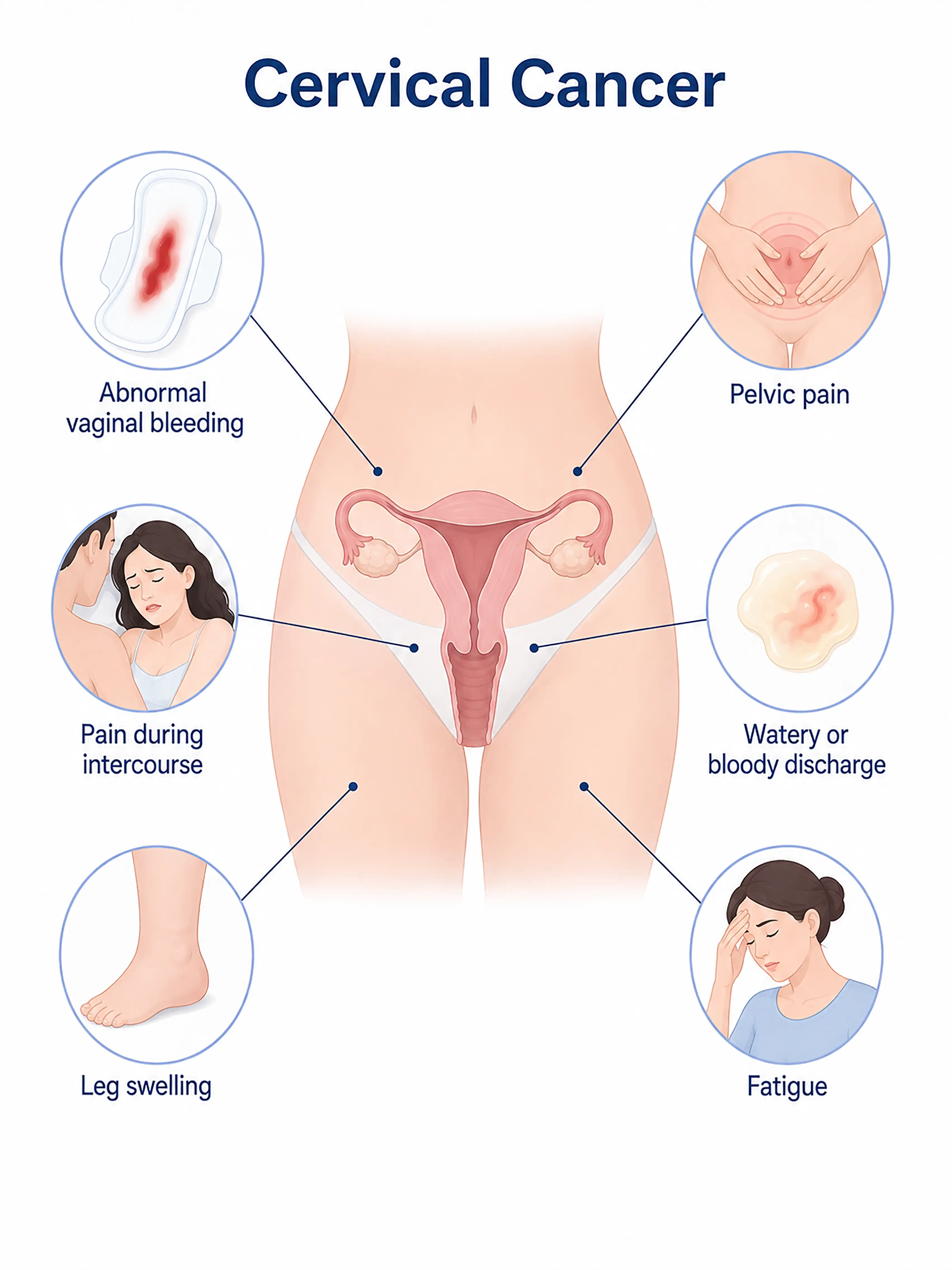
The tumor is confined to the cervical surface and usually causes no obvious symptoms. Some patients have slight vaginal bleeding after intercourse or examination, which may be overlooked or mistaken for menstrual irregularity.
2.Intermediate-stage cervical cancer symptoms
Stromal invasion increases irregular vaginal bleeding and watery or bloody discharge, with odor and lumbosacral aching. Menstrual irregularities become more pronounced.
3.Advanced-stage cervical cancer symptoms
Invasion into surrounding tissues and organs causes copious foul-smelling vaginal discharge, persistent lower back and leg pain, urinary frequency and urgency, leg swelling, and abnormal bowel movements.
When to Seek Medical Attention
Early warning signs include vaginal bleeding after intercourse, irregular intermenstrual bleeding, postmenopausal bleeding, and abnormal discharge. Please consult a doctor through "Chat with a Doctor" to support early detection. During the online consultation, the doctor will ask about symptoms and menstruation and guide you through cervical screening.
Cervical cancer stages
Stage 0 cervical cancer
Cancer cells remain within the cervical epithelium without breaching the basement membrane. This is carcinoma in situ, usually without obvious symptoms and commonly detected through cervical cytology screening.
Stage I cervical cancer
The tumor remains within the cervix without parametrial invasion. Contact bleeding or slight intermenstrual bleeding may occur; the cervix may look normal or mildly eroded.
Stage II cervical cancer
The tumor extends beyond the cervix but has not reached the pelvic wall or lower third of the vagina. Vaginal bleeding and malodorous discharge increase, with prominent lumbosacral aching.
Stage III cervical cancer
The tumor reaches the pelvic wall or lower third of the vagina and causes hydronephrosis, with persistent lower back and abdominal pain, leg swelling, and urinary obstruction.
Stage IV cervical cancer
The tumor invades bladder or rectal mucosa or metastasizes to the lungs, liver, or bones, causing corresponding organ damage and systemic wasting.
Cervical cancer symptoms in detail
1.Contact bleeding
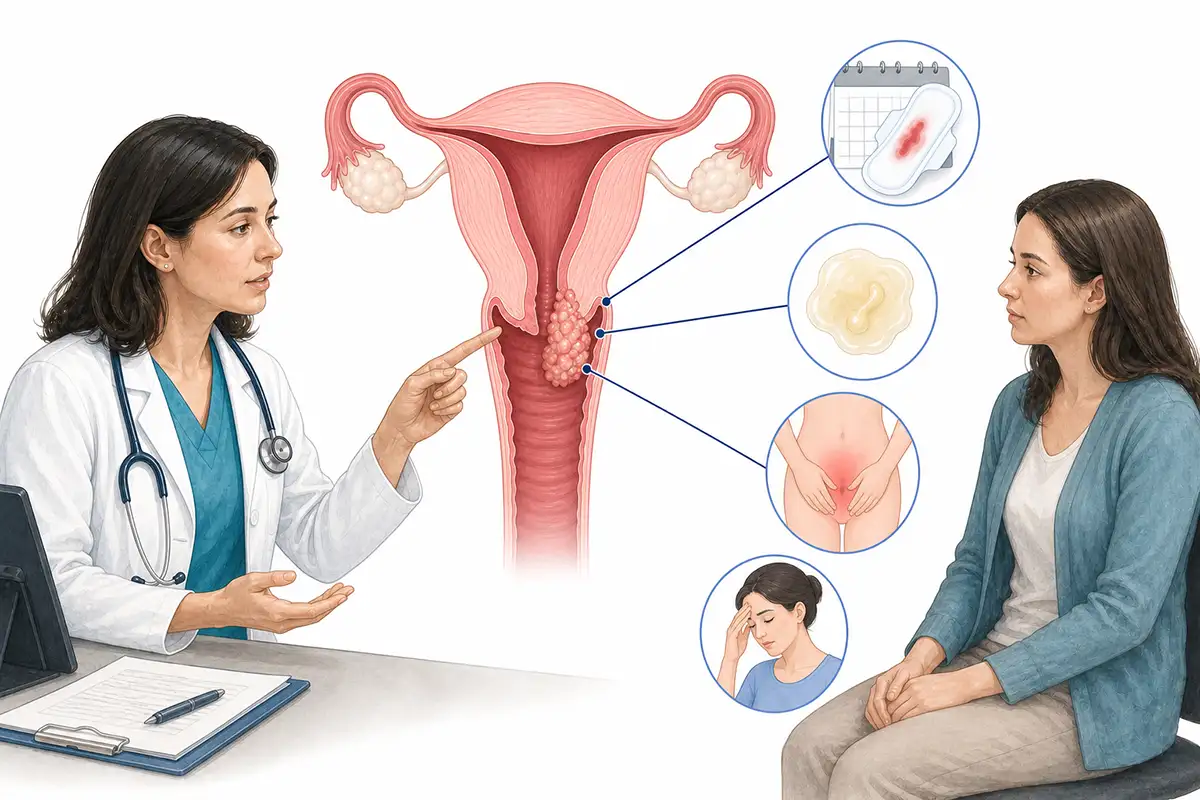
Slight bright or dark red vaginal bleeding after intercourse or examination is the most common early warning sign, associated with shedding of cancer tissue and exposed blood vessels.
2.Abnormal vaginal discharge
Increased white watery, bloody, or purulent discharge with foul odor is associated with tumor necrosis, infection, and increased cervical gland secretion.
3.Intermenstrual bleeding
Irregular vaginal bleeding outside menstruation, heavier flow, or prolonged periods may occur. Postmenopausal bleeding requires particular concern and immediate examination.
4.Lumbosacral aching
Parametrial and nerve invasion causes persistent lumbosacral pain that may radiate to the buttocks and legs. Unlike gastrointestinal colic, it is generally dull.
5.Severe pelvic pain
Compression or invasion of pelvic tissues and nerves causes persistent aching or dull lower abdominal pain, worse after activity and sometimes accompanied by painful intercourse.
6.Urinary frequency and urgency
Anterior bladder invasion or ureteric compression causes urinary irritation, sometimes with difficulty urinating and hematuria. Severe cases may develop hydronephrosis.
7.Lower limb swelling
Tumor compression of lymphatic vessels or impaired venous drainage causes swelling of one or both legs, especially distally, with heaviness and restricted movement.
8.Tenesmus
Posterior rectal invasion causes increased bowel frequency, tenesmus, and rectal bleeding. Severe cases can develop vesicovaginal or rectovaginal fistulas.
9.Systemic wasting
Advanced disease causes cachexia, including marked weight loss, anemia, fatigue, fever, and appetite loss, indicating progression and systemic metabolic disturbances.
Conclusion
Cervical cancer seriously threatens women's health and may invade nearby organs and metastasize in advanced disease. Early detection through standardized screening and timely individualized treatment help control progression and improve quality of life.


