


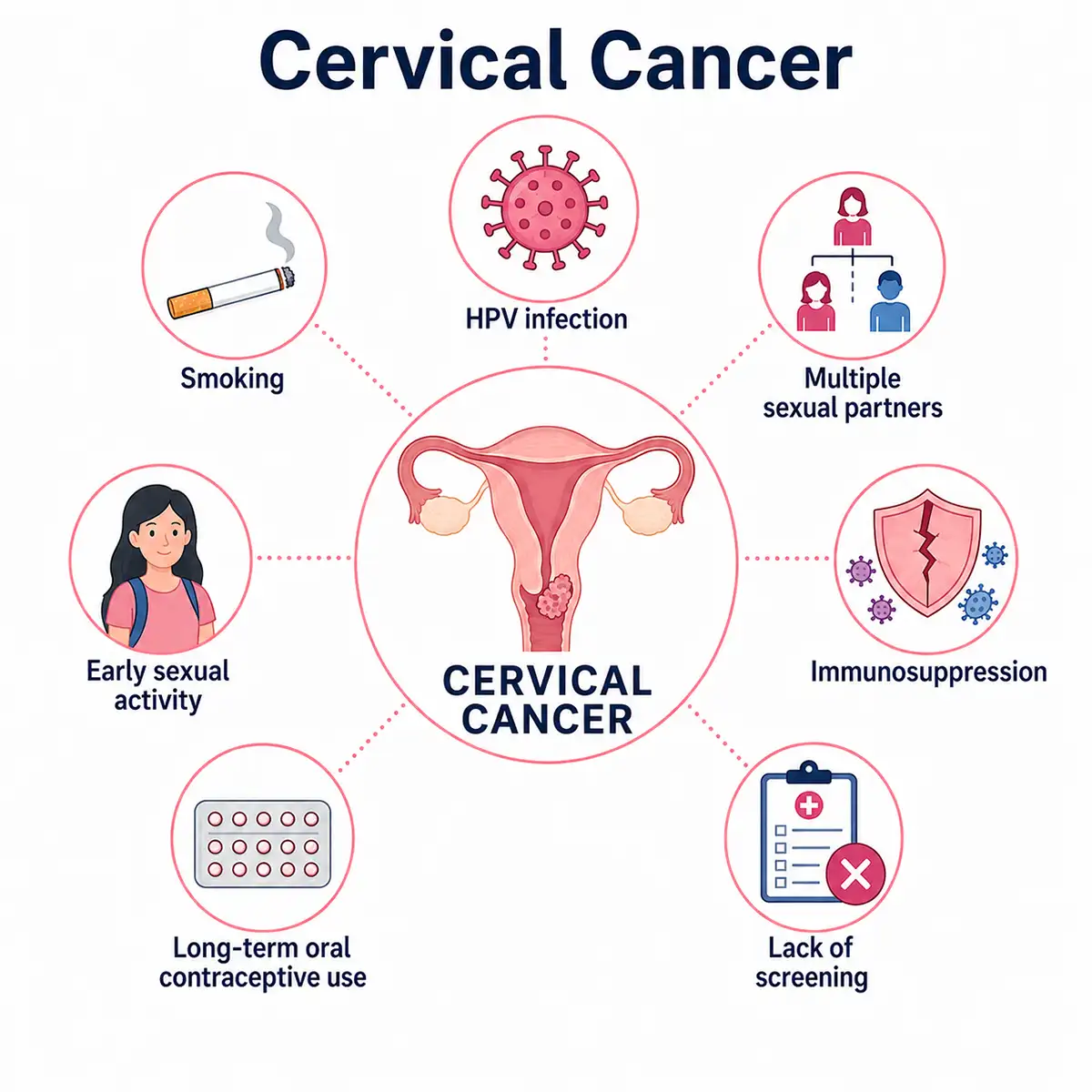
1. HPV infection
Persistent high-risk HPV infection is a necessary factor in cervical cancer development, most commonly involving HPV16 and HPV18. Viral oncoproteins can act on host genes and cause malignant transformation.
2. Sexual behavior
Multiple sexual partners and an early age at first intercourse increase HPV infection risk. Sexually transmitted diseases also increase genital tract susceptibility to HPV.
3. Smoking factor
Tobacco carcinogens damage cervical cells and reduce local immunity, increasing HPV infection risk and prolonging infection.
4. Immunosuppression
Immunocompromised people, including those with HIV or long-term immunosuppressant use after organ transplantation, have reduced ability to clear HPV and are susceptible to cervical cancer.
5. Hormonal factors
Long-term oral contraceptive use increases cervical cancer risk. Diethylstilbestrol exposure is also closely associated with clear-cell adenocarcinoma.
6. Childbearing factors
Early childbirth and multiple births increase risk. Women whose first delivery occurs before eighteen have markedly increased risk.
7. Genetic factors
Cervical cancer shows familial clustering. Women with a family history have increased risk, possibly associated with genetic susceptibility.
Conclusion
Multiple interacting factors cause cervical cancer, seriously harming reproductive health and potentially threatening life. HPV screening, vaccination, and regular examinations are essential for early detection and timely intervention.


