


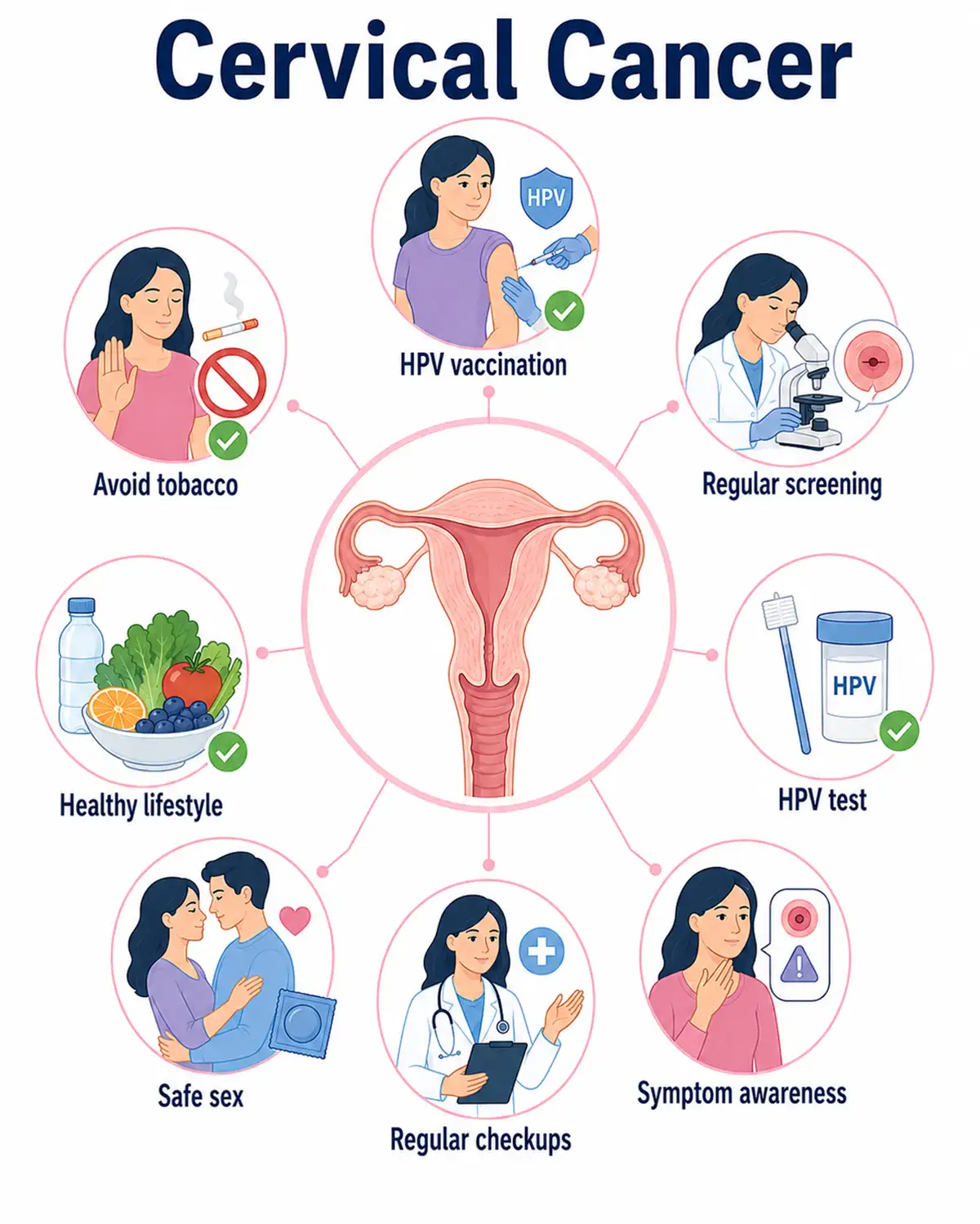
1. HPV vaccine
Women in the appropriate age groups should receive HPV vaccination, ideally at ages nine to fourteen. Vaccination effectively prevents high-risk HPV infection and reduces malignant transformation risk.
2. Periodic screening
Women over twenty-one or sexually active for more than three years should receive regular combined TCT and HPV testing to detect and treat precancerous lesions early.
3. Safe sexual practices
Fewer sexual partners and correct condom use reduce HPV infection risk. Avoiding an early start to sexual activity helps prevent infection.
4. Smoking and alcohol cessation
Smoking increases cervical cancer risk and reduces immunity. Quitting helps clear HPV infection and reduces cervical lesion risk.
5. Balanced nutrition
Eat more fresh fruit and vegetables rich in vitamins C and E and folate to strengthen immunity and help clear persistent HPV infection.
6. Regular daily routine
Adequate sleep and a regular routine maintain normal immune function. Sleep deprivation weakens the body's ability to clear viruses.
7. Reproductive health
Treat genital infections and sexually transmitted diseases actively. Keep the vulva clean and dry, and avoid prolonged use of irritating washes that disrupt microbial balance.
Conclusion
Cervical cancer seriously threatens women's health but can be effectively prevented through vaccination and regular screening. Attention to high-risk factors and regular examinations supporting early detection and timely intervention are essential to improving prognosis.


