


Global disease prevalence: Brain cancer is a life-threatening malignant tumor worldwide; it has a high incidence rate among adults, and high-grade brain cancer carries a very poor prognosis.
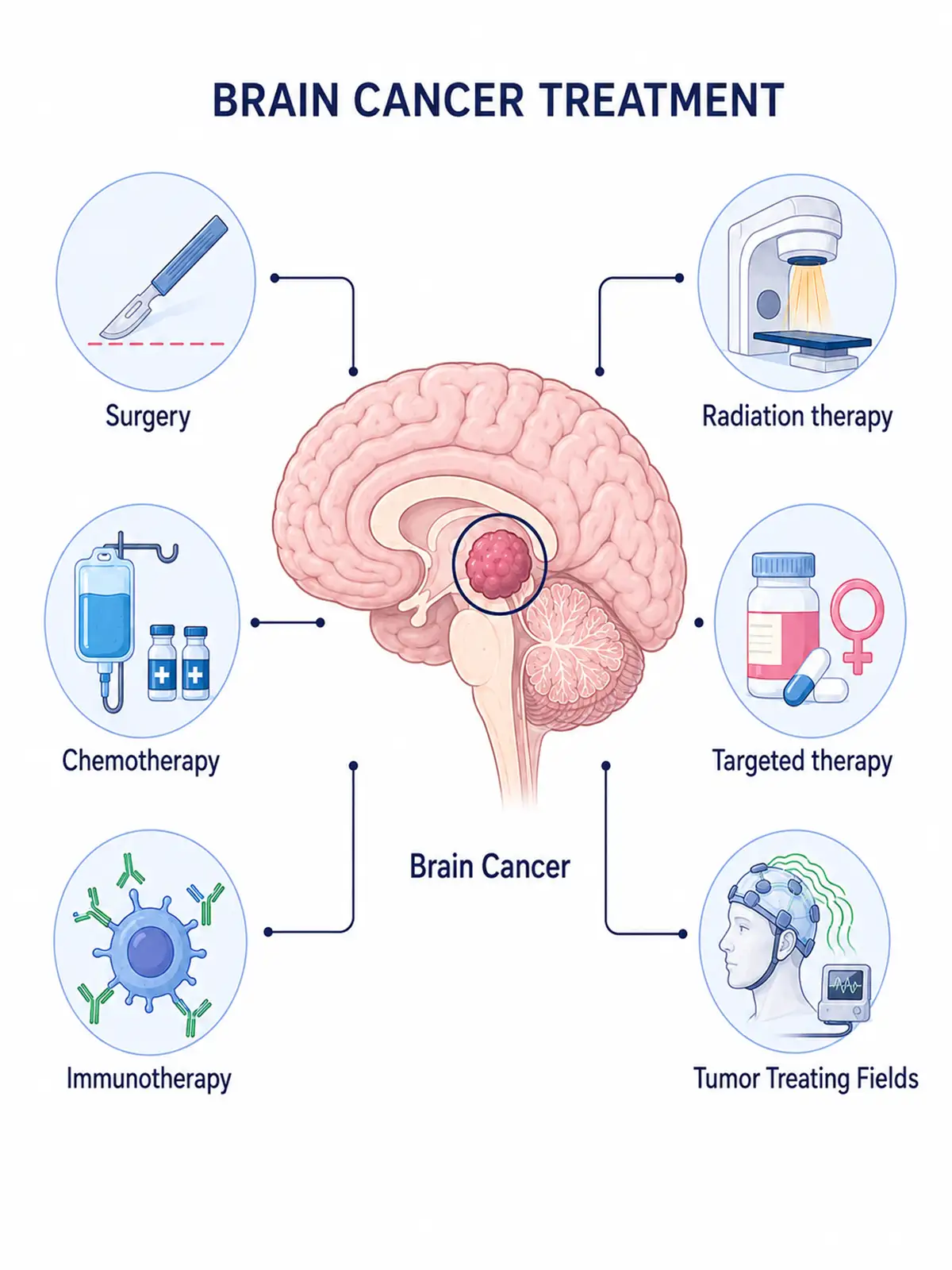
Treatment based on brain cancer stage
Early treatment (involving a localized, small tumor with a favorable response)
specifically surgical resection combined with adjuvant therapy—can effectively control tumor progression, and the patient's prognosis is relatively good.
Treatment for the intermediate stage (involving local spread; aiming to inhibit growth and delay progression)
employs a comprehensive approach—such as surgery combined with radiotherapy and chemotherapy—to control further tumor spread and slow the rate of disease deterioration.
Advanced-stage treatment (addressing extensive involvement, alleviating symptoms, and prolonging survival)
primarily employs systemic therapies such as chemoradiotherapy and targeted therapy to alleviate clinical symptoms and maximize patient survival time.
Consequences of delayed early treatment: Failure to receive timely, standardized treatment in the early stages allows the tumor to continue enlarging and severely damaging brain tissue function; missing the optimal window for intervention can be life-threatening.
Why choose Fosun Health for brain cancer treatment
Fosun Health’s brain cancer diagnosis and treatment services are managed by the Neuro-oncology Specialty Center. Bringing together senior experts in neurosurgery, radiation oncology, and medical oncology, the center has accumulated extensive experience in maximal safe resection surgery, stereotactic radiosurgery, and comprehensive postoperative radiotherapy and chemotherapy.Leveraging a global medical network, patients have access to cutting-edge international treatment options, including neuro-navigation-assisted precision surgery, CyberKnife M6 stereotactic radiosurgery (with 0.1mm precision), Tumor Treating Fields (TTFields) therapy, molecular targeted therapy, and immunotherapy.
For complex cases such as recurrent or high-grade brain cancer, a Multidisciplinary Team (MDT)—comprising experts from neurosurgery, radiation oncology, neuroimaging, and pathology—formulates the optimal treatment plan; a cross-border consultation mechanism provides patients with second opinions from top-tier overseas brain tumor centers.
Fosun Health possesses leading-edge technology in the field of brain cancer treatment.The MR-guided focused ultrasound brain treatment system (MR-guided FUS) introduced by Fosun Pharma has successfully treated over 25,000 patients worldwide.The world’s first 128-channel, helium-free Marvel MEG (magnetoencephalography) system provides an integrated solution ranging from precise localization to non-invasive treatment.Fosun Pharma’s novel cancer vaccine, SurVaxM, has received approval from the National Medical Products Administration (NMPA) to conduct Phase II clinical trials in combination with temozolomide for glioblastoma, offering new hope to brain cancer patients.
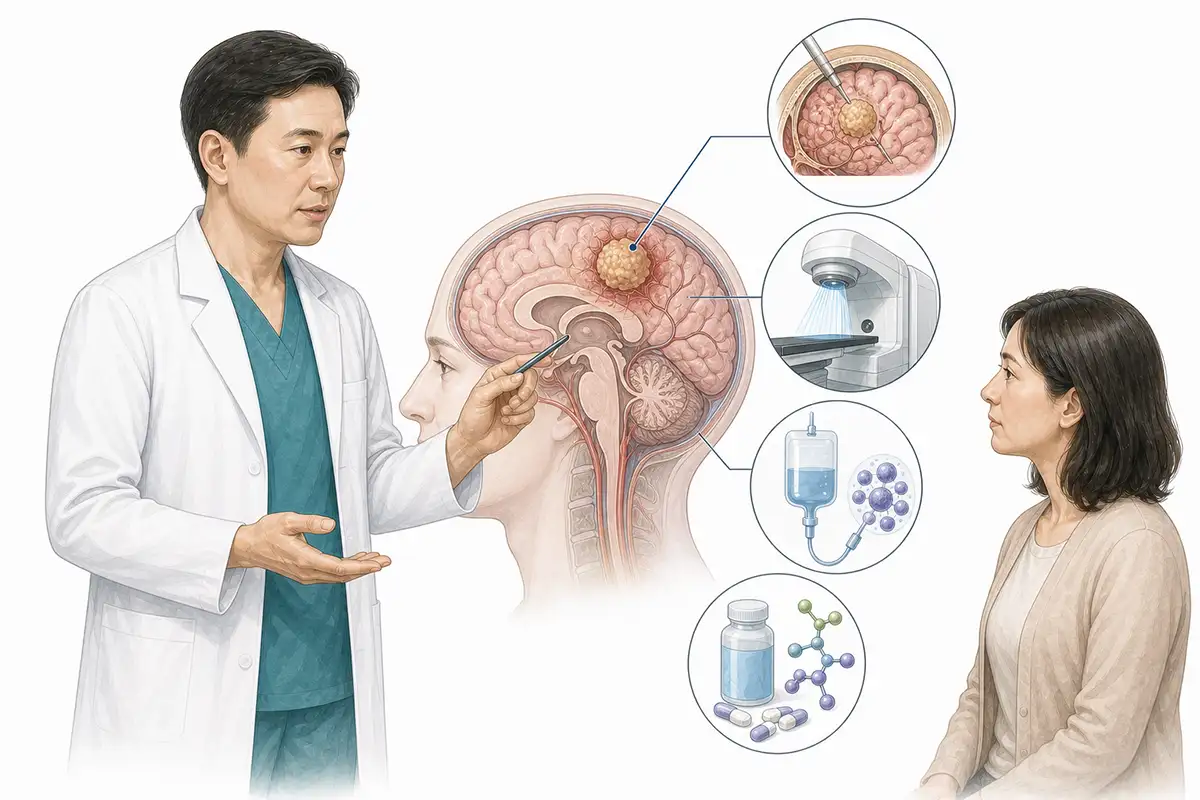
Brain cancer treatment methods
1.CyberKnife precision radiotherapy
CyberKnife precision radiotherapy may be considered based on lesion location and treatment history for certain small, relatively well-defined residual, recurrent, or specific metastatic malignant brain tumors that are suitable for stereotactic radiotherapy.
Treatment advantages:
① Precise focusing: Concentrating the therapeutic dose on specific, localized lesions.
② Non-craniotomy treatment: Does not require traditional craniotomy.
③ Applicable to specific recurrent lesions: Can be used for some localized recurrent lesions following prior radiotherapy, though the risks of re-irradiation require comprehensive assessment.
④ Protects normal tissues: Optimizes dose distribution based on the spatial relationship between the lesion and critical brain structures.
2.Microsurgical tumor resection
For localized primary malignant brain tumors with clear surgical indications and locations suitable for resection, microsurgical resection may be evaluated based on tumor location, size, and its relationship with functional areas, major blood vessels, and nerves.
Treatment advantages:
① Tumor debulking and local control: Resects tumor tissue that can be safely removed to the greatest extent possible.
② Relieve mass effect: Alleviates local compression caused by lesions inducing increased intracranial pressure or significant mass effect.
③ Obtain pathology: Surgical tissue can be used to determine the pathological type and molecular subtype.
④ Basis for adjuvant therapy: Postoperative radiotherapy and drug therapy regimens can be formulated based on pathology and the status of residual lesions.
3. VitalBeam linear accelerator precision radiotherapy
For glioblastoma and certain other high-grade gliomas, precision radiotherapy may be administered based on the extent of postoperative residual tumor and pathological/molecular characteristics.
Treatment advantages:
① Precision irradiation: Formulate a treatment plan based on postoperative residual lesions and the extent of tumor infiltration.
② Dose optimization: Improves target area coverage while minimizing radiation exposure to normal brain tissue.
③ Postoperative adjuvant therapy: Can serve as an important treatment modality following surgery for certain malignant gliomas.
④ Personalized treatment: Adjust the treatment regimen based on pathological grade, molecular characteristics, age, and systemic condition.
4.Chemotherapy
Uses anticancer drugs such as temozolomide to kill cancer cells and effectively control the rate of tumor progression; commonly used for patients with high-grade brain cancer.
5.Targeted therapy
Delivers precision strikes against specific molecular targets; offers good efficacy with relatively mild side effects; suitable for select patients with recurrent brain cancer.
6.Immunotherapy
Activates the body's immune system to recognize and attack cancer cells, providing a new, effective treatment option for patients with advanced brain cancer.
7.Comprehensive therapy
Formulate an individualized comprehensive treatment plan—combining surgery, chemoradiotherapy, and other modalities based on the patient's specific condition—to enhance therapeutic efficacy.
8.Supportive care
Approaches such as nutritional support, psychological counseling, and symptom management can comprehensively improve the patient's physical condition and quality of life.
Post-treatment care
Maintain a regular daily routine and a balanced diet; avoid strenuous exercise; attend scheduled follow-up appointments and actively cooperate with subsequent rehabilitation treatment as advised.
Post-treatment examinations
After treatment, regular cranial MRI scans, neurological function assessments, and imaging follow-ups are required to detect tumor recurrence or changes in the condition in a timely manner.
Conclusion
Brain cancer poses an extremely serious threat; successful treatment hinges on early detection, diagnosis, and intervention, as well as selecting an appropriate treatment plan and adhering to follow-up care to prolong survival.


